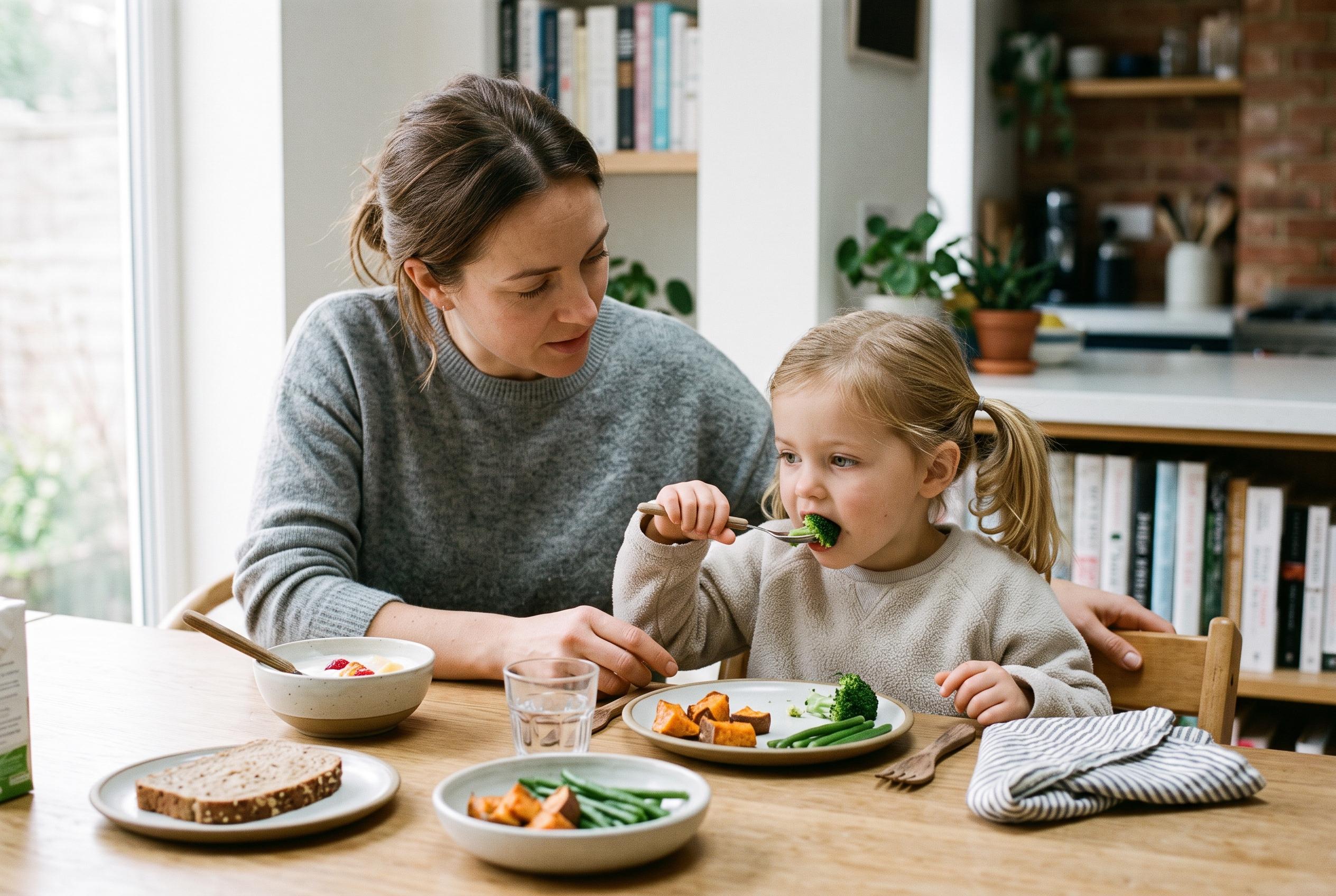

Child nutrition experts advise parents to focus on routines, repeated exposure, and nutrient-dense foods rather than individual meal successes when managing picky eaters, promoting a more relaxed family mealtime environment.
Picky eating can feel like a daily test for parents, but child nutrition experts say one difficult dinner rarely tells the whole story. In a recent Too Tired Mums live chat at SPH Media’s Health & Wellness Bazaar 2026, dietitian Jaclyn Reutens and Zespri’s Nina Yusman urged parents to step back from the pressure of judging a child’s diet meal by meal and instead look at the wider pattern. That approach matters because, as the CDC notes, children often need repeated, low-pressure exposure to a food before they accept it.
That wider view can also ease the panic when a child eats very little at one sitting. Reutens’s point was that a single plate does not define a child’s nutrition, especially if they have eaten a decent snack earlier, are tired after a busy day, or may simply be ready to eat again later. Cleveland Clinic and the American Academy of Pediatrics both advise parents to stick with regular meal and snack routines, rather than turning each dinner into a high-stakes event.
Another useful shift is to think about nutrient density rather than just volume. If a child eats only a little, what matters is how much nourishment those foods provide. Reutens described keeping “emergency nutrition foods” on hand, such as fruit, yoghurt and milk, so there is always an easier option when a meal does not go to plan. Healthline likewise recommends focusing on a range of nutrient-dense foods and avoiding the habit of labelling foods as “good” or “bad”, which can make eating feel more moral than practical.
The experts also stressed that progress does not depend only on swallowing a food. A child may first need to see, touch, smell or even lick something before they are ready to eat it. Boston Children’s Health Physicians says that repeated exposure, without pressure, is often part of the process, and the CDC advises parents that familiarising children with new foods over time can help reduce resistance. In other words, a carrot on the plate can still be a step forward, even if it comes home untouched.
Mixing something unfamiliar with something a child already likes can also make mealtimes less confrontational. The CDC suggests pairing new foods with accepted favourites, and Cleveland Clinic recommends starting with small portions so the new food does not overwhelm the child. That might mean serving a preferred rice dish alongside a small portion of vegetables, rather than asking a hesitant eater to face an entirely unfamiliar plate.
Parents may also find it helps to involve children before food reaches the table. The American Academy of Pediatrics recommends shopping, planning and cooking together where possible, because children are often more curious about foods they have helped choose or prepare. Reutens suggested the same broad idea in the live chat, saying that mealtimes should not become a battleground. Simple jobs such as washing produce, stirring ingredients or helping to assemble a meal can make children feel included without putting them under pressure.
The broader message from the conversation was reassuring: parents do not need to win every meal. Building a child’s diet is usually a slow process of repetition, familiarity and small steps, not a single decisive fix. The CDC and other paediatric guidance both suggest patience, routine and continued exposure, while the live chat reframed success as something more modest and realistic: a child who is gradually becoming more comfortable around food. For many families, that may be enough to make the table feel less like a test and more like a place to keep trying.
Disclaimer: This content is for informational purposes only and is not intended to be a substitute for professional medical judgment, advice, diagnosis, or treatment.