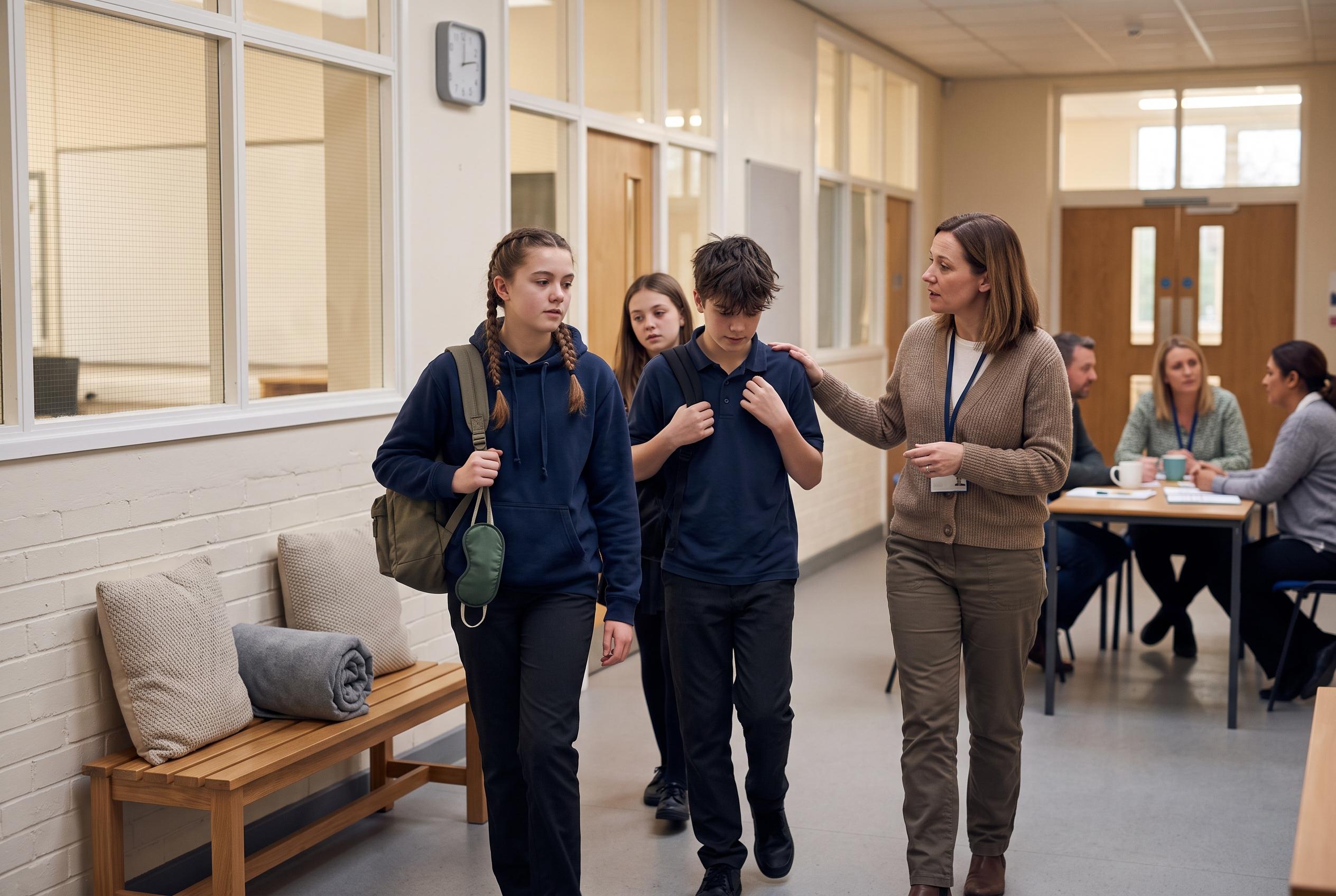

Recent research suggests traditional school-based sleep lessons have limited impact, but more extensive, collaborative programmes involving students and communities could hold the key to improving adolescent sleep habits.
School-based sleep lessons have long been seen as an efficient way to reach large numbers of teenagers, but the evidence suggests that education alone rarely changes what adolescents actually do. A review published in 2024 by Gaskin and colleagues examined 21 school intervention studies carried out between 2011 and 2022 and found that, overall, the programmes had little to no effect on sleep outcomes. The analysis covered more than 10,000 children and teenagers in 13 countries, pointing to a recurring pattern in the field: students may learn more about sleep, but that knowledge does not usually translate into longer or better rest.
That conclusion fits with earlier work in the area. A randomised Australian study led by Rigney found that a classroom-based programme improved neither sleep habits nor sleep knowledge in a meaningful way when compared with a control group. The intervention involved four weekly lessons, a group project and a presentation to parents, yet the benefits were modest at best and faded by follow-up. Researchers in that study argued that sleep education matters, but warned that stronger results will probably require more intensive programmes delivered over a longer period.
The 2024 review reached a similar judgement and also highlighted weaknesses in the research itself, including problems with study design, measurement and analysis. Its authors said future efforts should move beyond simple classroom teaching and bring in a wider school community, including administrators, teachers and parents. Earlier reviews had already pointed in that direction, suggesting that some programmes improve sleep knowledge without sustaining changes in behaviour, and that motivational elements may be needed if schools want to influence bedtime routines in a lasting way.
There are, however, signs that better results may be possible when interventions are more ambitious and students help shape them. In a later Belgian study led by Vandendriessche, researchers stretched the programme over 16 weeks and involved students in designing and carrying out the different components. At six months, the group reported better sleep knowledge, healthier pre-bedtime behaviour and less sleepiness, while the control group’s average sleep had dropped. The experimental group gained about 12 minutes of sleep on average, a small but positive shift that suggests longer, more collaborative and better-supported programmes may work better than one-off lessons alone.
Disclaimer: This content is for informational purposes only and is not intended to be a substitute for professional medical judgment, advice, diagnosis, or treatment.