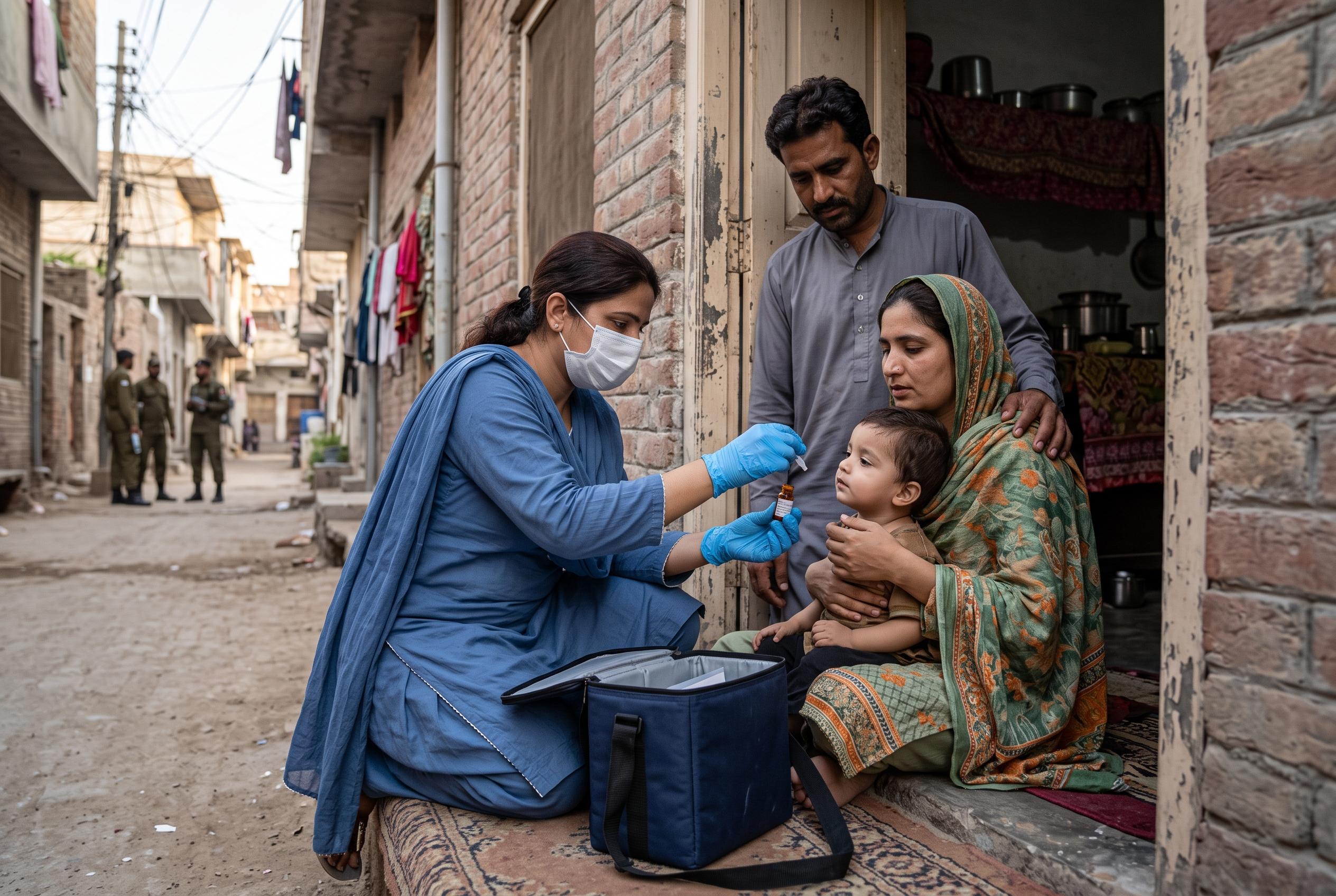

Pakistan has vaccinated over 28 million children in a new anti-polio drive, highlighting ongoing efforts to eradicate the virus despite security threats and recent infection cases.
Pakistan has accelerated its latest anti-polio effort, with the National Emergency Operations Centre saying more than 28.1 million children have received vaccine drops in an ongoing sub-national campaign aimed at stopping transmission of the virus. The drive, launched on 21 September across 115 districts, is scheduled to end on Sunday and is targeting roughly 31 million children under five.
The campaign comes as the country continues to record new wild poliovirus cases. Health authorities say Pakistan has reported four wild poliovirus type 1 infections this year so far, with three in Khyber Pakhtunkhwa and one in Sindh. Polio remains a disabling and sometimes fatal disease, but it can be prevented with repeated vaccination, the NEOC said, urging parents to cooperate with door-to-door teams.
Officials said the largest numbers of children vaccinated so far were in Sindh and Punjab, where teams have reached 10 million and more than 7.9 million children respectively. In Khyber Pakhtunkhwa, 7.1 million children have been immunised, while 2.2 million have been vaccinated in Balochistan. The campaign has also reached more than 443,000 children in Islamabad and about 140,000 in Gilgit-Baltistan. More than 273,000 workers are taking part in the operation.
The latest drive follows a year of repeated national and targeted campaigns as Pakistan tries to eliminate the virus after decades of setbacks. Government data cited by the NEOC shows the country says it has cut polio cases by 99.8% from an estimated 20,000 in the early 1990s to 31 last year. Even so, the programme continues to face misinformation, refusals and militant violence. This week, unidentified gunmen killed two police constables protecting vaccination workers in Balochistan, according to a police official, underscoring the security risks that still shadow the effort.
Disclaimer: This content is for informational purposes only and is not intended to be a substitute for professional medical judgment, advice, diagnosis, or treatment.