

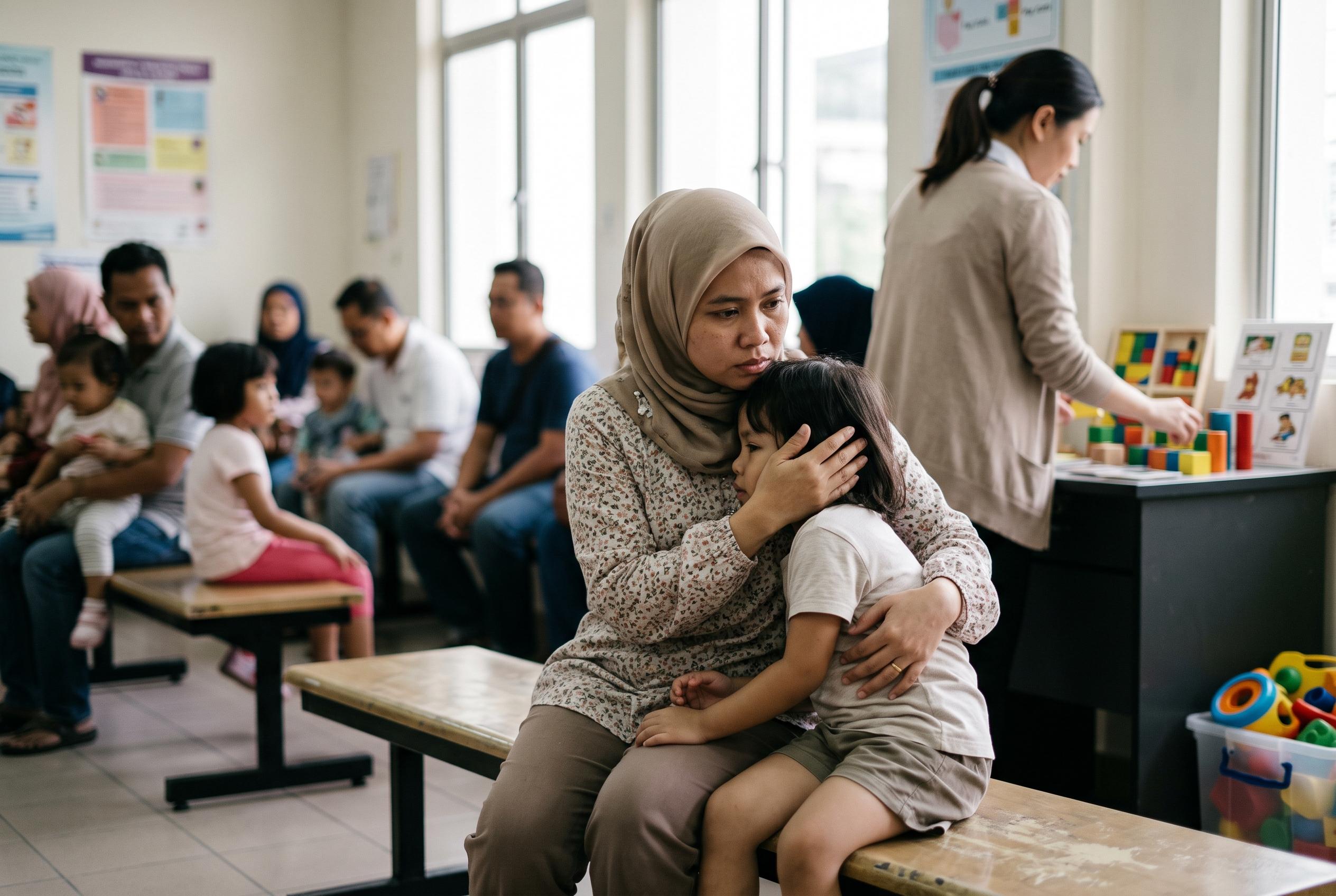

The sharp rise in autism diagnoses in Malaysia has revealed significant strain on health, education, and social services, highlighting the need for urgent expansion and reform of support systems across the country.
Malaysia is confronting a sharp rise in the number of children diagnosed with autism, a trend that is exposing deep pressure points across health care, education and family support systems. Official registrations have climbed from 6,991 in 2013 to more than 53,000 in 2023, before reaching 58,708 by the end of 2024. By April 30, 2026, the Department of Social Welfare recorded 90,459 people registered with autism, underscoring how quickly demand for services has expanded. The Star reported in August that registered cases had risen by 17,000 in just one year.
The increase is visible in classrooms as well as welfare rolls. A study published in the Malaysian Journal of Public Health Medicine found that autism prevalence among schoolchildren rose from 6.34 per 1,000 in 2018 to 9.29 per 1,000 in 2022. In raw numbers, that meant the number of autistic students in the Ministry of Education system more than doubled over the period, from 9,361 to 20,121. Primary-school pupils recorded the highest prevalence among the age groups examined, suggesting that demand for early identification and support is especially intense at the start of formal schooling.
Even so, a higher count of diagnosed children does not automatically mean autism itself is becoming more common at the same pace. Greater awareness, broader screening, better recognition by parents and teachers, and changes in diagnostic practice can all lift recorded numbers. The World Health Organization has said the strongest available evidence does not support a causal link between vaccines and autism, after reviewing research published between 2010 and August 2025. That makes clear that Malaysia’s registration surge should be understood as a rise in recognised cases and service needs, not as proof of any single cause.
What is already obvious is that the system is struggling to keep up. Health Minister Dzulkefly Ahmad has acknowledged shortages of trained staff, limited therapist numbers and uneven access to specialists, especially in Sabah and Sarawak. The strain is reflected in long waits for assessment and therapy, while private treatment can be expensive enough to shut out many families. The Star reported in April that Sabah had 7,057 children needing autism support but only 18 special education centres, a gap that is particularly severe outside urban areas.
The education sector faces a parallel challenge. By July 2026, more than 161,000 students with special educational needs were registered in institutions under the Ministry of Education, including more than 53,000 autistic students, according to local reporting. For some children, mainstream classrooms can work well if teachers are trained and schools provide the right adjustments, such as sensory supports, classroom aides and individualised learning plans. Others need smaller classes, highly structured settings or more intensive communication help. The key question is not whether one model works for all, but whether the system can offer the right placement for each child.
The implications reach well beyond childhood. Children diagnosed today will grow into adolescents and adults who may need continuing education, jobs, health care, independent-living support and social protection. Groups such as the National Autism Society of Malaysia have argued that early intervention should be treated as a national priority, not a private burden carried by parents alone. Malaysia’s central task now is not simply to record more diagnoses, but to expand screening, speed up assessments, increase the number of speech, occupational and behavioural specialists, and spread services more evenly across the country before the gap widens further.
Disclaimer: This content is for informational purposes only and is not intended to be a substitute for professional medical judgment, advice, diagnosis, or treatment.



