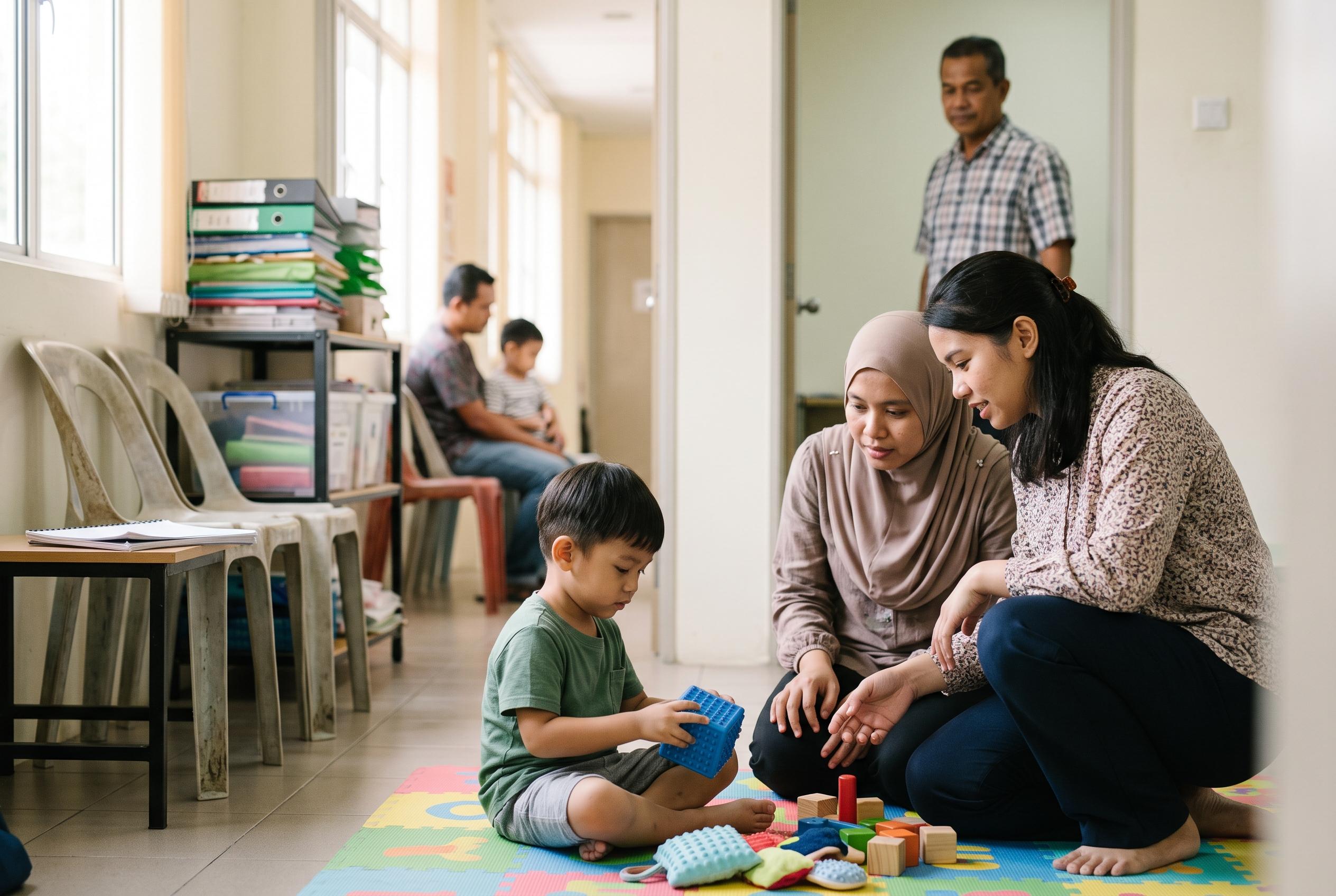

The number of children diagnosed with autism in Malaysia has surged, prompting urgent calls for scaled-up support and infrastructure amid rising diagnoses and systemic pressure.
Malaysia is confronting a steep rise in the number of children identified with autism, a trend that is putting pressure on clinics, classrooms and family budgets alike. Figures cited by Malaysia’s Social Welfare Department show registered children with autism rising from 6,991 in 2013 to more than 53,000 in 2023, before reaching 58,708 by the end of 2024. More recent reporting has put the figure even higher, with autism registrations continuing to climb through 2026.
The increase is also visible in schools. A study published in the Malaysian Journal of Public Health Medicine found that autism prevalence among school-age children rose from 6.34 per 1,000 in 2018 to 9.29 per 1,000 in 2022. The research, based on Ministry of Education data, recorded 9,361 autistic students in 2018 and 20,121 in 2022, with primary-school pupils showing the highest prevalence among the age groups examined. The study also found notable state-level differences, with the Federal Territories of Labuan and Kuala Lumpur recording the highest rates and Kelantan and Terengganu the lowest.
Health officials and disability groups say the growing numbers should be interpreted carefully. An increase in registrations does not automatically mean autism itself is becoming biologically more common at the same pace. Better awareness, wider screening, stronger recognition by parents and teachers, and easier access to assessment can all increase the number of children who are identified. Autism spectrum disorder is a neurodevelopmental condition that affects communication, social interaction and behaviour, but it varies widely in how it presents and how much support a child needs.
Malaysia’s Health Ministry has previously said there is no local epidemiological study establishing national autism prevalence, although a feasibility study using the Modified Checklist for Autism in Toddlers found an estimated rate of about 1.6 per 1,000 among children aged 18 to 36 months in clinic settings. The National Autism Society of Malaysia says autism typically appears in the first three years of life and affects children across all backgrounds, while also noting that boys are diagnosed more often than girls. The gap between early detection and confirmed diagnosis remains a major challenge for many families.
The practical strain is already being felt. The Star reported in August 2026 that about 93,199 people with autism were registered with the Social Welfare Department, with services under pressure from long waits for therapy and a shortage of trained professionals. Malay Mail reported in May that registrations had risen eightfold to 90,459 as of April 30, 2026, and that the government was trying to respond through awareness campaigns and new support centres, including a pilot facility in Bangi. In July, The Star also reported that 161,891 students with special educational needs were enrolled under the Education Ministry, including 53,169 students with autism.
That growing population poses a long-term planning challenge. Some autistic children can thrive in mainstream classrooms with proper support, including trained teachers, classroom adjustments and individual learning plans. Others need smaller classes, speech and language therapy, occupational therapy or more structured settings. Specialists say the core task now is not simply counting diagnoses, but building enough capacity across health, education and welfare systems to make sure children and families can get timely support, especially outside major cities. Sabah in particular has been cited as an area where specialist provision remains thin.
Disclaimer: This content is for informational purposes only and is not intended to be a substitute for professional medical judgment, advice, diagnosis, or treatment.