

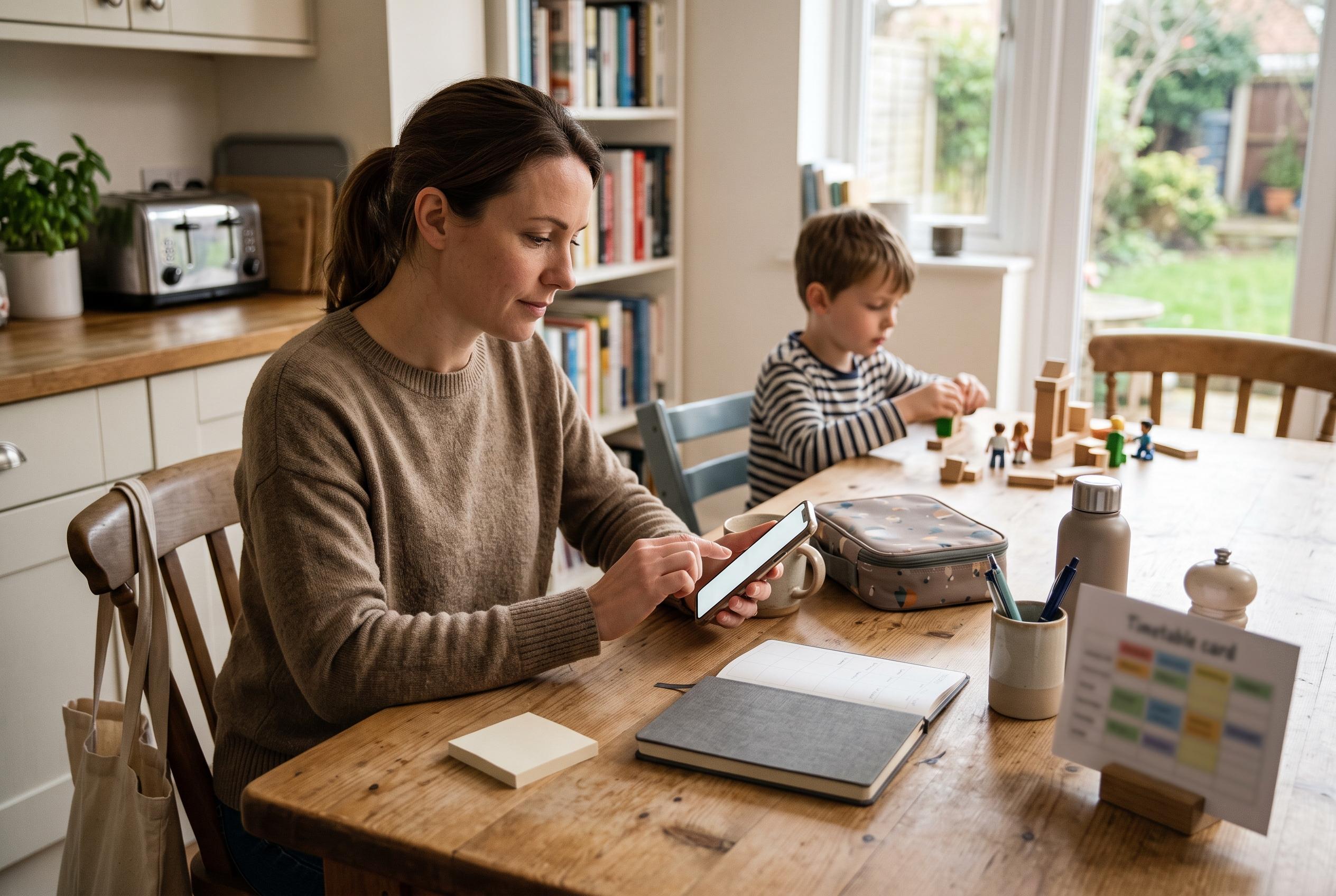

Emerging research highlights the potential of smartphone apps and organisational strategies to empower parents with ADHD to better support their children, offering new hope for family routines and management.
Children who cannot settle, stay on task or stop themselves from acting impulsively may simply be having an energetic day. But when those difficulties persist, show up in more than one setting and begin to disrupt school, family life or friendships, clinicians may start to consider attention-deficit/hyperactivity disorder, or ADHD. The disorder is commonly grouped into two main clusters of symptoms: inattention, and hyperactivity-impulsivity. The Centres for Disease Control and Prevention says those patterns can look different as children grow older, and may continue into adulthood in altered form.
That variation is one reason ADHD can be difficult to identify. The Mayo Clinic notes that anxiety, depression and learning difficulties can resemble ADHD, which means diagnosis usually depends on a careful assessment rather than a single screening test. A clinician will often look at a child’s medical history, carry out a physical examination and gather information from parents, teachers and sometimes other specialists. The CDC says symptoms must be persistent and sufficiently disruptive to daily life before ADHD is diagnosed.
Treatment is usually built around more than one approach. According to the National Institute of Mental Health, effective care may include medication, behavioural support, skills training and counselling, depending on the child’s needs. The CDC similarly says behaviour therapy, medication and school support can all play a role. For some families, the challenge is not only the child’s symptoms but also the parent’s ability to maintain routines and follow through consistently. Arizona State University psychologist Lauren Friedman told Knowridge that ADHD can be lifelong and may look different in adults, including parents who are trying to help their children.
Friedman’s research points to a practical problem: behaviour-management programmes can work better when parents are able to use them reliably themselves. In her study, parents with ADHD receive standard training to support their children, but they also learn organisational and time-management strategies aimed at their own symptoms. The project is also testing a smartphone app that sends reminders at moments when families need them most, such as hectic mornings. The idea is straightforward: if adults have support that fits their own executive-function difficulties, they may be better able to give children steady, effective help.
Disclaimer: This content is for informational purposes only and is not intended to be a substitute for professional medical judgment, advice, diagnosis, or treatment.



