

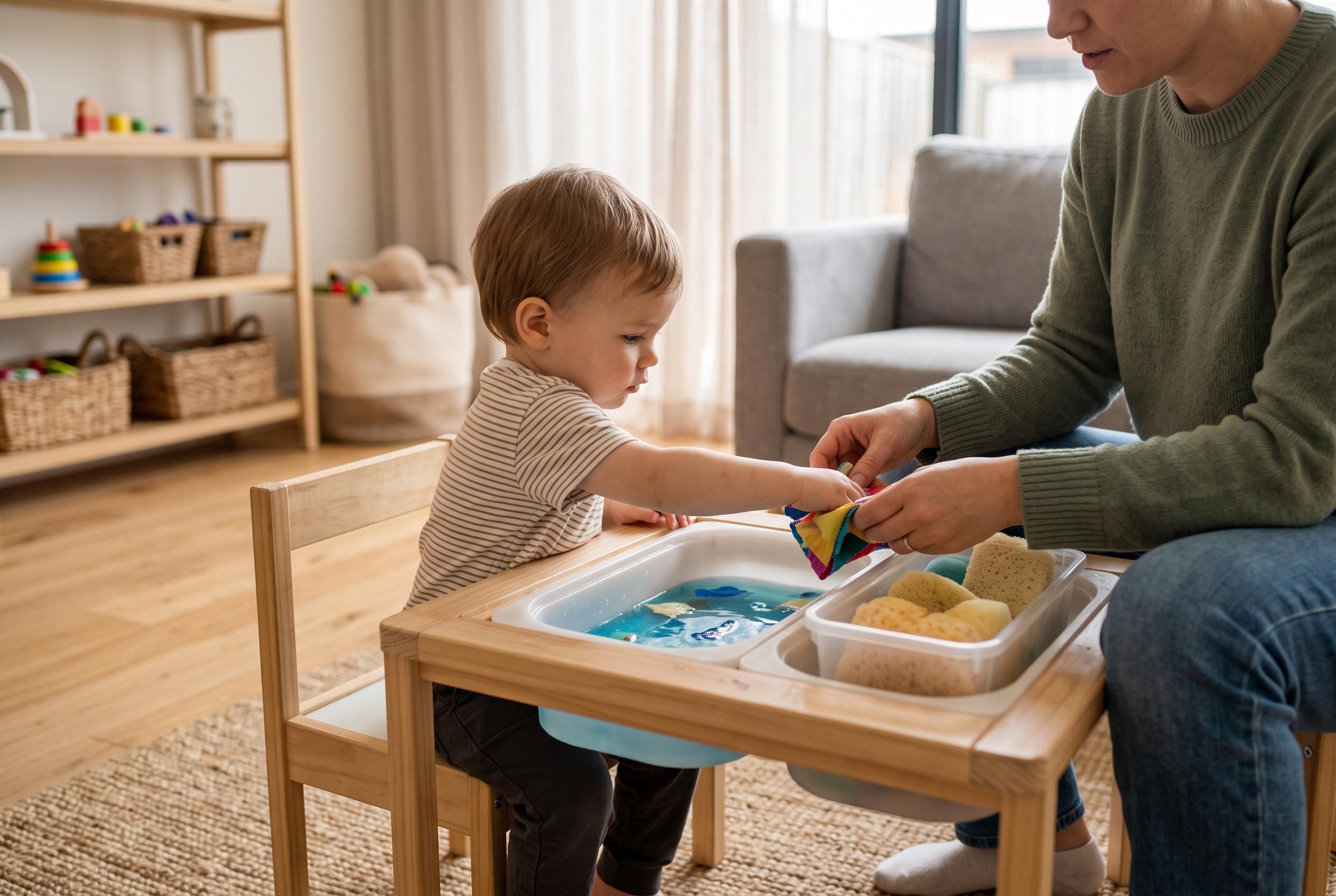

Recent research and expert guidance reveal that sensory activities can significantly enhance toddlers’ motor skills, language, and social abilities, turning everyday materials into powerful learning tools.
Sensory play can do far more than keep a toddler occupied for an afternoon. According to Healthline and the Cleveland Clinic, activities that invite children to touch, pour, scoop, listen, smell and sort can support fine motor development, language growth, problem-solving and social skills, while also feeding curiosity and imagination. For many families, that makes sensory play a simple, flexible way to turn ordinary materials into meaningful learning.
The toddler and preschool years are especially well suited to this kind of hands-on exploration. Healthline notes that young children are naturally drawn to novel textures, sounds and movements, while the Cleveland Clinic says sensory experiences can also help children regulate themselves and stay calm. That means a tray of rice, a bowl of water or a patch of foam can be more than a game; it can be a structured way to help children practise attention, persistence and self-control.
Practical ideas do not need to be elaborate. Montessori Parent Guide suggests activities such as dry rice scooping, water-pouring stations, oat bins with measuring spoons, washing toy animals, cloud dough, ice rescue play, nature trays and pom-pom transfers. Pip Playbook adds that bins, dough and messy trays can be especially effective when children are encouraged to repeat actions such as scooping, sifting, squishing and pouring, because repetition helps build confidence and coordination.
Parents and caregivers should still keep safety at the centre of any setup. The lead article stresses close supervision, non-toxic materials, careful checks for choking hazards and clean surfaces, and that advice is echoed in the wider guidance from the Cleveland Clinic and Healthline, which both frame sensory play as most useful when it is developmentally appropriate and properly contained. That may mean choosing food-based or natural materials for younger children, avoiding sharp edges and giving children enough space to move without colliding.
Used well, sensory play can become part of everyday family life rather than a special event. A small box of textured objects, a shallow water tray or a simple sorting activity can give children a chance to explore, make choices and build vocabulary while they play. The value lies less in the equipment than in the experience: a chance to discover how things feel, sound and behave, and to learn through that discovery.
Disclaimer: This content is for informational purposes only and is not intended to be a substitute for professional medical judgment, advice, diagnosis, or treatment.



