

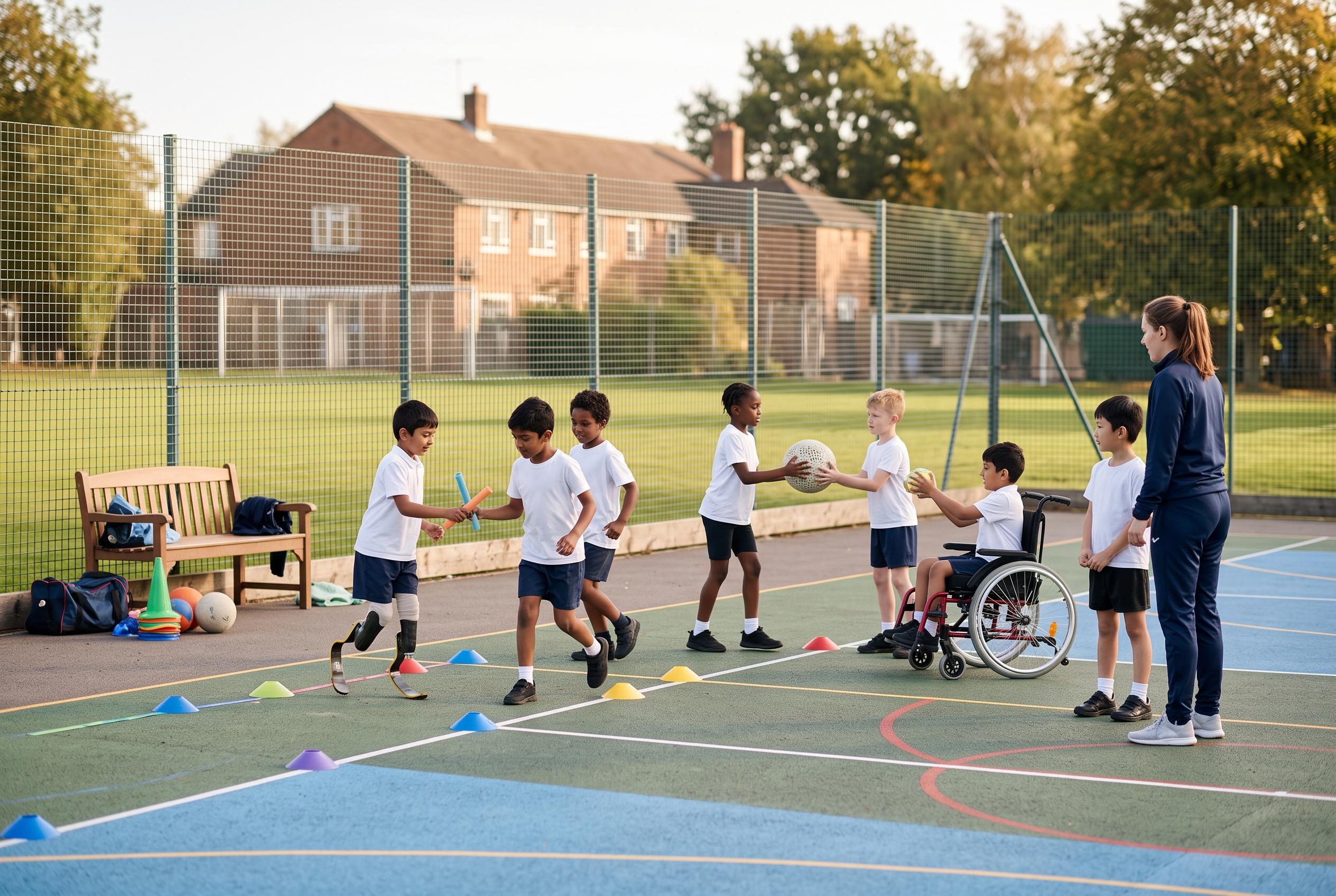

The Department for Education has unveiled a revised School Sport and Activity Action Plan to increase physical activity among children, emphasising longer-term goals and equality, amid ongoing concerns over low participation and inactivity levels.
The Department for Education has updated its School Sport and Activity Action Plan, setting out a fresh push to widen access to sport, improve physical education and increase the amount of time children spend being active in school. The plan repeats the aim of giving pupils two hours of PE each week, strengthening opportunities for girls and boys alike, and improving provision for swimming and water safety. According to the government, the update was published in July 2023.
The renewed emphasis comes against a backdrop of persistent concerns about inactivity among children. The Youth Sport Trust has said that fewer than half of young people currently meet the Chief Medical Officers’ advice of 60 minutes of moderate to vigorous physical activity a day. In evidence to parliamentary scrutiny on school and community sport, the charity has also pointed to a gender gap in participation and enjoyment, arguing that schools need to do more to create fair and appealing opportunities for girls.
Ali Oliver, chief executive of the Youth Sport Trust, welcomed the latest action plan and said the organisation works to help schools recognise the role of activity, play and sport in children’s development. She said children have a right to be physically active, while Abhishna Yogarajan, a youth board member at the charity, said the government’s commitment to two hours of PE a week was positive but insisted daily activity should remain the longer-term goal. Stephen Munday, chief executive of The Cam Academy Trust and a past president of the Chartered College of Teaching, said physical education and sport are central to attendance, achievement and behaviour.
The action plan also promises to build on the School Games, extend support for the School Games Organiser network, open up school facilities and continue the Holiday Activities and Food programme. The Youth Sport Trust has welcomed that investment and accountability, but it says the measures should be treated only as a starting point. The organisation argues that schools need a much more ambitious long-term strategy if they are to tackle the wider wellbeing pressures and inequality affecting children.
Disclaimer: This content is for informational purposes only and is not intended to be a substitute for professional medical judgment, advice, diagnosis, or treatment.



