

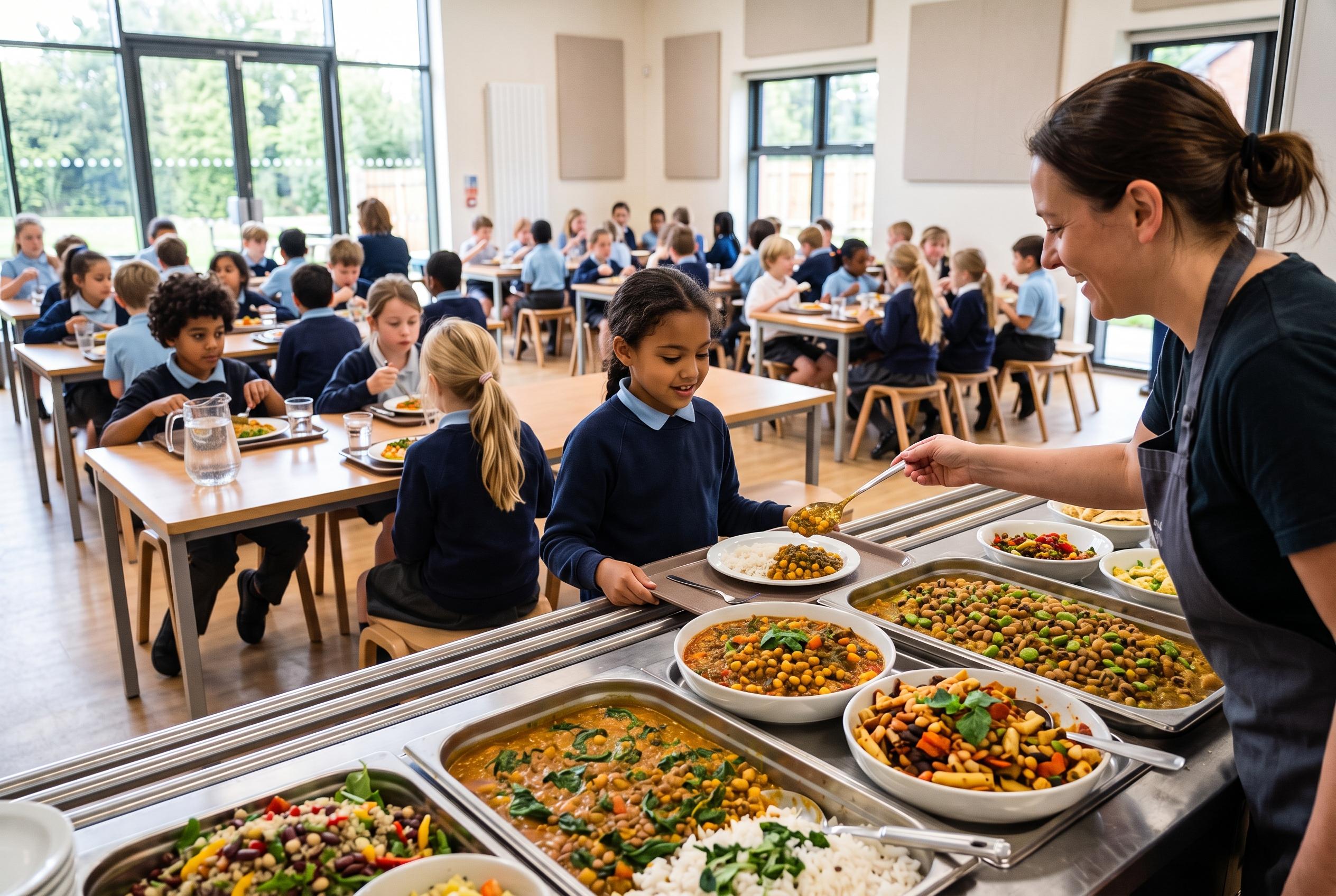

The UK government introduces landmark reforms to school food standards, elevating pulses and plant-based options to promote healthier and more sustainable meals for children across England from September.
The UK government has overhauled its school food rules for the first time in more than a decade, giving beans, lentils and chickpeas a far bigger role in what children are served at lunchtime. From next September, schools in England will be expected to include legumes alongside main meal options at least once a week, with secondary schools given an extra year to adjust to a fortnightly requirement during the transition. The change is designed to make menus healthier and more varied while also giving caterers more flexibility over the protein they use.
Under the updated standards, pulses such as beans and lentils will count towards the protein food group, though baked beans are treated separately and will not be classed as vegetables. The rules also keep the existing requirement that vegetables or salad appear with main meals, and that fruit and vegetables remain available at all mealtimes. Officials have also confirmed that vegetarian main dishes must still include pulses on at least three days a week.
The revisions go further in limiting less healthy options. Processed meats, including sausages, bacon, ham, burgers, meatballs, salami and pepperoni, will be allowed only once a week. Cheese can feature as a main ingredient no more than twice a week, while sugary foods and drinks face tighter limits and deep-fried foods are banned altogether. According to the Department for Education, the standards are intended to help children eat more fibre and less saturated fat, two areas where many young people still fall short of recommended levels.
Plant-based alternatives are also gaining ground. Fortified pea milk has been added to the list of permitted plant-based drinks, alongside unsweetened oat and soy milks, while yoghurt and vegan alternatives that meet nutritional standards can now appear on snack lists. The government said it would also publish guidance showing how schools can meet the protein rules using foods such as baked beans, pulses, vegetarian dishes, vegan meals and plant-based meat alternatives, with examples tailored to allergies, faith-based diets and sensory needs.
The changes come as free school meal eligibility is being widened this month to all families on Universal Credit, bringing more than three million children into scope. Jamie Oliver welcomed the announcement, saying the new standards were grounded in the latest science and would help children’s health and development. Campaigners from Foodrise also praised the wider use of pulses, arguing that legumes can be cheaper than meat and can help schools improve both nutrition and menu choice.
Disclaimer: This content is for informational purposes only and is not intended to be a substitute for professional medical judgment, advice, diagnosis, or treatment.



