

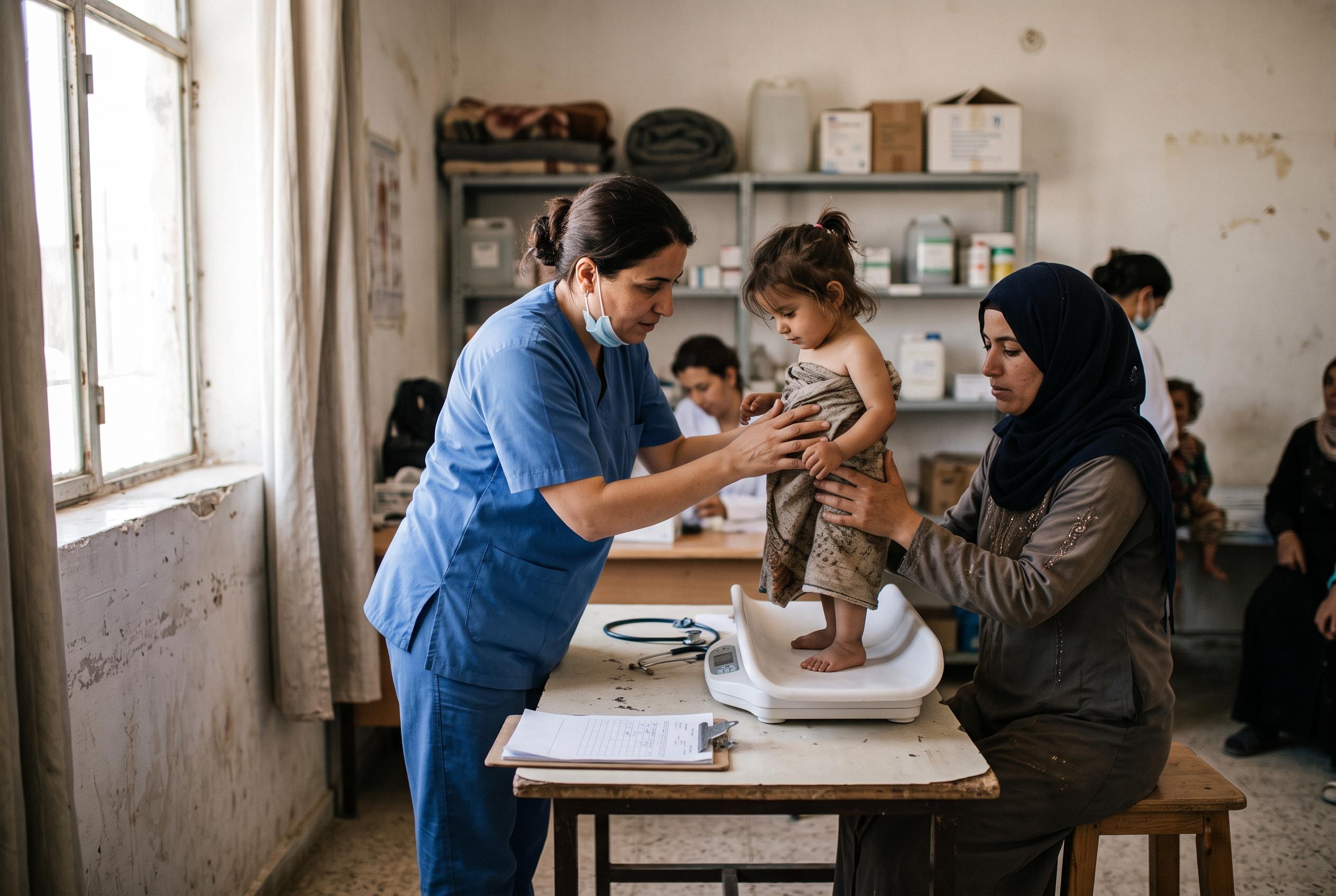

UNICEF raises alarm over escalating child malnutrition in Yemen as renewed fighting hampers access to vital health services, with the crisis worsening despite efforts to address it.
UNICEF has warned of a sharp worsening in child malnutrition in Yemen, saying renewed fighting is blocking access to health care and treatment centres just as the country’s humanitarian emergency deepens. The agency said the surge is especially worrying because it is appearing in places where its teams can still work, suggesting the wider scale of the crisis is likely to be greater than the available data shows.
Akhil Iyer, UNICEF’s representative in Yemen, told reporters in Geneva by video link from Aden that the agency was “very concerned” about a clear rise in acute malnutrition among children. In the areas reached by mobile nutrition teams over recent weeks, more than a quarter of nearly 2,900 children screened were found to be severely malnourished, and about 200 were classified as suffering from severe acute malnutrition, the most dangerous form. UNICEF said it is finding more cases each day in locations where newly displaced families have arrived.
The latest violence has also triggered fresh waves of displacement. UNICEF said about 71,000 children have fled their homes in the past three weeks, out of at least 133,000 people uprooted by the fighting, while others have tried to escape across the Red Sea towards Africa. The clashes have intensified along older front lines, including around Taiz, after Houthi forces pushed south along the Red Sea coast.
UNICEF said the figures from accessible areas only capture part of the picture. Its earlier analysis, released in August 2024, projected that about 609,808 children in Yemen would suffer acute malnutrition by the end of 2024, including 118,570 with severe acute malnutrition, a 34% increase from 2023. The agency also warned in March 2024 that almost 10 million children remained in urgent need of aid, with more than 2.7 million acutely malnourished and nearly half of children under five stunted, underscoring how years of war, poor food security, disease and limited access to clean water continue to drive the crisis.
Disclaimer: This content is for informational purposes only and is not intended to be a substitute for professional medical judgment, advice, diagnosis, or treatment.



