

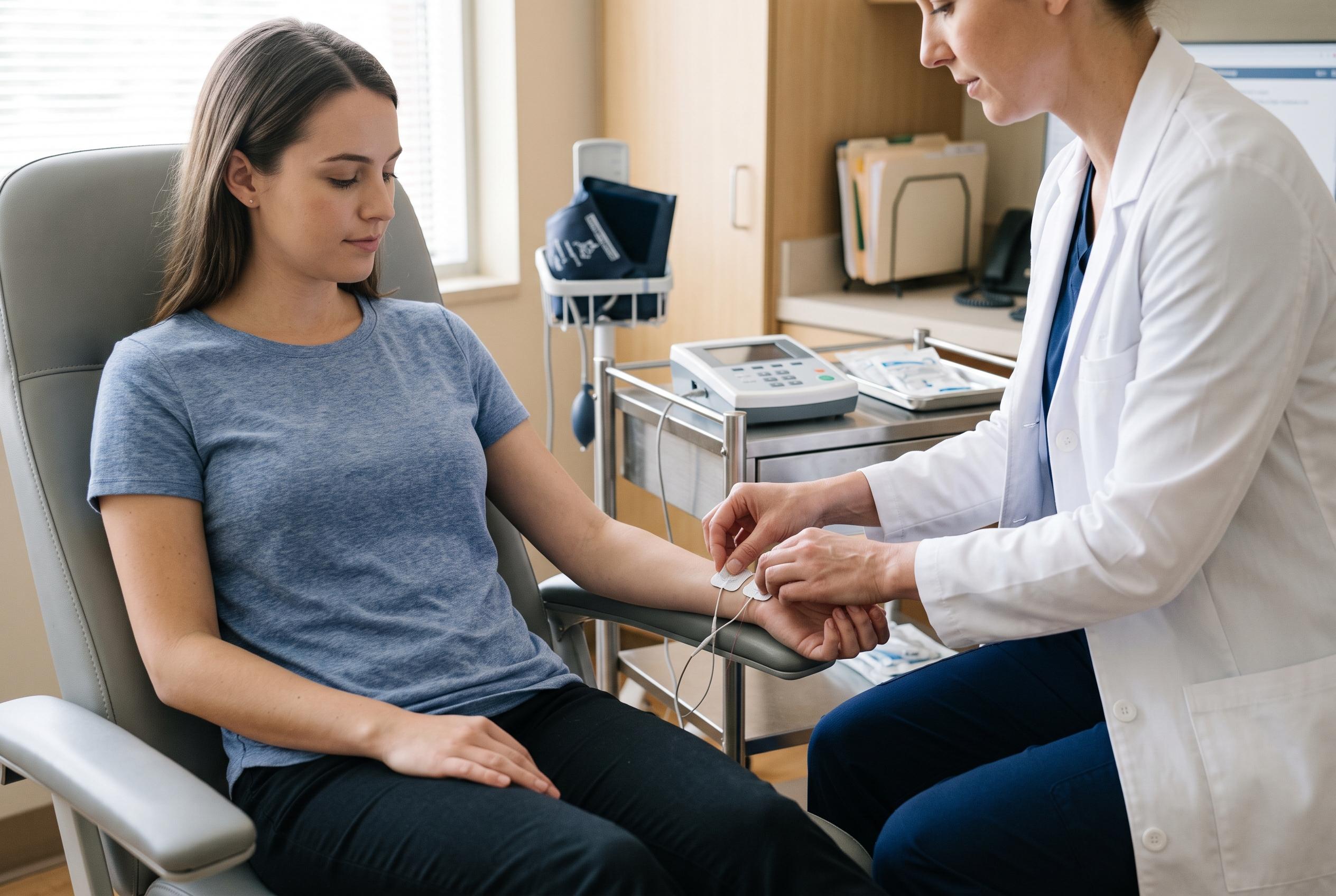

Research using machine learning and bioelectrical impedance analysis uncovers distinct biological profiles among women with anorexia nervosa, offering a nuanced approach to treatment beyond traditional BMI assessments.
A new study suggests that body composition, not just body weight, may help explain why patients with anorexia nervosa recover at different speeds. Using machine learning to analyse bioelectrical impedance analysis, or BIA, data from women with moderate to extreme anorexia nervosa, researchers identified three distinct biological profiles that were linked to different early weight-recovery trajectories over three months. The findings point to a more nuanced way of understanding the illness than the body mass index, which remains the main severity marker in current psychiatric classification.
BIA has long been studied as a practical way to assess nutritional status in anorexia nervosa because it can estimate fat-free mass, body water and other measures without the cost and radiation exposure of dual-energy X-ray absorptiometry. Earlier research found that it can track changes during refeeding and may capture starvation-related features, including phase angle, that BMI cannot show. Those older studies laid the groundwork for the current investigation, which used a more advanced, data-driven method to look for patterns across several BIA measures at once.
The study, published in the Wiley journal International Journal of Eating Disorders, followed 100 female patients aged 18 to 40 who had a BMI below 17 and were treated at Careggi University Hospital in Florence between March 2022 and December 2024. All underwent standard psychiatric assessment, BIA testing under tightly controlled conditions and weekly dietitian reviews during nutritional rehabilitation. The authors said the aim was to see whether machine-learning clusters based on body composition would correspond not only to baseline clinical differences but also to early changes in weight over time.
The algorithm separated the patients into three groups. One cluster had comparatively preserved body cell mass and lean tissue, another showed the most pronounced overall depletion, and a third had a pattern marked by higher extracellular water, lower body cell mass and lower phase angle, suggesting altered fluid distribution and cellular compromise. The clustering structure was supported by internal measures of separation, and the researchers said it was not simply a reflection of BMI, since two of the groups began with almost identical weights but still fell into different biological categories.
The differences mattered clinically. Over the three-month period, all three groups improved, but the fluid-redistribution cluster gained weight more quickly than the others, even after the model was adjusted for baseline BMI. By contrast, the most depleted group recovered more slowly. The authors also reported that the two groups with slower recovery had higher levels of childhood trauma, while the faster-recovering group had trauma scores closer to community and healthy-control ranges. That pattern led the researchers to suggest a possible link between early-life adversity, body composition and treatment response, although they stressed that the study could not prove cause and effect.
The work adds to a growing argument that anorexia nervosa may need more than a single weight-based severity scale. Current diagnostic systems still rely heavily on BMI, yet the authors said their findings support a broader view that includes biology, history and likely treatment trajectory. They also noted important limits: the study was single-centre, included only women, and covered only short-term weight recovery rather than full psychiatric outcomes. Even so, the results suggest BIA could become a useful tool for identifying patients who may need different clinical attention early in treatment, especially if future studies confirm the patterns in larger and more diverse groups.
Disclaimer: This content is for informational purposes only and is not intended to be a substitute for professional medical judgment, advice, diagnosis, or treatment.



