

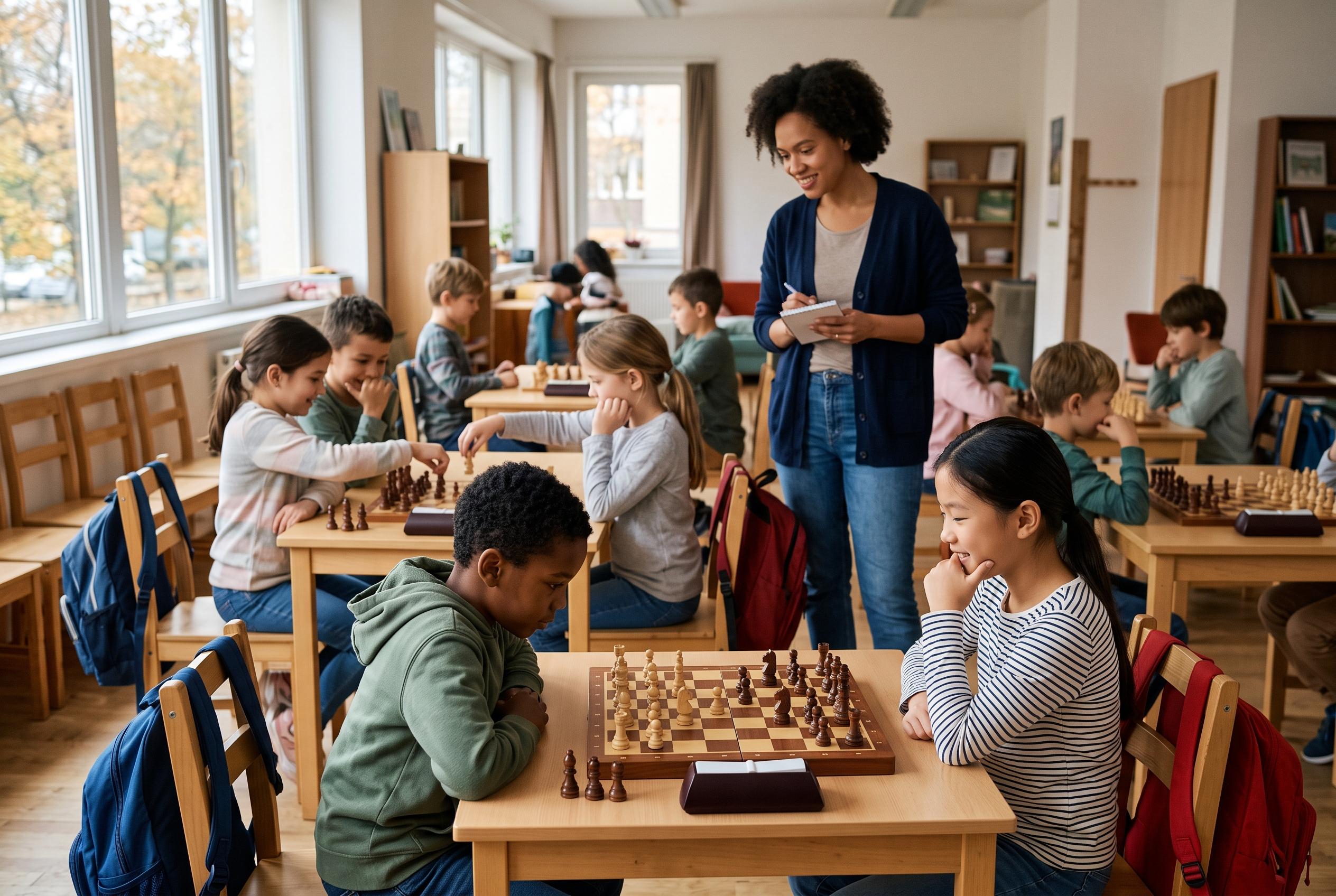

Once considered a niche hobby, chess is now a mainstream activity that fosters essential skills and strengthens community bonds among young players across the United States.
Chess has long shaken off its old image as a pastime for the socially awkward or the academically inclined only. At tournaments, it now draws children, parents and supporters together in a setting that feels more like a community gathering than a niche hobby, with young players arriving early and treating each round with the seriousness of a final. The appeal lies partly in that mix of competition and calm: each game is played one board at a time, with the outcome resting entirely on the child’s own decisions.
That individual responsibility is one reason educators and chess advocates often point to the game as a useful tool for children. According to Chess.com and Chess Learning Academy, regular play can strengthen concentration, memory, problem-solving and strategic thinking, while also teaching patience and discipline. Those skills matter off the board as much as on it, especially for children learning how to manage setbacks, think ahead and make choices under pressure.
The game can also help children build emotional resilience. Chess.com says young players learn that mistakes have consequences, but also that a poor result does not end the lesson. In practice, that means a child who loses a match must absorb the disappointment, reset and prepare for the next one. For many families, that cycle of effort, loss and renewed focus becomes one of the quiet strengths of the game.
Healthline has likewise described chess as an activity that can support self-awareness, planning and creativity, while the Chess Kid website says it may help children perform better in school by improving attention span, analytical thinking and spatial reasoning. Those claims are not a guarantee that every player will excel in class, but they do help explain why chess has found favour with parents looking for activities that build both discipline and confidence.
The broader popularity of chess in the United States suggests the game is no longer confined to a narrow crowd. Statista reported in July 2026 that a significant share of Americans said they enjoy chess, underscoring how widely the game now resonates across age groups. For children especially, that rising profile matters: what once looked like a quiet sideline has become, for many families, a practical and rewarding way to sharpen the mind and strengthen character.
Disclaimer: This content is for informational purposes only and is not intended to be a substitute for professional medical judgment, advice, diagnosis, or treatment.



