

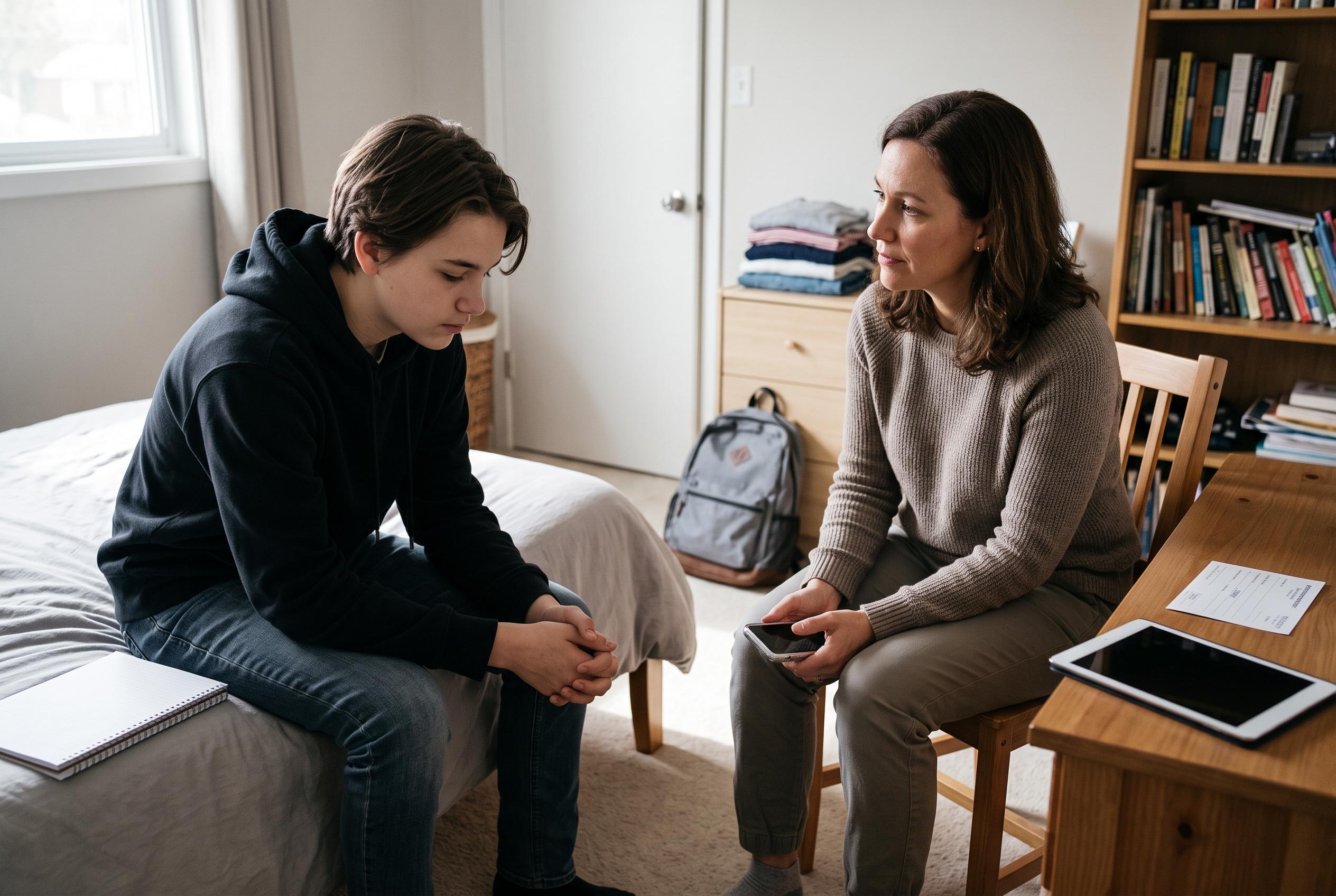

As self-harm among California adolescents more than doubles, advocates highlight persistent gaps in access to mental health services and the disproportionate impact on marginalized communities, underscoring a mounting public health challenge.
Jae Janea was alone for days before a summer evening last year when despair pushed her to a nearby dollar store to buy razor blades. She cut her wrists, then phoned her best friend, who urged her to make a tourniquet and came over to help bandage the wounds. The next morning, the pair went to urgent care. Janea, now 22, says the episode brought a painful clarity: she did not want to die, she wanted the pain to stop. She has since intensified therapy, paid closer attention to her routine and worked to create more distance between herself and overwhelming emotions.
Her experience sits within a wider and worrying pattern in California. Research cited by the University of California, Berkeley, shows self-harm among adolescents in the state has increased markedly over time, with rates more than doubling between 2005 and 2021. By 2021, the highest rates were among multiracial, white and Black girls aged 15 to 19, and multiracial girls in particular saw a sharp rise after 2016. California’s 2026 State of the Girl Report found that nearly one in four seventh-grade girls report self-harm.
The broader public health picture is also uneven. While California has expanded youth mental health spending under Governor Gavin Newsom, including a $4.3 billion boost in 2022 and support for a 2024 ballot measure aimed at building treatment capacity, advocates and school representatives say serious gaps remain. The California Department of Public Health has also published a population-based prevention plan focused on suicide, self-harm, overdose and behavioural health disparities. Yet Newsom vetoed bills in 2022 and 2023 that would have widened youth mental health services further. Public Policy Institute of California researcher Shalini Mustala told lawmakers that depressive symptoms and suicidality among teens have steadily risen since 2009 and that self-harm hospitalisations have stayed above pre-pandemic levels.
Experts stress that self-harm is not the same as a suicide attempt, even though the two are often discussed together in surveys and clinical databases. Janis Whitlock, an emeritus research scientist at Cornell University who has studied self-injury for more than two decades, says non-suicidal self-injury is usually about temporary emotional relief rather than intent to die. Common forms include cutting, scratching and burning. She added that many people who self-injure never reach an emergency room, in part because school protocols and family responses often route them into crisis care only after an incident has escalated.
The issue is especially visible in communities already under strain. Dawn L. Brown, who leads the Los Angeles nonprofit EmpowHer, said the girls her organisation serves are wrestling with fear about school shootings, threats to bodily autonomy, immigration and money. She said many Black and Latina girls are also carrying the weight of feeling dismissed or attacked for who they are, particularly those who are LGBTQIA+. Brown argued that self-harm has long been stigmatised as a white girl issue, even though it has always existed in Black communities as well. Researchers and advocates say trauma, stigma and a lack of open conversation all contribute to the problem.
Janea’s own path has been marked by violence, grief and hard-won recovery. She says trauma began early in childhood and deepened when, at 12, her father tried to kill her mother and cousin and attempted to kidnap her. He later went to prison. She attempted suicide at 13, struggled to be honest in therapy and began self-harming around that time. Sexual assault at 15 made it easier to speak openly about her pain, she says, and she was later diagnosed with borderline personality disorder. Now she shares her story with more than 200,000 followers on Instagram, hoping others will understand they are more than a diagnosis and that recovery is possible. “You can absolutely become better after everything that you’ve dealt with,” she says. “I’m accepting that these bad things have happened to me, but they don’t make up who I am as a person. I can continue (to) change the trajectory of my life.”
Disclaimer: This content is for informational purposes only and is not intended to be a substitute for professional medical judgment, advice, diagnosis, or treatment.



