


While anxiety after illness in children often reflects temporary distress, distinguishing it from underlying psychiatric or medical conditions requires careful assessment of symptoms, timing, and context, especially when physical or neurological signs are present.
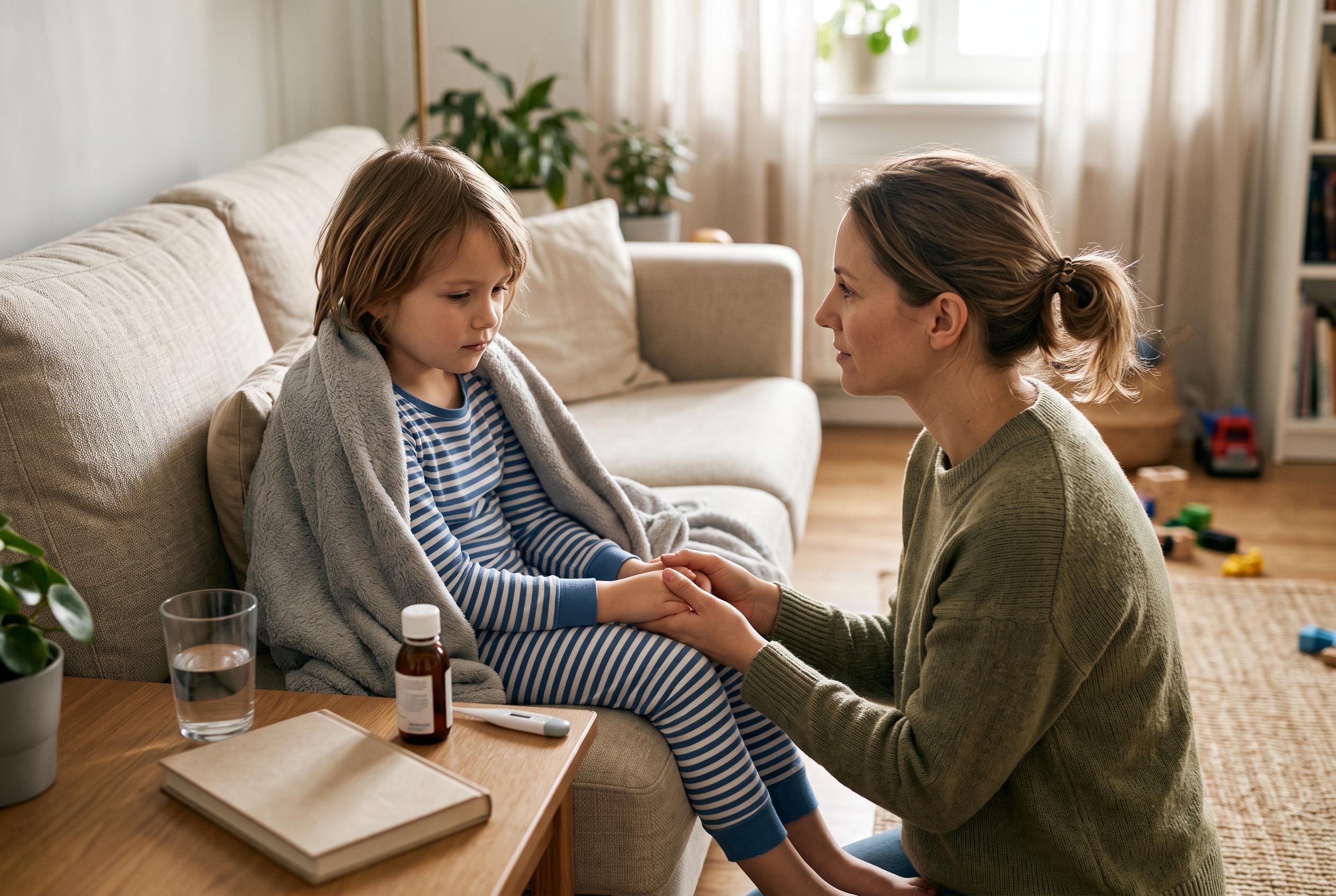
A child who seems more anxious after being ill is not necessarily showing a new psychiatric disorder. More often, the illness has left a temporary mark on the child’s sense of safety, routine, and physical comfort. Pain, poor sleep, fatigue, missed school, and worry about symptoms returning can all make children more clingy, irritable, or fearful. In many cases, the anxiety fades as the child regains strength and normal daily life resumes.
That said, anxiety can also overlap with physical symptoms in ways that make the picture harder to read. A racing pulse, nausea, dizziness, sweating, trembling, shortness of breath, or exhaustion may look like anxiety, but they can also reflect an underlying medical problem. The reverse is true as well: anxiety itself can produce body symptoms that seem alarming. Clinicians generally need to look at the order in which symptoms appeared, whether they are still present, and how far the child has moved from their usual baseline.
Returning to school often brings the issue into sharper focus. Children may worry about catching up academically, explaining an absence to friends, or coping without a parent close by. Younger children, in particular, may not be able to describe what they feel in clear terms and may instead refuse school, become unusually dependent, or avoid activities they once enjoyed. According to guidance from paediatric and mental health organisations, persistent anxiety that interferes with sleep, eating, school attendance, or family life deserves closer assessment.
Doctors are especially alert when anxiety appears suddenly and is accompanied by other changes, such as obsessive thoughts, restricted eating, tics, cognitive difficulties, sleep disruption, urinary symptoms, emotional volatility, or a sharp drop in school performance. The National Institute of Mental Health says PANDAS is marked by a sudden onset of obsessive-compulsive symptoms or tics after a streptococcal infection, while public health and hospital guidance on PANS describes a broader syndrome in which abrupt psychiatric symptoms develop together with other neuropsychiatric features. Specialists stress that these conditions are diagnoses of exclusion and should not be assumed simply because a child was recently unwell.
The question of infection is especially sensitive because overlap does not prove causation. The South Carolina Department of Public Health, Children’s National, and the Child Mind Institute all note that PANS and PANDAS require careful evaluation because many childhood illnesses can be followed by behavioural changes without being the direct cause. Lyme disease is another condition sometimes considered when anxiety appears alongside headaches, fatigue, joint pain, facial weakness, dizziness, or other compatible signs. But anxiety alone is not enough to point to Lyme disease, and the presence of an infection does not by itself explain a child’s emotional symptoms.
What matters most is the whole clinical picture. A child who develops anxiety after being ill may simply be struggling with recovery, disrupted routines, and fear of getting sick again. But if the change is abrupt, severe, or clearly out of character, or if it comes with physical, neurological, or cognitive symptoms, further medical evaluation is sensible. New confusion, seizures, severe headache with neck stiffness, progressive weakness, loss of consciousness, hallucinations, or dangerous food or fluid restriction should prompt urgent attention. In other words, the timing of the anxiety is important, but the accompanying symptoms are what help determine whether the child needs reassurance, follow-up, or a broader work-up.
Disclaimer: This content is for informational purposes only and is not intended to be a substitute for professional medical judgment, advice, diagnosis, or treatment.



