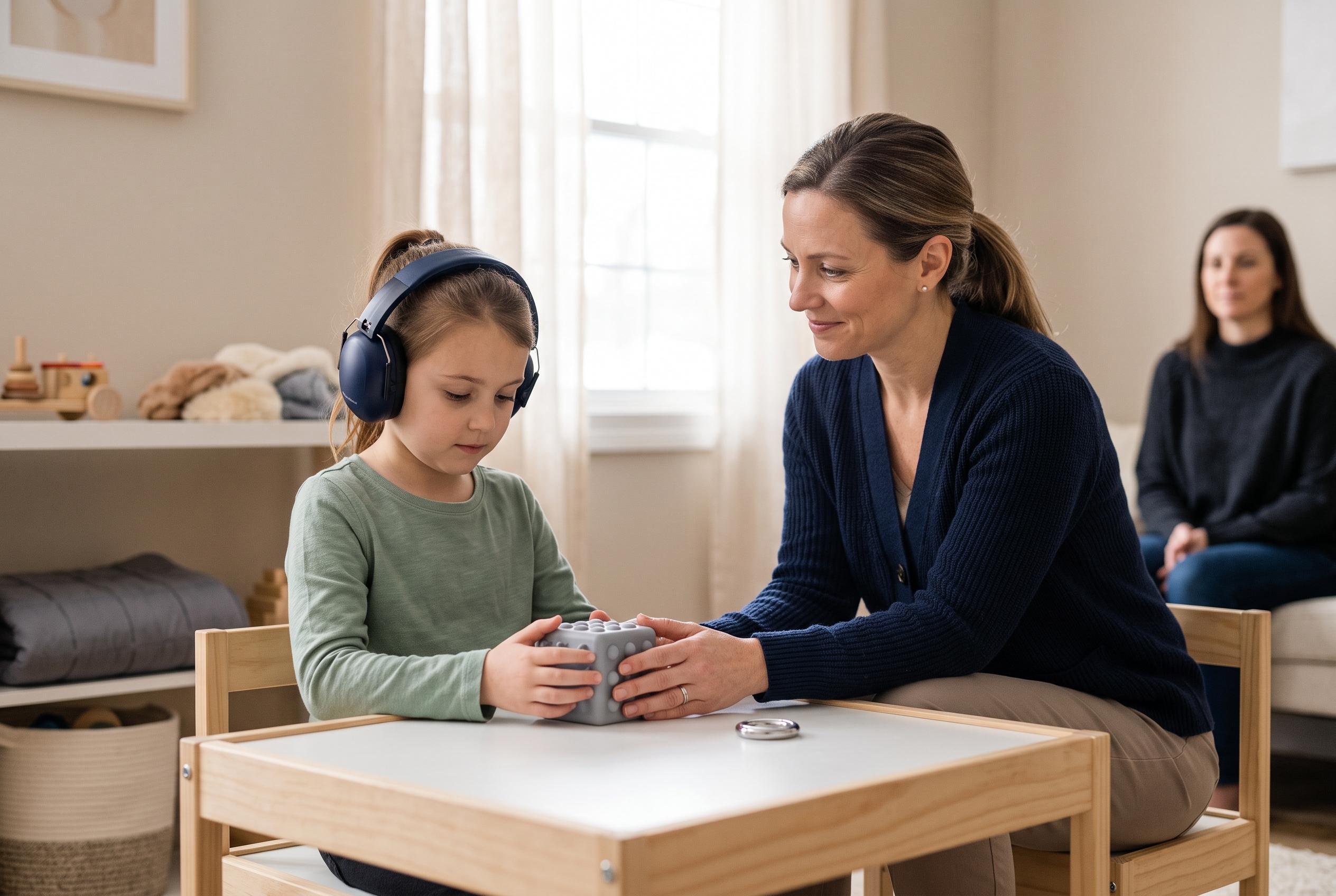

A UCLA study reveals that teaching autistic children to describe tactile sensations objectively can reduce sensory brain activity and potentially improve their emotional regulation, offering a new approach to managing sensory overload.
A simple classroom-style exercise that teaches autistic children to describe what they sense like a reporter may help calm the brain’s response to uncomfortable touch, according to a UCLA Health study published in the Journal of Child Psychology and Psychiatry. Researchers say the technique, which they call cognitive reappraisal, asked children to focus on facts rather than on distress, with MRI scans showing reduced activity in sensory brain regions when they used the approach.
The study included 47 autistic children and teenagers, along with 45 typically developing peers, aged eight to 15. While the participants were in an MRI scanner, researchers rubbed unpleasant textures such as artificial grass and scratchy wool on their forearms. The children had first been taught the “reporter game”, in which they were encouraged to describe the sensation objectively, as a news reporter might, rather than dwell on how bad it felt.
According to UCLA, autistic participants showed a significant drop in activity in sensory areas of the brain when they used the reporter game compared with trials in which they simply concentrated on the texture itself. Both groups also showed greater activity in frontal brain regions involved in regulating emotion, although the effect was stronger in older autistic children than in younger ones, Medical Xpress reported.
Shulamite Green, the senior author and an associate professor-in-residence of psychiatry and biobehavioural sciences at UCLA, said the work moves the field from measuring brain activity towards testing possible treatments. However, the study also found that the autistic children did not rate the textures as less unpleasant, even when their brain patterns changed, suggesting the technique may need more time, practice or real-world testing before it translates into a clearer sense of relief. Green said the method is already part of cognitive behavioural therapy, which could make it easier to fold into existing care for anxiety and emotional regulation.
Disclaimer: This content is for informational purposes only and is not intended to be a substitute for professional medical judgment, advice, diagnosis, or treatment.