

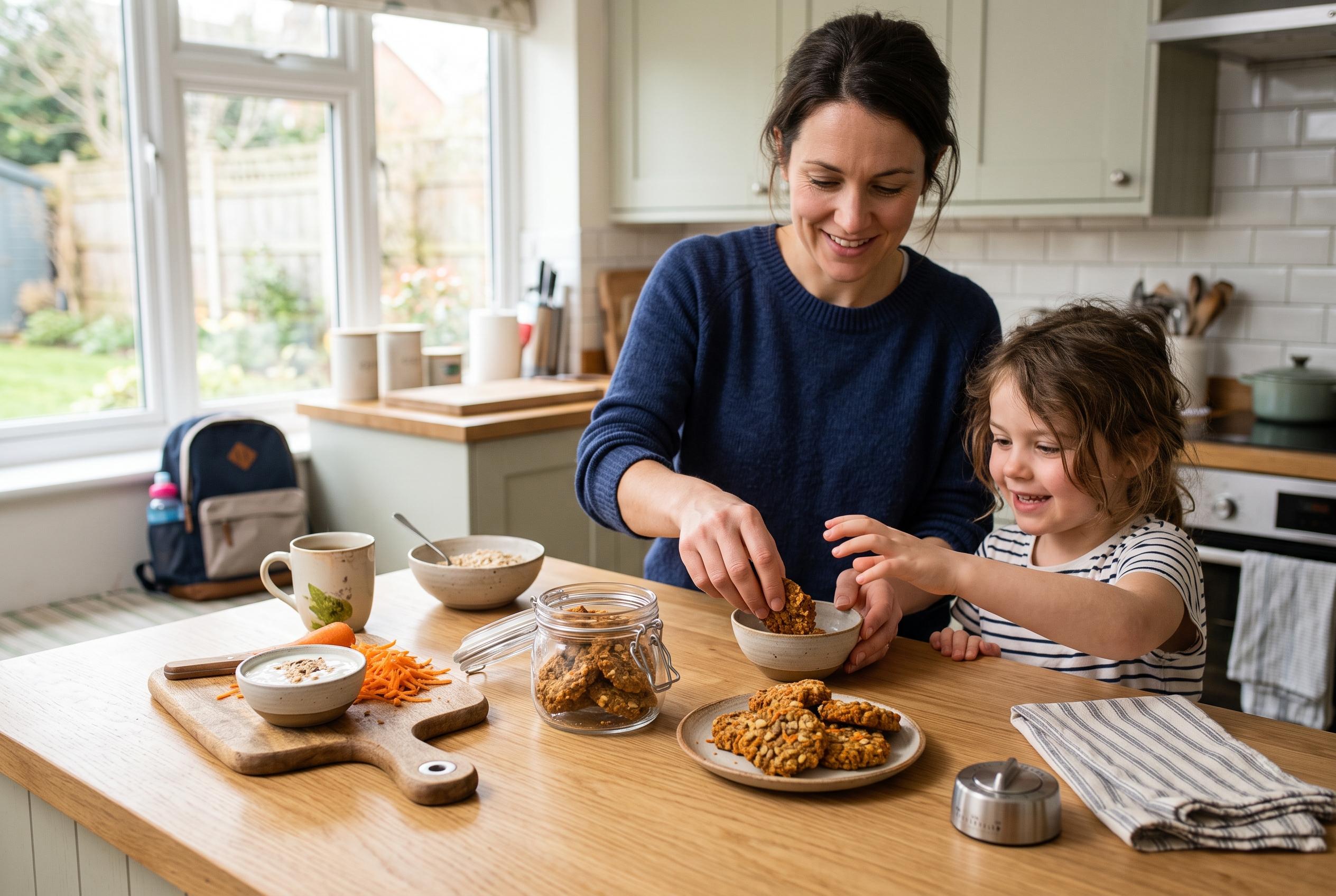

Dietitian and mother Sarah Remmer champions portable, protein-rich carrot cake breakfast cookies as a flexible, wholesome solution for hectic mornings, emphasising customisation and ease of storage.
Carrot cake may not be the first thing most parents think of at breakfast, but Sarah Remmer makes a persuasive case for it in portable form. Her carrot cake breakfast cookies are designed for hectic mornings, blending mashed banana, finely grated carrots, oat flour, whole wheat flour, eggs, cinnamon, ginger and, if desired, chia seeds and walnuts. The result is a soft, lightly spiced cookie that can be eaten with one hand, packed into a lunchbox or pulled from the freezer when the day starts in a rush.
Remmer, who is a dietitian and mother of three, frames the recipe as a practical answer to the reality of family breakfasts, when sitting down for a full meal is not always possible. She argues that a good breakfast cookie should do more than satisfy a sweet tooth: it should bring together carbohydrate, protein, fat and fibre in a format children will actually eat. In her version, the combination of eggs, oats, whole wheat flour, chia seeds and walnuts gives each large cookie nearly 5 grams of protein and about 3 grams of fibre. She also rejects the idea that vegetables need to be concealed from children, saying that involving them in grating carrots, mashing banana or adding glaze can help build familiarity rather than suspicion.
The recipe itself is straightforward and does not require a mixer. Remmer recommends using very ripe bananas for sweetness, finely grating the carrots so they soften evenly, and stirring the wet and dry ingredients together just until combined. The dough is then portioned into generous scoops and baked until lightly firm at the edges. A simple icing-sugar glaze can be added once the cookies have fully cooled, giving them a more dessert-like finish without making them overly sweet. The method is similar in spirit to other carrot cake breakfast cookie recipes found across food sites, which often pair carrots with oats, walnuts, raisins and warm spices for a make-ahead morning bake.
The flexibility is part of the appeal. Remmer offers an egg-free version using chia eggs, as well as a nut-free option for families managing allergies, though she notes that removing walnuts does not automatically make every ingredient safe for school settings. Other recipes in the same category show how adaptable the idea can be: Bob’s Red Mill has a vegan and gluten-free version; Humann’s recipe leans on oats, white whole wheat flour and a protein icing; and Vitacost promotes a gluten- and dairy-free take with coconut, applesauce and maple syrup. Taken together, the recipes suggest that breakfast cookies are less a novelty than a practical template that can be tailored to different diets and pantry staples.
Remmer’s storage advice makes the recipe especially useful for busy households. The cookies keep for a couple of days at room temperature, several days in the fridge and up to three months in the freezer if left unglazed. They can be served on their own or alongside yoghurt, milk, fruit, cottage cheese, nut or seed butter, or a boiled egg. In other words, they are not meant to be a perfect breakfast solution, only a helpful one. For parents trying to get everyone out the door fed and reasonably content, that may be enough.
Disclaimer: This content is for informational purposes only and is not intended to be a substitute for professional medical judgment, advice, diagnosis, or treatment.



