

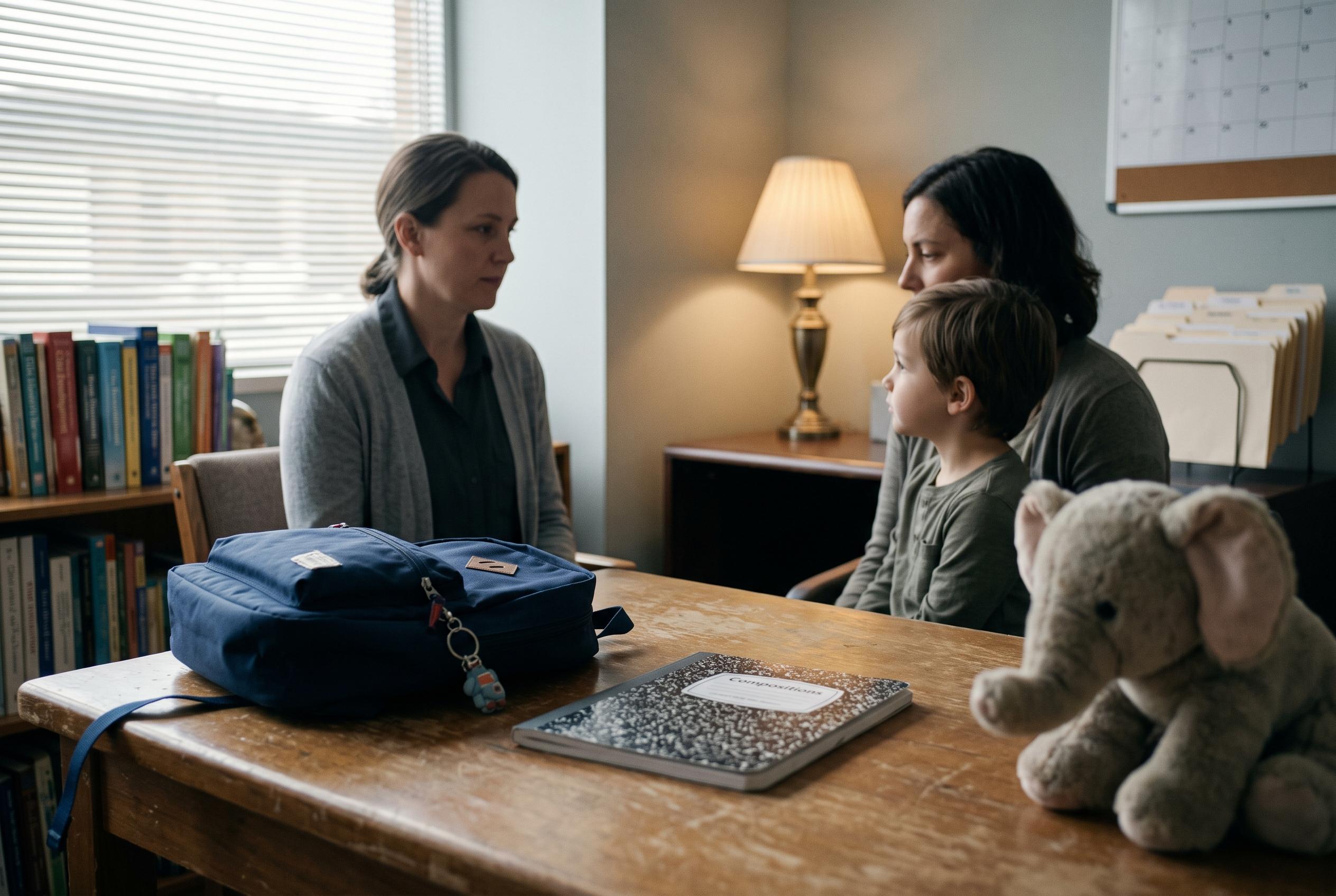

The rise and fall of the ‘psychopathic child’ label illustrates how psychiatry’s understanding of childhood deviations has evolved, reflecting broader social and institutional changes over time.
The idea of a “psychopathic child” once carried real weight in child psychiatry, but it now belongs more to medical history than to modern diagnosis. Jesper Vaczy Kragh argues that its rise and fall reveal something larger than one abandoned label: they show how psychiatry has repeatedly redefined childhood difference according to the concerns of its time. Historical studies of child psychopathy, including research indexed by PubMed, show that the term was applied to a wide range of behaviours that deviated from social expectations, from restlessness and impulsivity to school failure and wider conduct problems.
That breadth mattered. The diagnosis was never confined to the violent or the overtly criminal, despite the associations the word carries today. In practice, it could be used for children who were difficult to manage, judged morally suspect, or simply unable to fit the standards imposed by school, family and institution. Research on the history of psychopathy in child and adolescent psychiatry suggests that this flexibility made the term useful to clinicians and administrators trying to make sense of behaviour that did not fit neatly into other categories. A separate review of the topic for the Association for Child and Adolescent Mental Health notes that later debates about child psychopathy became increasingly focused on particular traits, but earlier definitions were far broader.
Kragh’s account also highlights a basic historical difference that is easy to miss: childhood mental disorder was once treated as uncommon, and child psychiatry largely concerned itself with exceptional cases. In the early and mid-twentieth century, the field often centred on children already visible to authorities, especially those in orphanages, reformatories and other institutions. A recent study of Danish child psychiatry found that psychopathy was central to the development of the discipline there, helping clinicians and policymakers focus on children seen as deviant or socially disruptive. The category became a way to classify not only symptoms, but social unease.
That older model contrasts sharply with the present. Today, diagnoses such as ADHD and autism are part of everyday language, and many children are assessed within ordinary schools and family settings rather than in closed institutions. Historical work on ADHD and autism has shown that the children were present long before the diagnoses were widely recognised, but the interpretive frameworks were different. The challenge, as Kragh suggests, is not to retrofit modern labels on to the past, but to understand why earlier generations found other explanations more convincing.
The shift was not only clinical but institutional. Earlier psychiatrists often saw removal from the home and placement in specialised facilities as a practical answer to behavioural disturbance. More recent approaches tend to stress inclusion, family involvement and support in the community. That change reflects a wider transformation in attitudes to childhood, expertise and the role of the state. It also shows how strongly ideas about treatment are shaped by assumptions that later generations may no longer share.
There is a caution here for modern psychiatry. Research on the decline of the psychoneurosis framework in American child and adolescent psychiatry suggests that diagnostic systems do not merely evolve because of new evidence; they also lose older developmental and contextual ways of thinking. In that sense, the disappearance of psychopathy from child psychiatry is not just a story about progress. It is also a reminder that diagnostic language can narrow as well as clarify, and that the context surrounding a child’s behaviour may be as important as the label attached to it.
For that reason, the history of the psychopathic child still matters. It shows how quickly a category once treated as self-evident can become obsolete, and how much psychiatry depends on the cultural expectations of the day. The children in these records were real, and so were the anxieties they provoked. But the words used to interpret them belonged to another era. That distance ought to encourage caution whenever a contemporary diagnosis starts to feel permanent.
Disclaimer: This content is for informational purposes only and is not intended to be a substitute for professional medical judgment, advice, diagnosis, or treatment.



