

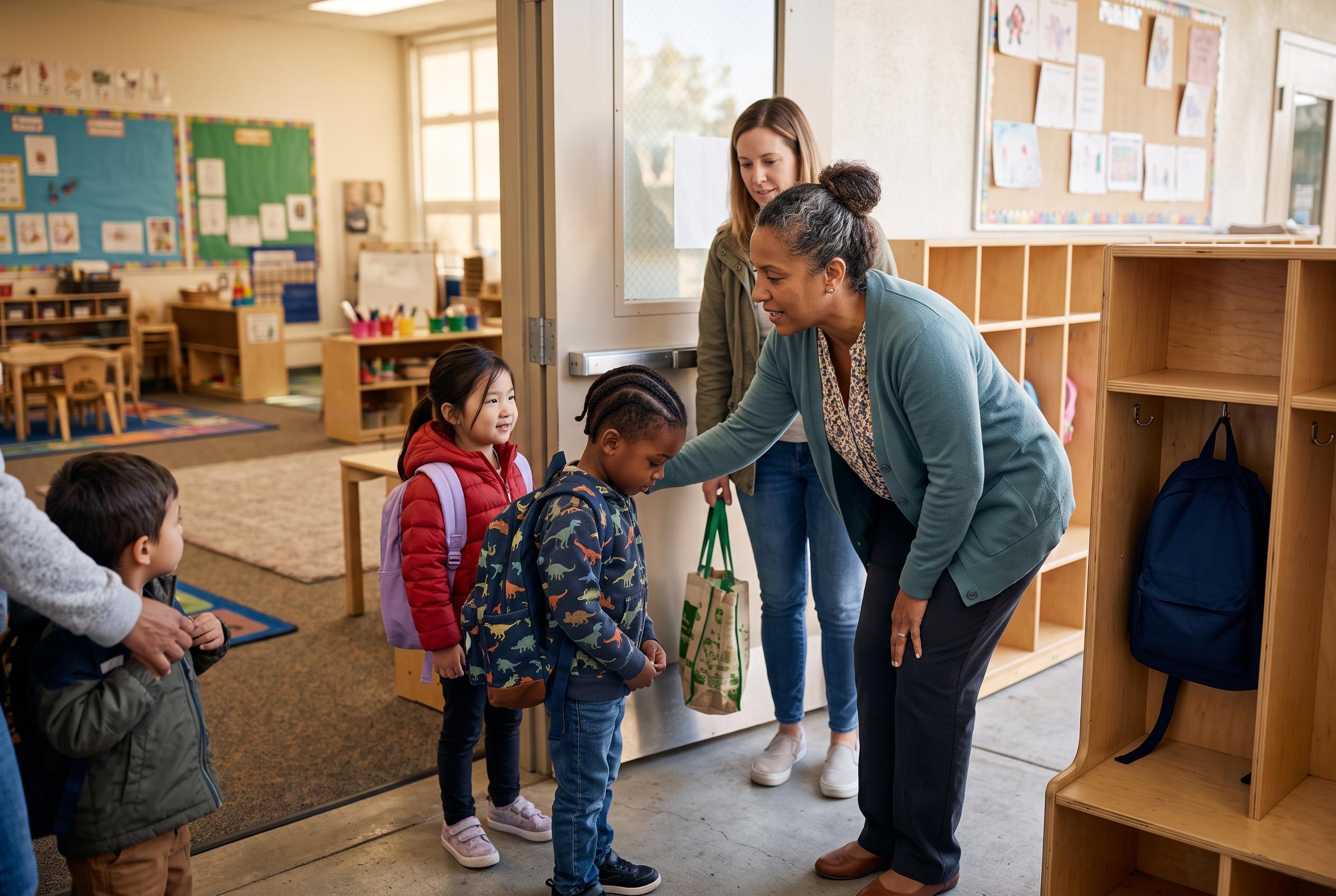

California’s transitional kindergarten and kindergarten students face troubling high rates of chronic absenteeism, prompting targeted strategies to improve attendance and address foundational learning gaps amid ongoing challenges following the pandemic.
California’s youngest pupils are still missing school at troubling rates, even as the state’s overall chronic absenteeism picture continues to improve. Data highlighted by EdSource shows that about 24% of transitional kindergarten and kindergarten students were chronically absent in the 2024–25 school year, a level well above the 19% rate for all students. Public Policy Institute of California figures released alongside that reporting put the combined TK-to-grade 8 rate at 23% for the youngest children, second only to high school students. The pattern matters because chronic absenteeism is generally defined as missing at least 10% of the school year, or about 3.5 weeks in a typical 180-day calendar.
Education experts say the reasons are often understandable at first: young children get sick more easily, families are still building routines, and some parents do not yet see daily attendance as essential in the early grades. Yet researchers and school leaders warn that missed days add up quickly. According to the California Department of Education, the state’s chronic absenteeism rate fell to 19.4% in 2024–25 from 30% in 2021–22, but it remains well above pre-pandemic levels. That broader improvement has not erased the concern that absenteeism in transitional kindergarten and kindergarten can interrupt the foundational learning that shapes later reading and maths performance.
Roseville City School District, near Sacramento, offers one example of how districts are trying to respond. The district used letters, attendance graphics and follow-up calls to remind families how quickly absences can accumulate, while also explaining that children who are only mildly unwell may still be able to attend. Jessica Hull, the district’s executive director of communication and community engagement, said families often do not keep track of the total number of days missed, which means schools have to make the risk visible. The district’s overall chronic absenteeism rate dropped from nearly 26% in 2021–22 to 10.5% in 2024–25, even as enrolment grew, according to state data.
But the youngest children remained a particular challenge. At one point, Roseville City’s TK and kindergarten chronic absence rate was 11 percentage points higher than the rest of the district, prompting staff to focus more closely on the early grades. The district has since tailored letters to individual students, spelling out how many days they have already missed and what that means for their attendance trajectory. Kara Stern, education director at SchoolStatus, said the company’s experience across California districts suggests that contacting families after three to five absences is more effective than waiting until a pattern is firmly established. SchoolStatus says its data from the 2025–26 school year point to improvement in the districts it works with, including lower chronic absenteeism rates among TK and kindergarten students.
The coming autumn should offer a clearer test of whether those efforts are working more broadly. California is due to release new absenteeism data for the 2025–26 school year, the first year in which transitional kindergarten was widely available to all families. Educators will be watching closely to see whether the youngest pupils continue to lag behind or whether earlier intervention, clearer communication and stronger attendance habits are beginning to shift the trend.
Disclaimer: This content is for informational purposes only and is not intended to be a substitute for professional medical judgment, advice, diagnosis, or treatment.



