

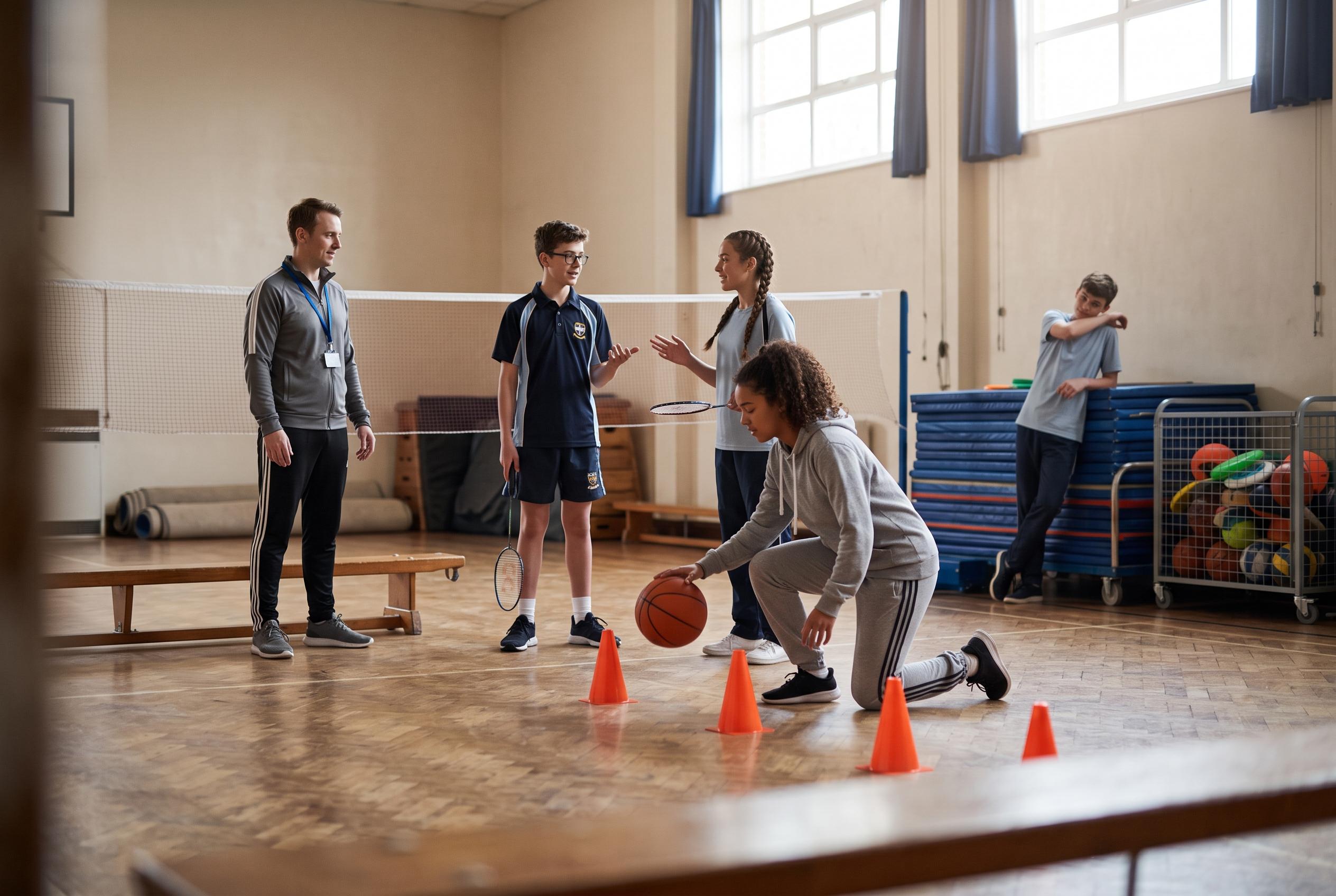

A new study reveals that teenagers who perceive their PE teachers as supportive of their choices are more likely to enjoy physical activity and intend to remain active post-school, highlighting the importance of empowering students in PE lessons.
A new study in Frontiers in Psychology suggests that when teenagers perceive their physical education teachers as supportive of choice and initiative, they are more likely to say they want to stay active after finishing school. The research, based on a survey of 1,824 senior high school students in Luoyang, Henan Province, found that this perceived autonomy support was linked not only to stronger exercise intentions, but also to higher enjoyment of physical activity and a stronger sense that exercise was part of who they are.
The study focused on four linked ideas: perceived teacher autonomy support, physical activity enjoyment, exercise identity and intention to be physically active. Researchers reported that students who felt their PE teachers encouraged participation, acknowledged their views and offered more freedom tended to score higher on all three of the other measures. In the main model, perceived autonomy support had a positive direct association with intention to be active, and it also showed indirect associations through both enjoyment and exercise identity.
Enjoyment and identity both appeared to matter in their own right. The authors found that students who said they enjoyed activity more were also more likely to describe exercise as part of their self-image, and both of those factors were associated with stronger intentions to remain active after graduation. A serial pathway was also identified, with autonomy support linked to enjoyment, enjoyment linked to exercise identity and exercise identity linked to intention. However, the reverse ordering, with exercise identity before enjoyment, fit the data just as well.
That caution is important. Because the research was cross-sectional, meaning it captured responses at one point in time, it cannot show that one factor caused another or prove a single timeline. The authors said the findings point to a statistical association, not a unique causal chain, and they stressed that the outcome was an intention to stay active rather than measured physical activity itself.
The study also has practical implications for schools. The authors suggest that PE lessons which give students meaningful choice, explain the purpose of activities clearly, use supportive rather than controlling language and offer varied, appropriately challenging tasks may help build both enjoyment and exercise identity. They also note that future research should test these ideas over time and examine whether stronger intentions translate into actual activity after graduation, rather than stopping at self-reported willingness.
Disclaimer: This content is for informational purposes only and is not intended to be a substitute for professional medical judgment, advice, diagnosis, or treatment.



