

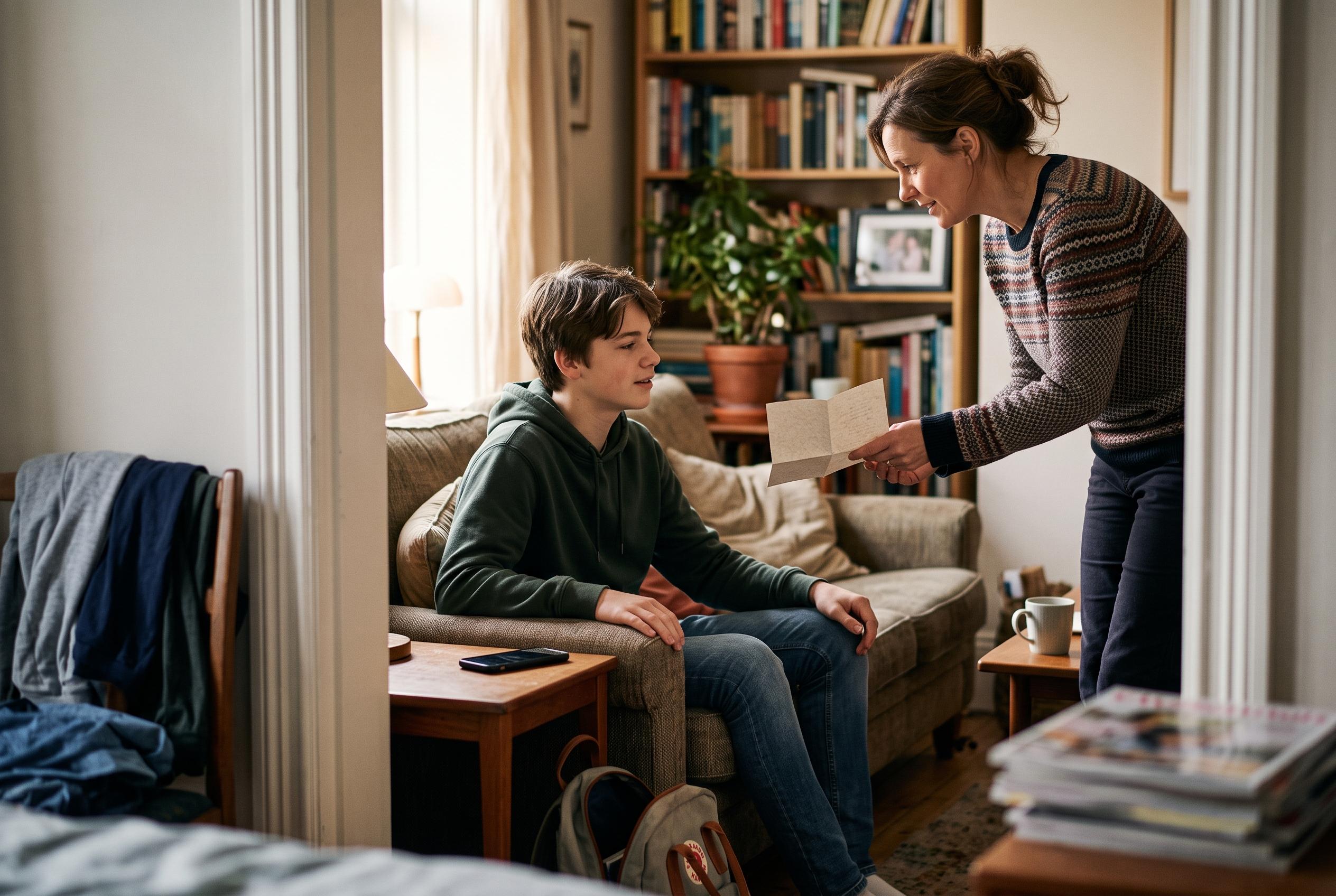

A new report highlights the ‘bedroom generation’ in England, emphasising that meaningful, accessible offline activities, tailored to young people’s interests, are key to reconnecting teenagers with real-world experiences and reducing their reliance on screens.
Teenagers who retreat to their bedrooms are not always rejecting the world; often, they are reacting to the version of it on offer. For parents and teachers, the harder task is not simply to reduce screen time, but to make ordinary life feel worth stepping into. That means starting with the interest beneath the behaviour: strength, confidence, friendship, independence, adventure or a sense of competence, then finding a real activity that speaks to that wish.
A report from the Centre for Social Justice, published in September 2026, gives that challenge some shape. It describes a “bedroom generation” in England, saying that more than a third of 15-year-olds hardly ever leave their bedrooms except for school, nearly one in five spend no evenings out with friends, and almost a quarter spend at least six waking hours in their rooms on a typical weekend day. Yet the same research found that three in four want to spend more time doing things outside the home. The figures do not prove that phones caused the retreat, but they do suggest a gap between what young people are doing and what many of them would prefer to do.
That gap matters because “get off your phone” is only an instruction about what to stop. It does not answer the more practical question of what should come next. A teen who is told to log off still needs somewhere to go, someone to go with, and a reason to believe they will feel welcome there. If the alternative to scrolling is boredom, correction or embarrassment, then adults have not really solved the problem. The better question is what kind of offline life is being invited.
Research suggests that participation grows when young people feel competent, connected and able to make choices. A systematic review of 34 qualitative studies in physical education found that students were more likely to join in when they felt capable and included, and less likely to engage when teasing or undermining teaching damaged that sense of belonging. A separate 2023 review of nine out-of-school physical-activity programmes found no clear overall improvement in activity levels, which is a reminder that a promising framework is not the same as a guaranteed result. In practice, the message for adults is to be curious rather than forceful: ask what a child actually wants to be able to do, then build from there.
That approach also fits the wider evidence on movement. The World Health Organisation says physical activity supports fitness, bone health, muscle development, motor skills, thinking and mental health in children and teenagers. It includes walking, cycling, active play and recreation, not just organised sport. That broader view matters because many young people do not want a fitness identity or a competitive team; they want to feel good in their bodies, enjoy time with others or simply have a low-pressure way to begin. An ordinary walk, a stretch session or a shared outing can be a useful start.
Belonging, though, is not just about the activity itself. It is also about the setting. Irish research published by the Economic and Social Research Institute in September 2026 found that school absence had risen in recent years and was linked to a range of individual, family and school factors, including socio-emotional difficulties, not enjoying school, financial strain and weaker relationships with teachers. The report also suggested that schools which involved students more in decision-making tended to have lower absence rates. That does not mean choice alone solves disengagement, but it does reinforce a simple point: when children feel excluded or unheard, they are less likely to show up.
The physical environment matters too. Research from the ESRI found that higher absence was not evenly spread across families and was associated with wider disadvantage, while a separate study on outdoor play in the United States showed that safety, childcare attendance, urban living and family circumstances all influenced how often young children played outside. Those findings are about different age groups, but they point in the same direction: access is shaped by surroundings, not by motivation alone. Not every family has a safe beach, a nearby park, transport or money for classes. Advice that ignores those realities risks turning access into another test parents are expected to fail.
That is why practical invitations work better than abstract lectures. If a teenager wants more strength, a supervised gym session or a home routine with proper guidance may be more effective than a speech about discipline. If they want confidence, a beginner-friendly movement class, a dance session or a balance challenge may be a better entry point. If they want time with friends, a walk, a shared game or a small group activity may do more good than another reminder to look up from a screen. The invitation should be real, affordable and small enough to try.
There is also room to recognise that screens are not always the enemy. Research published in 2026 on a co-designed online yoga nidra programme for autistic children found that the home-based format could make participation easier, even though the small pilot did not show clear anxiety improvements. The study is a useful reminder that digital tools can sometimes serve as a bridge into activity rather than a barrier to it. For some children, especially those with disability or sensory needs, the challenge is not to remove technology altogether, but to use it in ways that support access and comfort.
The same principle applies in school and class settings. A more effective room is one where children can choose between solo, paired and group work, where mockery is not tolerated, and where a child can influence the activity in a meaningful way. Success should be measured by what they discover, not by comparison with others. Progress may mean asking for help, trying a different position, choosing a pause or finding a way to join in that suits their body. Adults do not have to occupy every moment of the lesson; they do have to make sure the space itself feels safe enough to enter.
For families, the most useful shift may be from argument to invitation. Instead of repeating “put the phone down”, it helps to ask what the young person would actually like to try, then offer two realistic choices that connect to that interest. A short gym visit, a beach walk, a quiet stretch, a shared meal, a music session or a simple outing with a friend can all count as life, not just as screen-free time. Not every invitation will work, and not every teen will take it. But if adults want children out of their bedrooms, they need to offer more than removal. They need to offer something worth opening the door for.
Disclaimer: This content is for informational purposes only and is not intended to be a substitute for professional medical judgment, advice, diagnosis, or treatment.



