

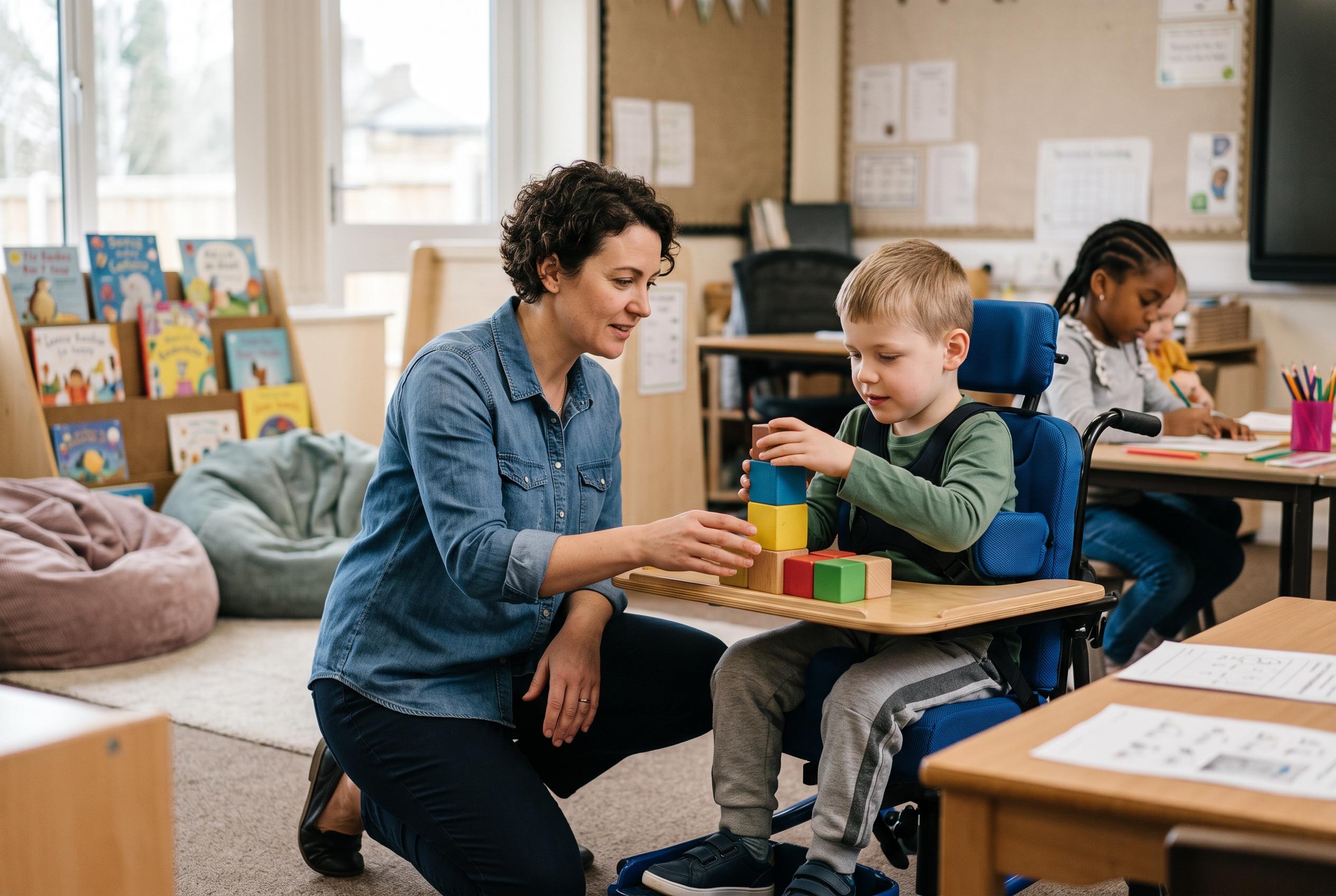

Parents and educators are urged to focus on individual needs and support arrangements in inclusive education, ensuring that all children with disabilities can genuinely access and benefit from mainstream classrooms with appropriate supports.
Parents of children with disabilities are often told that general education is the starting point, but that does not mean it is a one-size-fits-all answer. Under the Individuals with Disabilities Education Act, school teams must first ask what a child needs and then decide how those services should be delivered. As Frances Shefter writes in her special education series, the question is not whether a child should simply be placed in a mainstream classroom and left to cope, but whether that classroom, with the right supports, can provide a free appropriate public education.
That distinction matters because the least restrictive environment is a legal principle, not a slogan. IDEA requires schools to educate students with disabilities alongside their non-disabled peers to the maximum extent appropriate, and that obligation includes considering whether the child can learn in general education with special education services, related services and supplementary aids. According to disability-rights guidance, those aids can include structured learning environments, adapted materials, behavioural supports, classroom assistance and other measures designed to remove barriers to learning. Inclusion, advocates note, is about meaningful participation, not just being physically present in the room.
A general education placement can still include specialised instruction delivered in different ways. As Shefter explains, families may hear the terms “push-in” and “pull-out”. Push-in services take place inside the general education classroom, while pull-out services happen elsewhere, often in a smaller setting. The point, however, is not the label. The IEP team should decide first how much support a child needs, then determine whether that support belongs inside the classroom, outside it, or in a combination of both. The frequency and length of each session should flow from the child’s needs, not from the school timetable.
That approach is especially important for children with significant academic needs, including those working towards an alternate certificate rather than a diploma. A certificate track does not automatically make general education inappropriate. The team may conclude that a student should join non-disabled peers for part of the day, such as electives or selected academic subjects, while receiving modified instruction or added supports in those settings. The critical issue is individualisation. Two students may both be in general education, yet their school days may look entirely different depending on what each needs to access instruction.
Supplementary aids and services also play a central role, but they are not a substitute for specialised teaching. A child who needs explicit reading intervention, for example, may also need visual supports, extra processing time, assistive technology or reduced distractions. Those supports can help the student participate, but they do not replace direct instruction in the skill that is causing difficulty. As resources on special education placement and service delivery note, families should look closely at the full IEP, not just the placement line, because the real question is whether the plan is designed to produce educational progress.
Once services are in place, the next question is whether they are working. Shefter advises parents to look beyond grades and ask whether their child is making meaningful progress towards goals, whether the services are being delivered as written and whether the child is truly able to access classroom instruction. A student may receive passing marks while relying heavily on adult prompting, repeated reteaching or extensive modifications. In that case, the grades may tell only part of the story. If the current mix of supports is not effective, the team may need to change the service model or consider a more specialised setting.
For families, the practical takeaway is straightforward: the words “general education” mean little on their own. What matters is the substance of the IEP, the supports attached to it and the degree to which the school is meeting the child’s individual needs. General education with supports can be the right placement, but only if it gives the student genuine access to learning and real opportunity to make progress.
Disclaimer: This content is for informational purposes only and is not intended to be a substitute for professional medical judgment, advice, diagnosis, or treatment.



