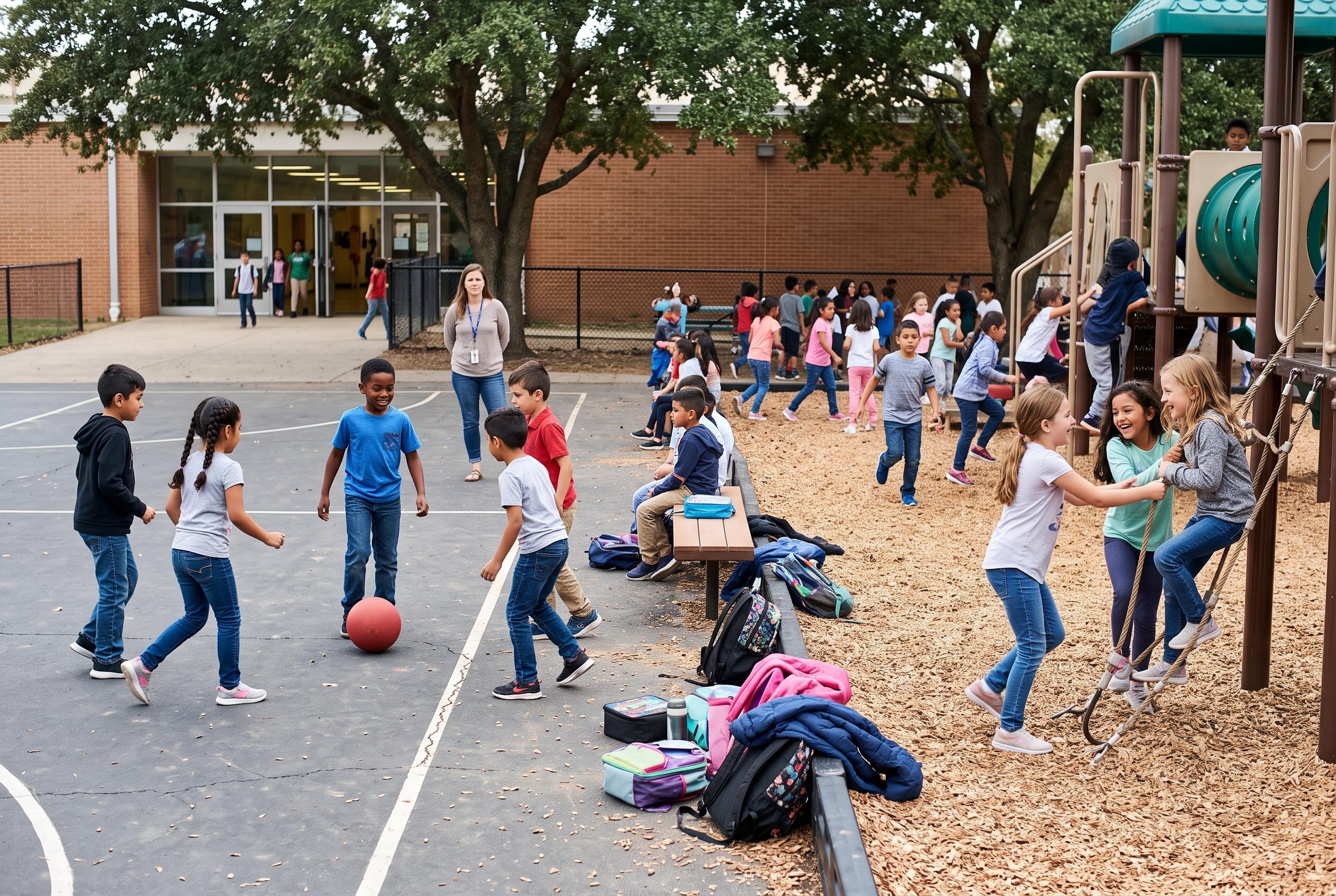

The American Academy of Paediatrics has emphasised that recess should be a protected, integral part of the school day from kindergarten to Year 12, highlighting its vital role in supporting social, emotional, physical and cognitive development amidst concerns of diminished access and varying quality.
The American Academy of Paediatrics has renewed its case for recess, saying the break should be treated as a regular, protected part of the school day rather than something to be trimmed away when time is tight or behaviour becomes difficult. In its 2026 policy statement, the academy said recess supports social, emotional, physical and cognitive development, and should not be withheld for academic or punitive reasons. The updated guidance also reflects a broader view of recess that applies from kindergarten through Year 12, in line with the Centres for Disease Control and Prevention’s definition of a scheduled period for active, peer-based play.
The revision matters because it draws together a large body of research on how children and adolescents learn. According to the policy statement published in Pediatrics, the academy reviewed more than 100 sources spanning neuroscience, education and school health. The evidence it cites points to benefits from “wakeful rest”, the pause after learning that may help new information settle into memory, as well as from physical activity, which has been linked to better attention, information processing and recall. The academy also said peer engagement during recess gives students a daily chance to practise negotiation, communication and problem-solving in ways that structured lessons do not always allow.
The statement places strong emphasis on quality as well as access. Recess, it says, should be a child’s personal time, and it should not be treated as a reward or a punishment. The academy also argues that recess and physical education are not interchangeable: physical education offers structured instruction, while recess gives children more freedom to choose how they move, socialise or rest. That distinction has been highlighted in the academy’s own news coverage of the policy, which also notes the importance of trained supervision and inclusive spaces so that all students can benefit from the break.
Timing appears to matter too. The policy statement cites research suggesting that multiple breaks during the day, with at least 20 minutes of recess, may offer the best results for learning and wellbeing. It also notes that recess before lunch can improve meal consumption, reduce behaviour problems and help children return to class more settled. The academy warns that access is not equal: some students, particularly those from marginalised backgrounds, receive less recess or are more likely to lose it altogether. For teachers, therapists and parents, the message is clear. Recess is not wasted time. Used well, it can help students return to lessons more focused, calmer and ready to learn.
Disclaimer: This content is for informational purposes only and is not intended to be a substitute for professional medical judgment, advice, diagnosis, or treatment.