

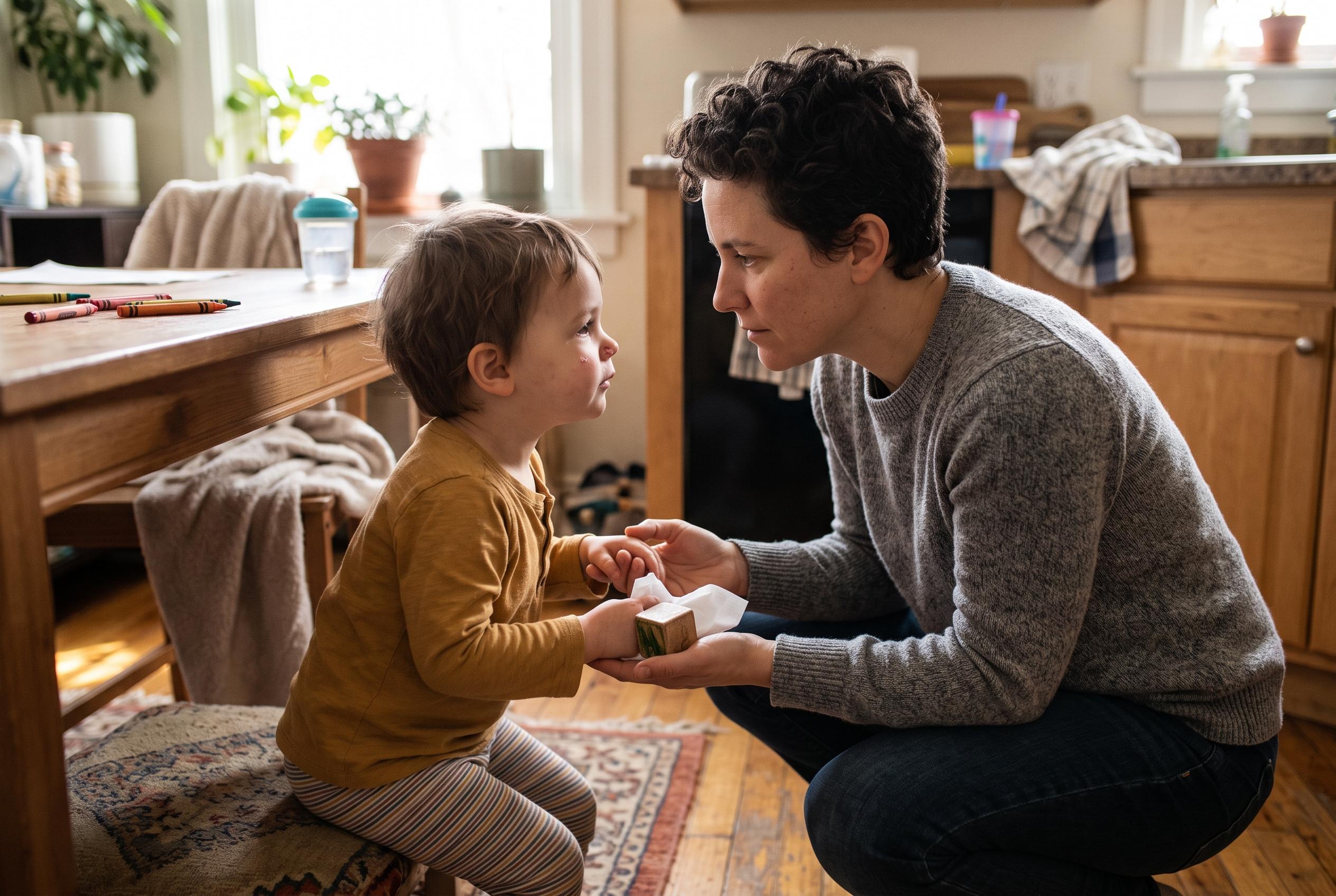

A personal essay highlights how the way parents respond after conflict, particularly anger, shapes children’s emotional resilience and attachment, emphasizing repair over perfection.
One sharp moment in a supermarket can expose something larger than the broken item on the floor. In a personal essay for Psychology Today, Dogan Alpaslan Demir describes snapping after a glass bottle slipped from a child’s hand, then feeling the familiar rush of shame that often follows a parental outburst. The turning point came in the car, when the writer realised that anger itself was not the problem; the real question was how a parent returns from it.
That distinction matters because family life is not built on perfect calm. As the attachment-focused group Attachment Trauma Network notes, relationships between parents and children are constantly marked by small ruptures and repairs. In other words, the bond does not depend on never getting it wrong. It depends on what happens after the misunderstanding, the raised voice or the hurt feeling.
Researchers have long argued that this back-and-forth is central to healthy development. A study published on PubMed found that infants learn emotional regulation through repeated interactions with caregivers who respond promptly and sensitively to distress, and that repairing mismatched states between parent and child helps shape later stress recovery. The point is not flawless synchrony, but a reliable pattern of return.
Demir draws on the work of the late infant researcher Ed Tronick to make a similar argument. The writer says ordinary parent-child pairs are out of step much of the time, and that what matters most is the repair that follows. That is consistent with other writing on attunement, which describes the process as careful emotional tracking rather than constant harmony. Misattunement is inevitable; repair is the skill that gives it meaning.
The article also makes a wider case about what children actually need to learn. Many parents teach kindness, sharing and apology, Demir writes, but far fewer model how to be angry and still stay connected. That gap can leave children believing that conflict is dangerous, that anger must end in collapse or rejection, and that the person who lost control is no longer safe to approach. By contrast, a calm return can show that strong feeling and continued love can exist together.
Other research supports that view. A review on emotion reactivity and regulation from Bath University found that parents who emotionally maltreat children tend to report more negative mood, depression, verbal aggression and anger than non-maltreating parents, underlining why unchecked reactions can damage family life. At the same time, a study on parent-child attunement and adolescent adjustment found that a tuned-in relationship can soften the harm caused by overcontrolling parenting. The broader message is clear: children are shaped not only by the presence of conflict, but by how adults handle it.
What Demir offers is not an argument for excusing bad behaviour. It is an argument for staying present after it. A parent who can say, in effect, “I was angry, I overreacted, and I am still here” gives a child a workable model of repair. That, more than a spotless record, may be what teaches a young person that anger can be survived, relationships can recover, and love does not have to disappear when feelings run hot.
Disclaimer: This content is for informational purposes only and is not intended to be a substitute for professional medical judgment, advice, diagnosis, or treatment.



