

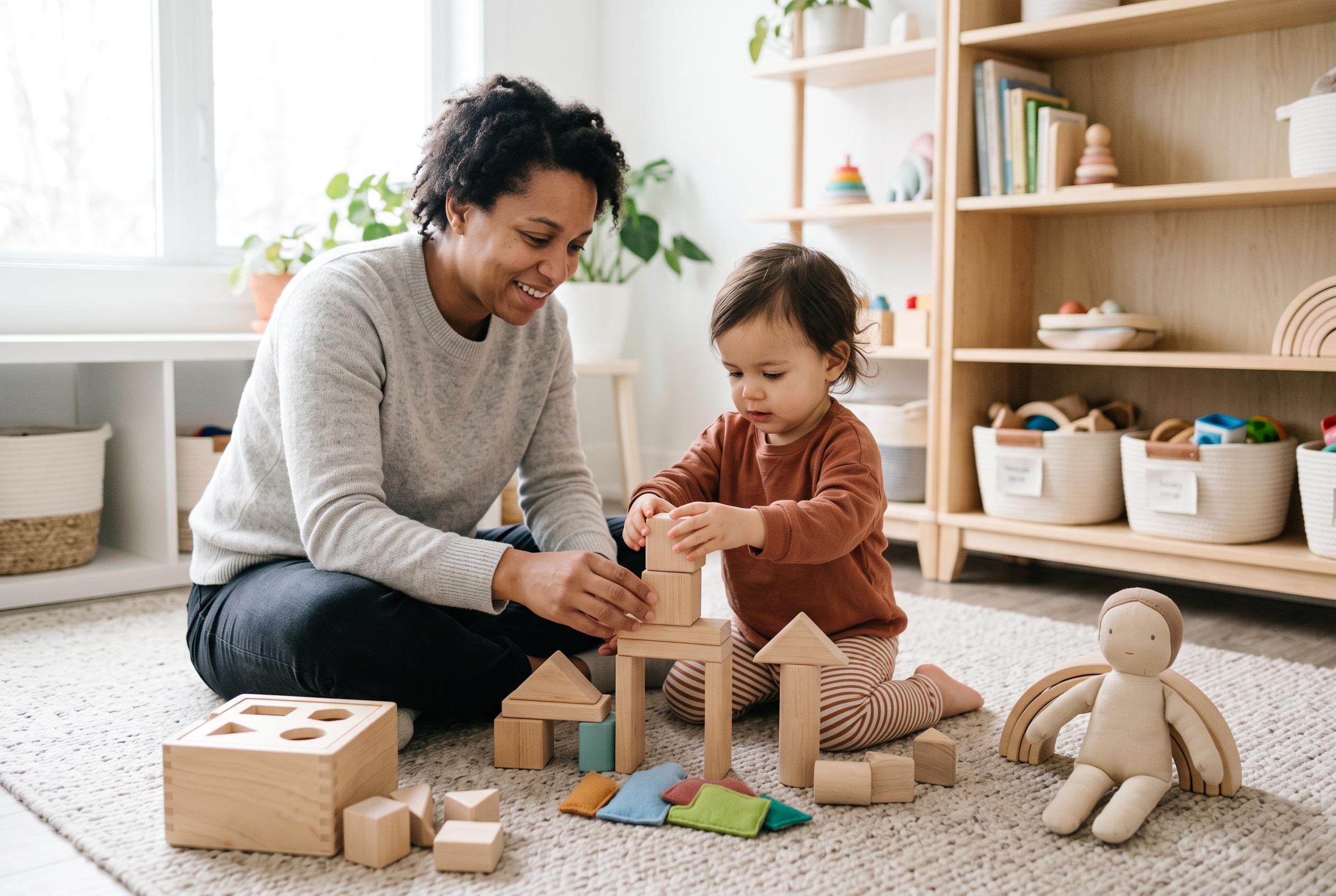

Discover the latest recommendations for the most valuable toys for 3-year-olds, focusing on open-ended play, motor skills, and nurturing early imagination while avoiding toy clutter.
Three is the age when curiosity turns relentless. Questions come thick and fast, language takes off, and play starts to look more purposeful. For parents, it is also the stage when naps can become unreliable, making quiet-time toys especially valuable.
The best toys for 3-year-olds do more than entertain. They support the skills children are building at this age: talking in short conversations, naming what they see, drawing circles, stringing beads, dressing themselves, using a fork and learning to play alongside other children. The most useful options are often the simplest: open-ended toys, a few well-chosen building sets, art supplies, pretend-play props and a handful of games that teach turn-taking.
Quiet time is where open-ended toys earn their keep. Blocks, figurines, costumes and art materials can hold a child’s attention without requiring an adult to sit nearby. Screen-free audio players also fit well into this routine, because they keep the room calm without turning quiet time into screen time. By contrast, puzzles, instruction-based builds and board games are often better saved for when a parent is close at hand.
Gross motor play remains important too. Three-year-olds still need to climb, balance, jump and burn off energy, even indoors. Compact climbing frames, play couches, trampolines, balance beams and similar toys can help channel that movement when outdoor time is limited. Fine motor play matters just as much. Lacing sets, latches, scissors practice, beads and other hands-on activities strengthen the small hand muscles children will later need for writing and cutting.
Open-ended play is one of the strongest themes at this age. Realistic animals, toy sinks, play food, painter’s tape, trains and magnetic tiles can all become part of longer, more elaborate stories. Those toys tend to grow with a child, because they can be used in different ways over time. A simple set of blocks can become a zoo, a garage, a castle or a road system, depending on the day.
Close-ended toys have their place as well. Simple board games and cooperative games help three-year-olds practise rules, patience and turn-taking. Short games work best, and adults should expect some frustration. Still, these early experiences matter because they introduce the idea that play can have structure as well as imagination.
Pretend play becomes more sophisticated around this age. Children start acting out familiar roles such as chef, firefighter, doctor, teacher or parent, and those scenes often reveal what they are processing emotionally. Nurturing toys, dolls, shopping carts and baby-care sets can help children work through separation, empathy and routines from daily life. For many families, those toys also become the ones children return to most often.
Creative play is equally useful. Mess-free colouring, washable paints, reusable activity sheets and simple cutting-and-pasting tools give three-year-olds a safe way to experiment without overwhelming the room. Sensory toys such as sand kits, play-dough sets and tactile bins can be especially effective when a child needs to settle after a busy morning.
Music and audio round out the picture. Songs, stories and simple instruments all suit three-year-olds well, because language is blossoming and rhythm is often easier to explore than formal instruction. Toy microphones, drums, ukuleles, harmonicas and audio players all support that stage in different ways, whether the goal is singing, storytelling or independent listening.
For parents trying to avoid toy overload, the simplest approach is to cover a few categories rather than buying multiple versions of the same thing. One open-ended set, one gross motor option, one art supply, one pretend-play toy and one quiet-time audio player can go a long way. At 3, the best toys are usually the ones that make room for imagination, movement and a little peace and quiet.
Disclaimer: This content is for informational purposes only and is not intended to be a substitute for professional medical judgment, advice, diagnosis, or treatment.



