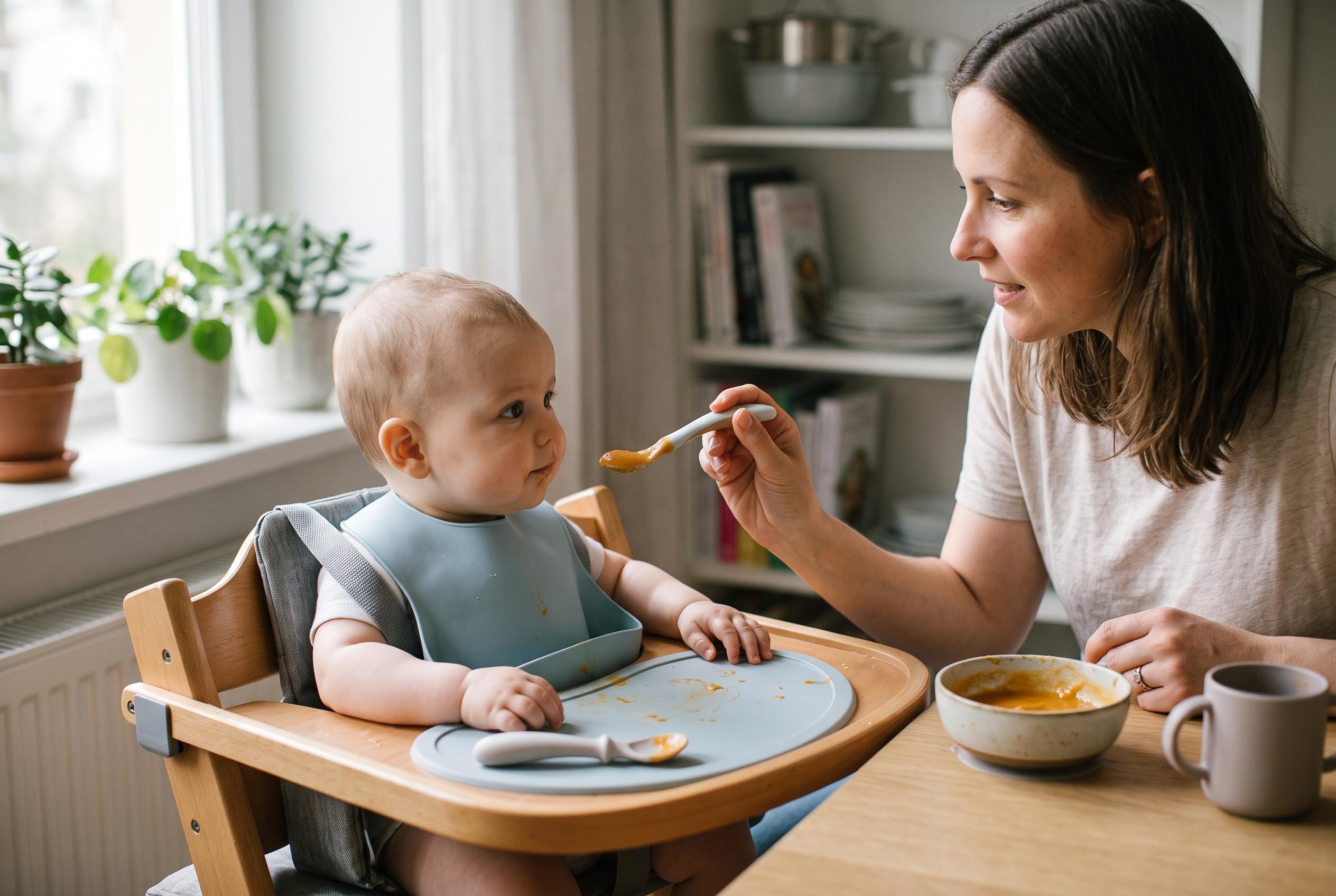

Experts emphasise recognising developmental signs, responsive feeding techniques, and safety measures to help parents introduce solids confidently and safely, beyond just age guidelines.
Starting solids is less about picking a single method than about recognising whether a baby is developmentally ready, responding to their cues and keeping food safe.
Paige Vidrine, a speech-language pathologist and International Board-Certified Lactation Consultant at The Feeding Connection in Saginaw and Keller, says the first signs of readiness include steady head control, the ability to sit with little help and clear interest in what others are eating. HealthyChildren.org and other paediatric guidance echo that message, noting that age alone is not the deciding factor.
Experts also stress that the early weeks are as much about exploration as eating. A baby may look at food, touch it, smell it and only then decide to taste it. That is why family mealtimes matter: babies learn by watching, and responsive feeding helps parents notice when a child leans forward for more or turns away to signal that they are finished.
Vidrine advises parents not to worry if a food is refused at first. Repeated exposure often matters more than immediate acceptance, and a rejected vegetable can become a favourite after many tries. Breast milk or formula should remain the main source of nutrition through the first year, with solid food added alongside it rather than replacing it too soon.
Practical steps can make the transition easier. Small portions reduce overwhelm, and parents can adjust texture or cut food safely by looking up age-appropriate serving methods. Guidance from Pampers and paediatric sources also recommends introducing common allergens such as milk, egg, wheat, peanuts, tree nuts, fish, shellfish, sesame and soy early and regularly, while watching for any reaction and seeking medical advice if one appears.
Gagging at this stage is common and is not the same as choking. Gagging helps move food forward and protect the airway, while choking means food is blocking the airway and there may be no sound. Before starting solids, parents should review infant choking first aid and keep a reminder nearby.
If a baby struggles with textures, gags or vomits excessively, or if feeding feels stressful or stalled, experts advise speaking with a feeding specialist such as a speech-language pathologist or occupational therapist. That support is especially important for babies with weight concerns or developmental delays. The goal, Vidrine says, is to help children move towards safe, confident eating at their own pace.
Disclaimer: This content is for informational purposes only and is not intended to be a substitute for professional medical judgment, advice, diagnosis, or treatment.