

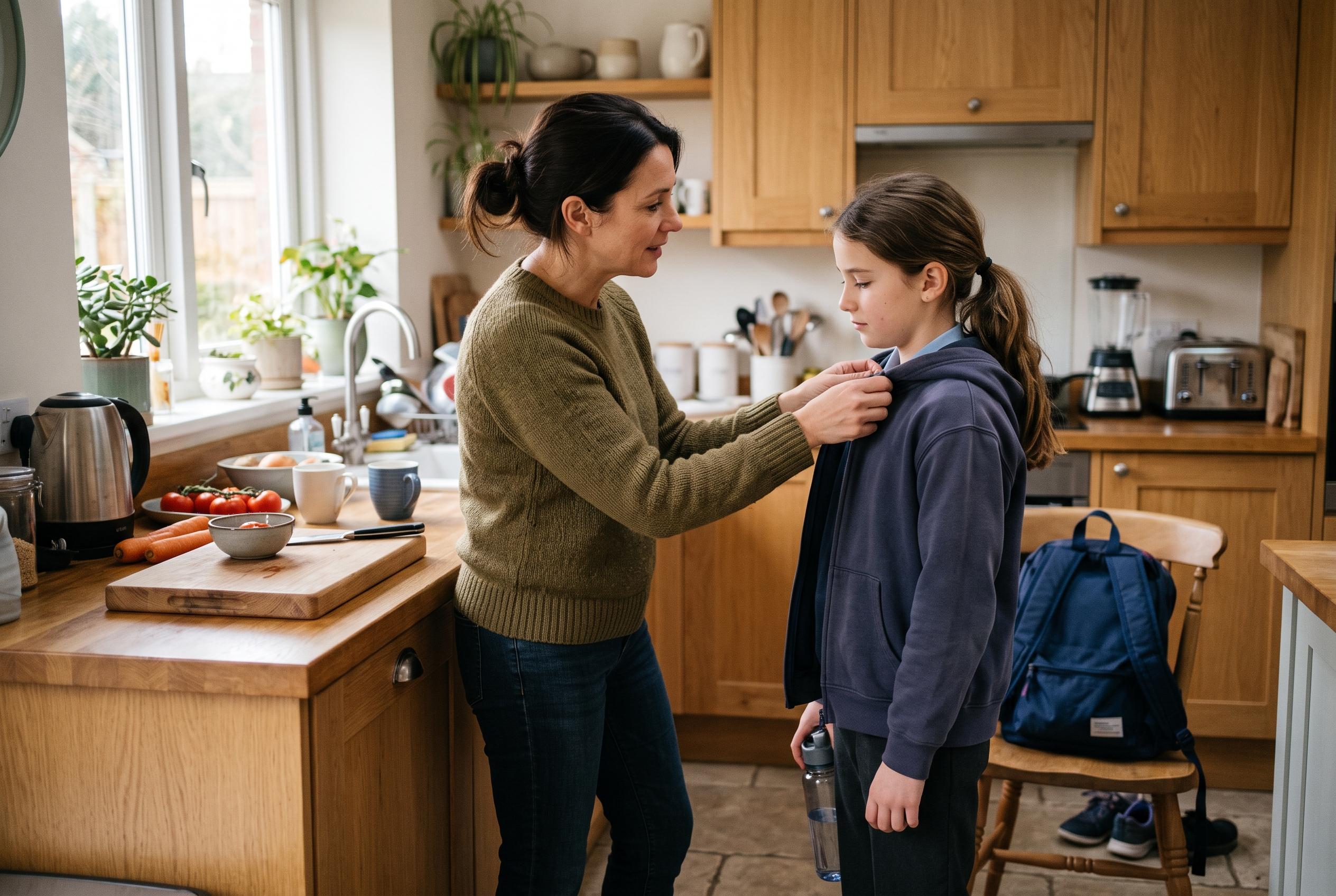

Expert advice highlights the importance of trust, patience, and small gestures in maintaining strong family connections as tweens seek independence amid emotional and social upheaval.
Parents of tweens and teenagers are often told to give their children space, but distance does not have to mean disconnection. Alison Middleton Timms, a clinical hypnotherapist and founder of Amity-Health, argues that the aim is not to win arguments with adolescents, but to preserve trust and keep the relationship open as they grow towards independence. Her advice is rooted in both her professional work with families and her own experience as a mother. The wider developmental picture supports that approach: the CDC says the teen years bring major physical, emotional and social changes, while the Child Mind Institute notes that tweens are also navigating rapid shifts in identity, peer pressure and self-esteem.
One of Timms’ central points is that teenage moodiness is not always personal. A slammed door or curt reply may reflect a young person trying to separate from their parents, rather than rejecting them entirely. Healthline and Cleveland Clinic both describe the tween years as a period of growing independence, when children often test limits while still needing reassurance. That means parents may need to look beyond the surface behaviour: what appears to be laziness can be overwhelm, and what sounds like indifference may actually be anxiety or embarrassment.
Timms also recommends saying less when emotions are running high. Parents often respond to tension by talking more, asking more questions or trying to fix the situation immediately, but that can push a teenager further away. The more useful response, she says, is to steady the atmosphere first and save the conversation for later. The Child Mind Institute similarly advises parents to be thoughtful about their reactions and to avoid escalating conflict when a child is already defensive.
Timing matters too. According to Timms, difficult conversations are often easier when they happen side-by-side, during a car ride, a walk or while cooking, rather than in a formal sit-down talk that can feel like an interrogation. She also encourages parents to ask fewer, better questions and to leave room for silence. My Parent Toolkit makes a similar point, suggesting that parents listen more than they speak and ask open, non-accusatory questions that invite a real answer instead of a reflexive “fine”.
Her guidance also emphasises boundaries. Connection does not mean giving in to every request or removing structure. The CDC says parents remain important role models during the teen years, and the Child Mind Institute notes that tweens still need clear limits as they move towards greater independence. Timms argues that the role of a parent shifts from controlling every decision to helping a young person learn how to make good ones, while still knowing there is a safe adult to return to.
Repair is another theme running through her advice. Parents will get things wrong, and so will their children. What matters, Timms says, is returning to the conversation and trying again. That message echoes advice from Cleveland Clinic, which encourages parents not to blame themselves when tensions rise, and to keep making small efforts to reconnect. In Timms’ view, ordinary gestures matter most: the lift to practice, the text message, the cup of hot chocolate, the repeated invitation to talk.
That ordinary effort, she says, is what holds a family together through the teenage years. The relationship does not depend on perfect words or flawless judgement, but on a willingness to keep showing up. As Timms puts it in her book, “The connection between you and your child is not built in dramatic moments. It is built in ordinary ones.”
Disclaimer: This content is for informational purposes only and is not intended to be a substitute for professional medical judgment, advice, diagnosis, or treatment.



