

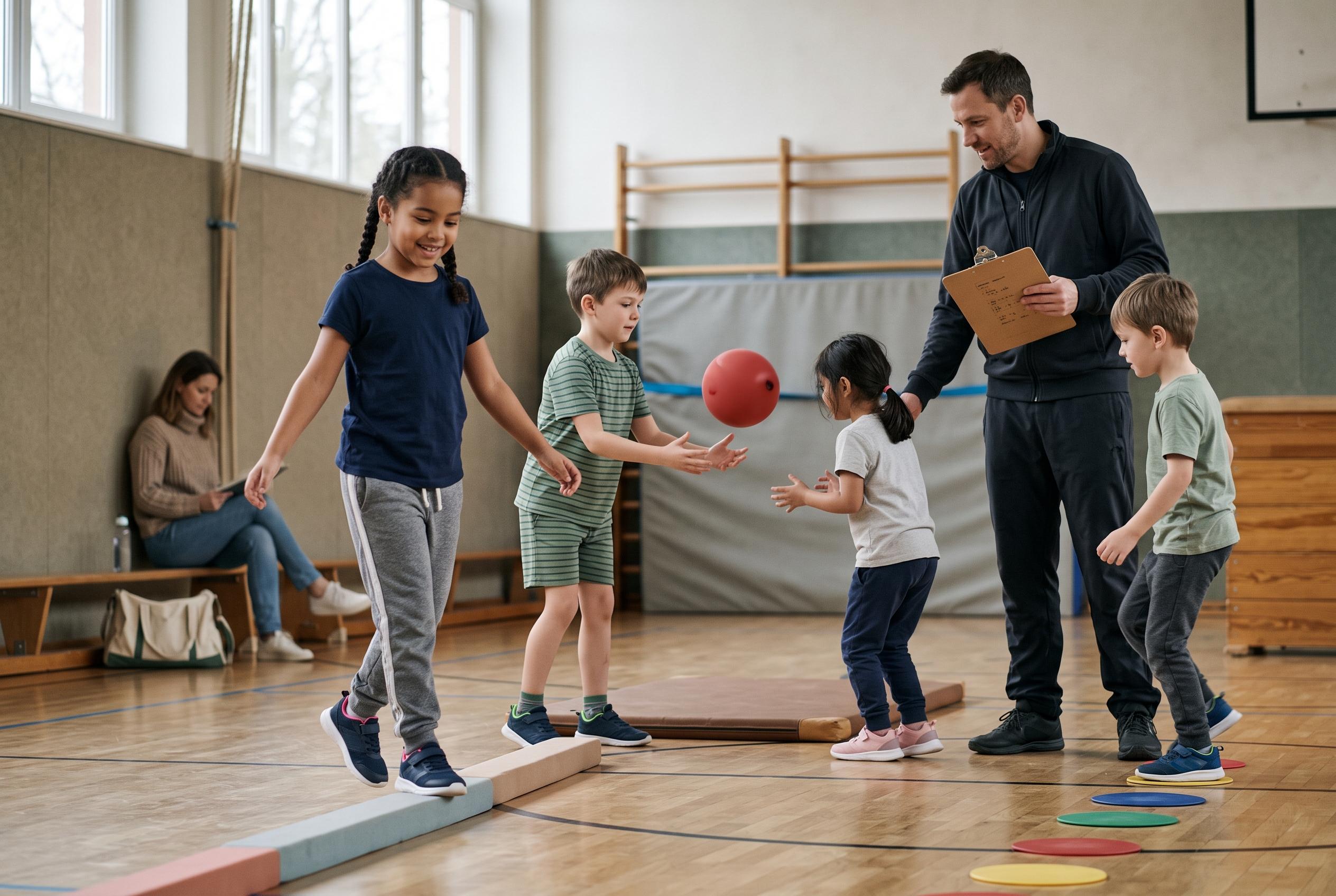

Hesse will implement a voluntary movement test for second-year primary pupils from November, aiming to identify children needing additional physical support and encourage broader sports engagement, with tailored follow-up courses to foster confidence and inclusivity.
Hesse will launch a statewide movement check for primary school pupils from November as part of a bid to spot children who need extra physical support and to steer them towards local sport. According to the state government, the voluntary programme will first be offered to second-year pupils and will include eight simple tasks designed to measure basic motor skills, including a 20-metre sprint, backwards balancing and press-ups. Parents must give consent before a child takes part.
State sports minister Diana Stolz said the test is intended to identify children who may need help while also encouraging those who are already particularly strong to try other sports. The ministry says youngsters who need extra support will be offered a free follow-up course at a local sports club, with around 100 such courses planned across the state each year. The Hessian Youth Sports Association says the follow-up programme will provide 20 movement sessions, usually once a week during the school year, with the aim of building confidence and making club sport more accessible.
The checks will be marked in a child-friendly way, with “Pfoten” rather than grades, and families will receive a more detailed assessment showing how a child compares with others of the same age. The Ministry of Education says the results should also help schools adapt sport and movement provision to local needs. Armin Schwarz, the education minister, said physical activity is part of a broader educational duty and argued that coordination, concentration and stamina matter well beyond sport lessons. The state’s official information pages say the programme is still being prepared, with fuller details expected from November 1, 2026.
Disclaimer: This content is for informational purposes only and is not intended to be a substitute for professional medical judgment, advice, diagnosis, or treatment.



