

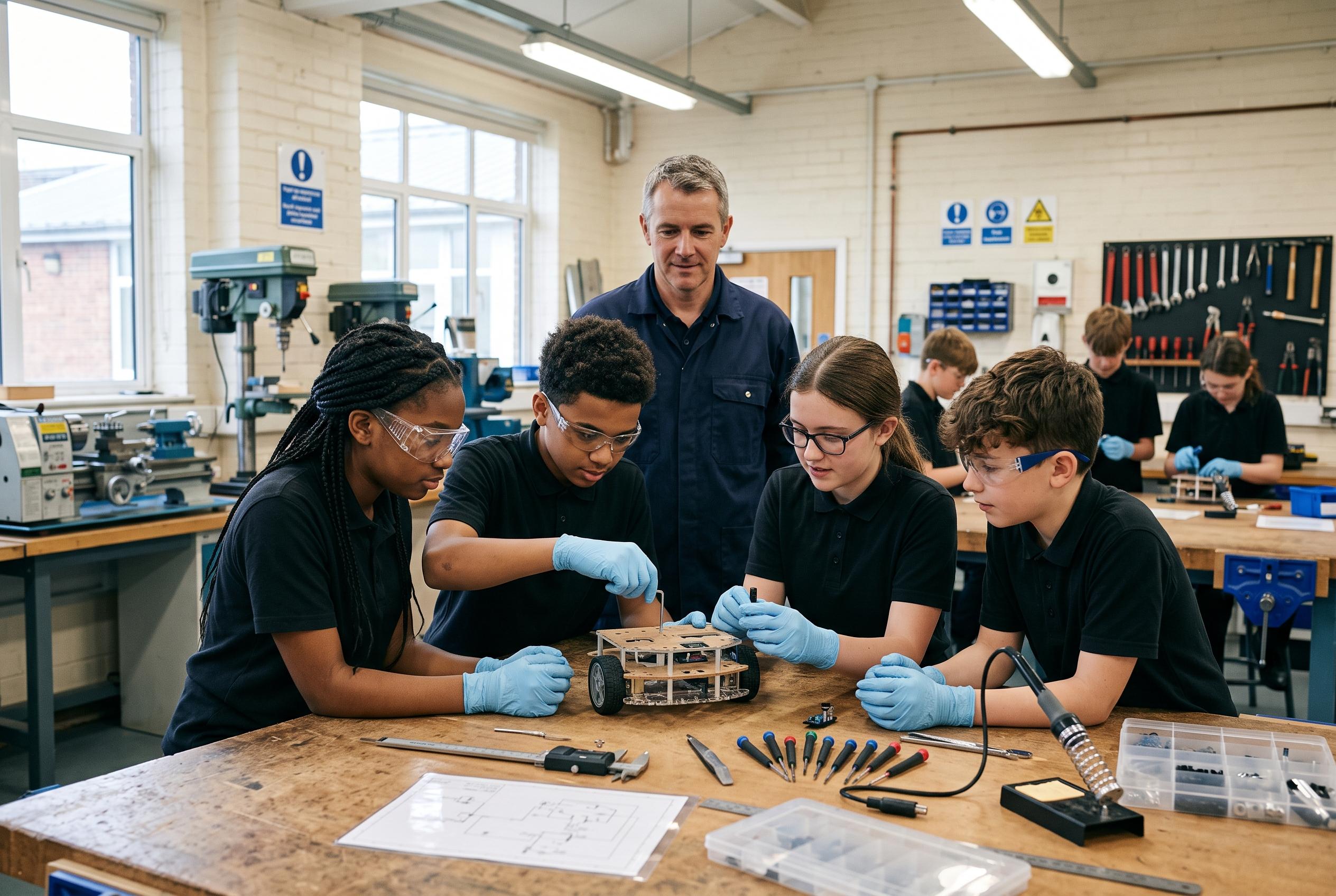

WorldSkills UK proposes integrating hands-on skills competitions within schools and regional events to boost young people’s confidence, practical abilities, and readiness for the workplace amid concerns of a potential ‘Lost Generation’ of NEET youths.
WorldSkills UK is urging schools, colleges and employers to use skills competitions more widely as concerns mount that too many young people are leaving education without the confidence or practical abilities needed at work.
The organisation has put forward proposals to the Milburn Commission calling for competitions to be embedded more directly into classrooms and for new regional events to bring together employers and education providers. The idea is aimed in part at young people who are most at risk of becoming not in education, employment or training, or NEET, after the commission warned that more than one million such young people could become a “Lost Generation” cut off from the labour market.
WorldSkills UK wants to begin with a project for pupils in Key Stages 3 and 4, aged 11 to 16, giving them more hands-on opportunities to build the kinds of skills linked to different careers. It is also exploring regional competitions for 16 to 19-year-olds, with employers and educators working alongside one another to help young people understand workplace expectations before they start applying for jobs.
The pitch has been backed by research commissioned from Public First, which surveyed 2,009 employers across the UK. It found that 90% of employers see work experience as important for developing workplace skills, while 74% said skills competitions could form part of a wider package to improve young people’s job prospects. Yet 61% said schools are not preparing young people with the skills businesses need, rising to 69% in Wales and 68% in Yorkshire and the Humber.
Nearly half of those surveyed, 46%, said young people were not ready to enter the workplace, though views varied by region. The figure was around 40% to 51% in most parts of the country, but fell to 34% in London. More than a third of employers, 34%, also said the need for extra training was a barrier to hiring young people, with the figure climbing to 46% in digital and technology.
Emma Roberts, external affairs director at WorldSkills UK, said the findings showed strong employer appetite for a different approach. She said the group needed to “think outside the box” about how young people are prepared for work, adding that too many only discover what employers expect after they have already entered the workplace. WorldSkills UK argues that competition-based learning offers a relatively low-cost and scalable way to help students develop resilience, problem-solving and confidence alongside qualifications.
The research also suggests employers see a direct business case for improving workplace readiness. Seven in ten said recruiting people with the right skills could increase revenue, with the proportion rising to 82% in digital and technology, 80% in advanced manufacturing and 79% in the creative industries. That view is likely to add momentum to the wider debate over how schools, colleges and businesses can work together more closely to improve the move from education into employment.
The timing of the proposals comes as Team UK prepares for WorldSkills Shanghai 2026, where 28 young people will compete against participants from about 80 countries in disciplines ranging from renewable energy and bricklaying to health and social care, 3D games design and robot systems integration. The international event, which is expected to draw more than 250,000 visitors, is intended to showcase technical excellence under pressure, and WorldSkills UK hopes similar competition models can be brought closer to home. The organisation already runs a range of competitions and related programmes, including an enterprise skills initiative for learners with special educational needs and disabilities, designed to build communication, teamwork and problem-solving skills.
Disclaimer: This content is for informational purposes only and is not intended to be a substitute for professional medical judgment, advice, diagnosis, or treatment.



