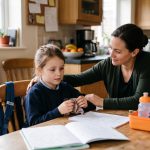
The South Korean government has introduced new regulations prohibiting private tutoring centres and academies from using tests and assessments to select or rank preschool children, aiming to promote healthier childhood development.
South Korea will ban private academies, tutoring centres and individual tutors from using entrance tests, oral exams, interviews or level assessments to recruit preschool children or place them into ability-based classes, in a move aimed at curbing what has become known as the “4-year-old exam” and “7-year-old exam”.
The Ministry of Education said the revised enforcement decree of the law governing private teaching institutes was approved by the Cabinet on Tuesday and will take effect on October 1. The rules set out in detail that written, oral, practical and interview-based evaluations are all prohibited when they are used to select young children or sort them into different groups.
Officials said the ban also covers tests designed to rank a child’s ability, including assessments that rely on previous test results or records of achievement. However, once a child has enrolled, academies will still be allowed to carry out diagnostic checks to support teaching, provided parents are told in advance what the assessment is for, how it will be done and how the results will be used, and they give written or electronic consent.
Those post-enrolment checks must be descriptive rather than competitive. They may be carried out through observation or interviews during lessons, but they cannot show marks, rankings or pass-fail decisions. Instead, they should describe a child’s progress and any support needed. Authorities said violations will bring fines of 1 million won for a first offence, 2 million won for a second and 3 million won for a third, with whistle-blower rewards also possible within budget limits.
The tougher rules also extend oversight of private tutoring for young children. From October 1, anyone offering private lessons to preschoolers or operating a tutoring centre must report to the local education office. Education Minister Choi Kyo-jin said the revision was intended to block extreme forms of early private education and help build a society in which children can grow up healthy and happy.
Disclaimer: This content is for informational purposes only and is not intended to be a substitute for professional medical judgment, advice, diagnosis, or treatment.