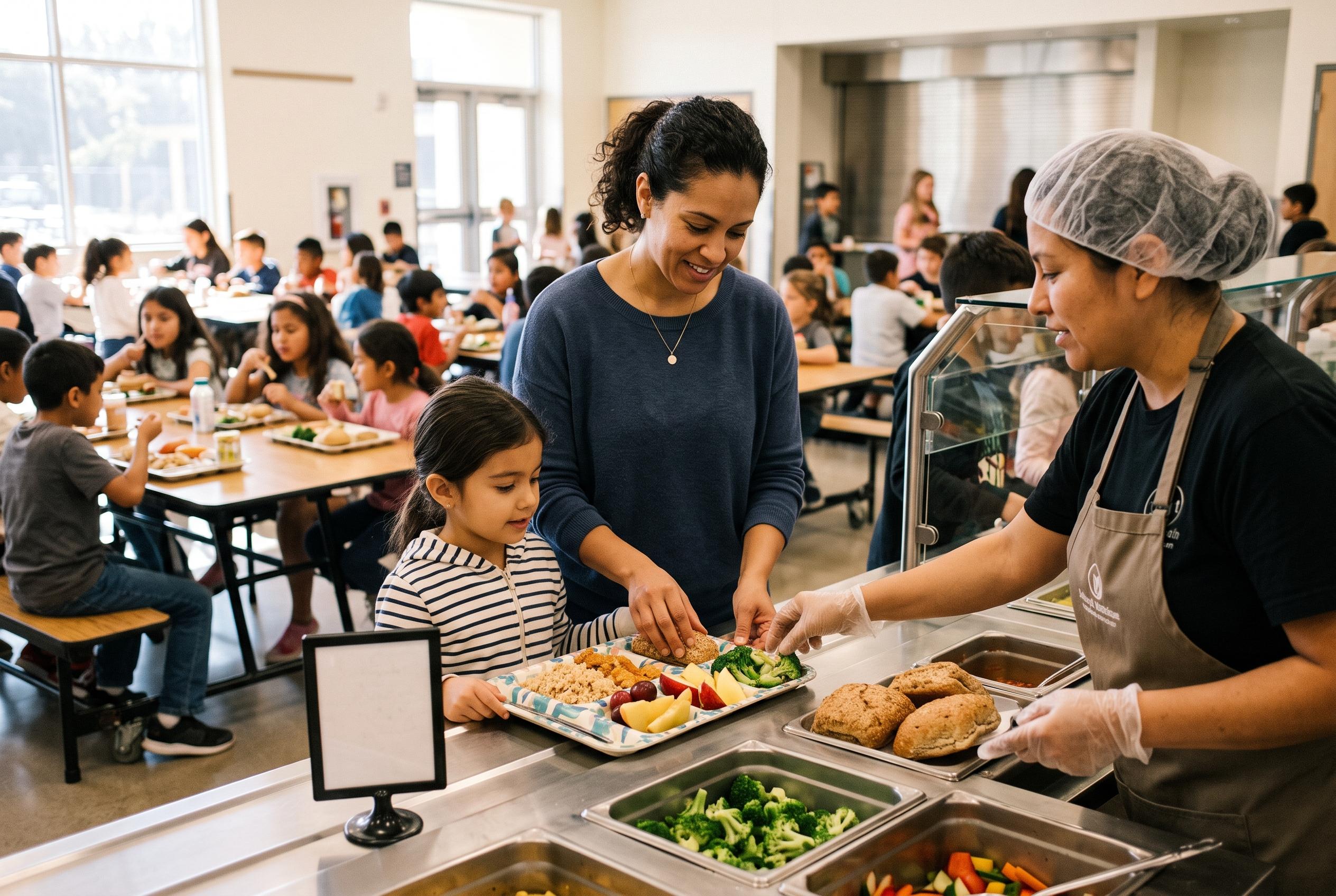

California advances its efforts to improve children’s health by enacting a phased ban on ultra-processed foods in public schools, with compliance expected by 2032, marking a significant shift in educational nutrition standards.
California has already moved beyond proposal to law on a plan to strip certain ultra-processed foods from public school meals. Governor Gavin Newsom signed Assembly Bill 1264 on October 8, 2025, turning what began as a bipartisan legislative push into a phased ban that will reach full effect in 2032, according to the governor’s office and legislative summaries.
The law leaves the details to state health officials. California’s Department of Public Health must define which products count as “ultra-processed foods of concern” and which items will be treated as restricted school foods. School districts are then expected to begin phasing those items out in 2029, with a complete prohibition set for July 1, 2032, according to the bill text and legislative tracker records. That means families are unlikely to see an overnight overhaul of lunch menus, but the direction of travel is now clear.
Assemblymember Jesse Gabriel, who introduced the measure, cast the bill as part of California’s broader effort to tighten food safety standards for children. Assembly Minority Leader James Gallagher, a Republican, signed on as a co-author, underscoring the bill’s bipartisan backing. Supporters have pointed to research linking heavy consumption of ultra-processed foods with obesity, diabetes, heart disease, cancer and cognitive decline, while nutrition researchers have also argued that foods engineered for maximum sweetness, saltiness and fat can be especially hard for children to resist.
The new law builds on a series of earlier California actions. In 2023, Gabriel helped drive passage of the California Food Safety Act, which banned four food additives statewide. In 2024, Newsom signed a separate school food safety law removing six artificial dyes from public school meals. Taken together, the measures show California steadily narrowing the use of additives and heavily processed ingredients in school food, even as the state leaves the exact list of banned items to regulators still working out the definition.
For parents and school officials, the practical question now is which products will be caught by the new rules and how quickly manufacturers will reformulate them. Some districts may need to switch brands, while others may be able to keep familiar menu items if suppliers change recipes to meet state standards. What is already certain is that California is treating school food as a front line in children’s health policy, and the changes will arrive in stages rather than all at once.
Disclaimer: This content is for informational purposes only and is not intended to be a substitute for professional medical judgment, advice, diagnosis, or treatment.