

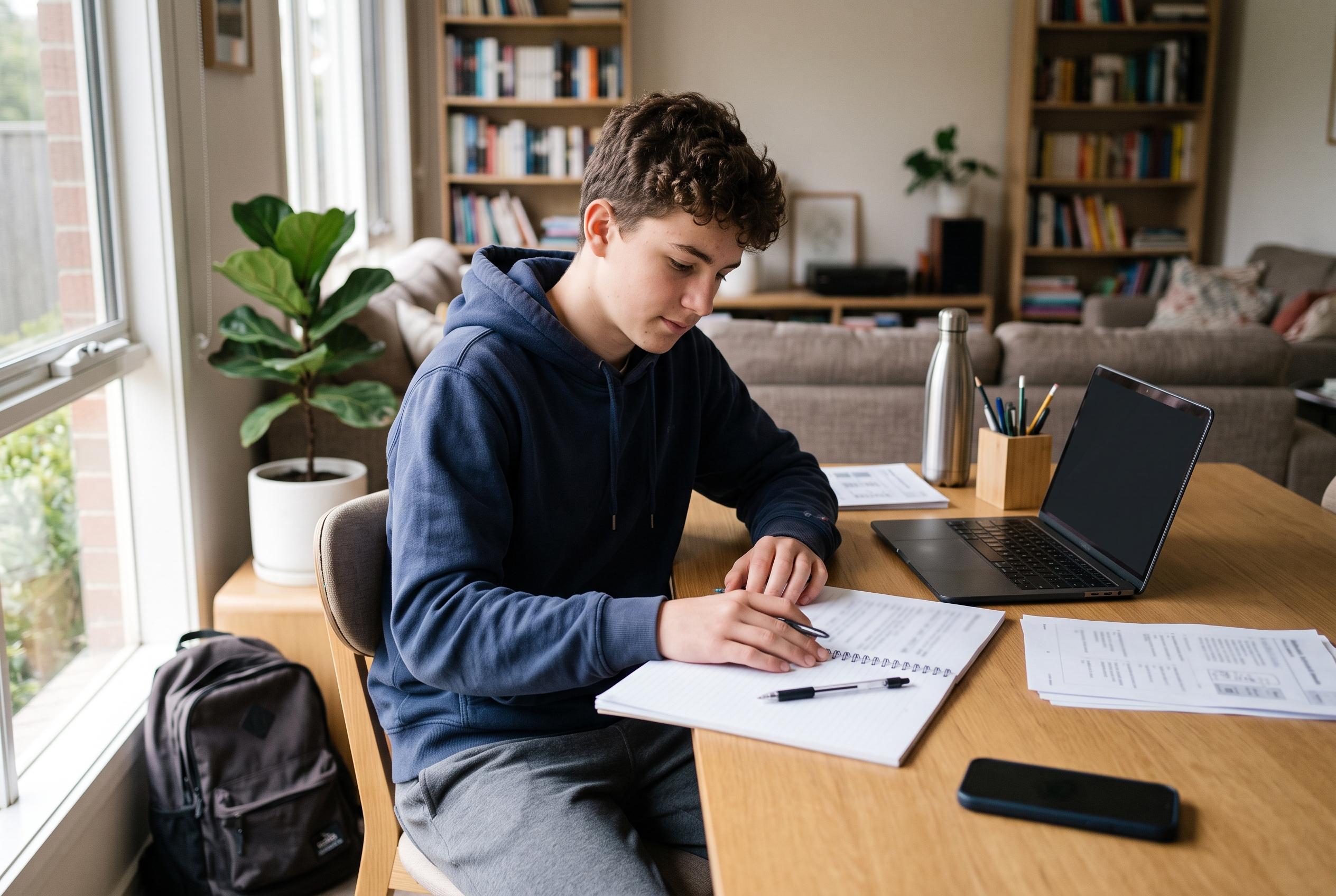

A new analysis indicates that Australian teenagers could gain dedicated study time by reducing their social media consumption, potentially improving academic performance in senior subjects.
Australian teenagers could reclaim enough time for an extra focused study session each day if they redirected only a slice of their social media habits, according to an analysis by Excel Academics. The tutoring company said its modelling, based on Australian Institute of Health and Welfare data and usage patterns from its LearnCEL platform, suggests teenagers spend about 100 minutes a day on social media, or more than 600 hours a year. Excel Academics argued that even trimming that by roughly a third could create room for one 33-minute learning session daily.
The company linked that idea to performance data from Year 11 and 12 students using LearnCEL, an adaptive platform that identifies gaps in understanding and assigns targeted practice. Across Chemistry, Physics, Mathematics, Economics and Biology, Excel Academics said students improved concept mastery by about four percentage points per session on average. It estimated that reaching mastery in the senior subjects studied typically takes between 4.8 and 8.0 hours of targeted adaptive learning, with an average of about 5.7 hours.
The analysis arrives as Australia continues to debate youth social media use and its wider effects on schooling and wellbeing. That debate has intensified since the country’s 2025 ban on under-16s from major social media platforms, though a working paper from the National Bureau of Economic Research found compliance among 14- and 15-year-olds was initially low, with fewer than one in three following the rules. Separately, research published in ScienceDirect found that while social media, gaming and streaming can crowd out schoolwork, digital media does not necessarily lead to worse academic outcomes.
Excel Academics presented its findings as an illustration of what may be possible rather than a prediction for every student. The company said outcomes depend on prior knowledge, subject difficulty, consistency and the quality of study conditions. It said the main point was that small, regular changes in daily routines could build into meaningful gains over time, especially when study is focused on specific weaknesses rather than simply adding more hours.
The company also offered practical advice for students trying to turn some recreational screen time into productive revision. Its suggestions included studying in shorter blocks, switching off notifications, using focus modes and keeping phones out of reach during revision. That approach echoes earlier research on Australian adolescents, which found that screen time rose sharply between the ages of 10 and 14, with social networking among the biggest drivers, and that young people’s screen use is varied enough to warrant more nuanced policy responses.
Disclaimer: This content is for informational purposes only and is not intended to be a substitute for professional medical judgment, advice, diagnosis, or treatment.



