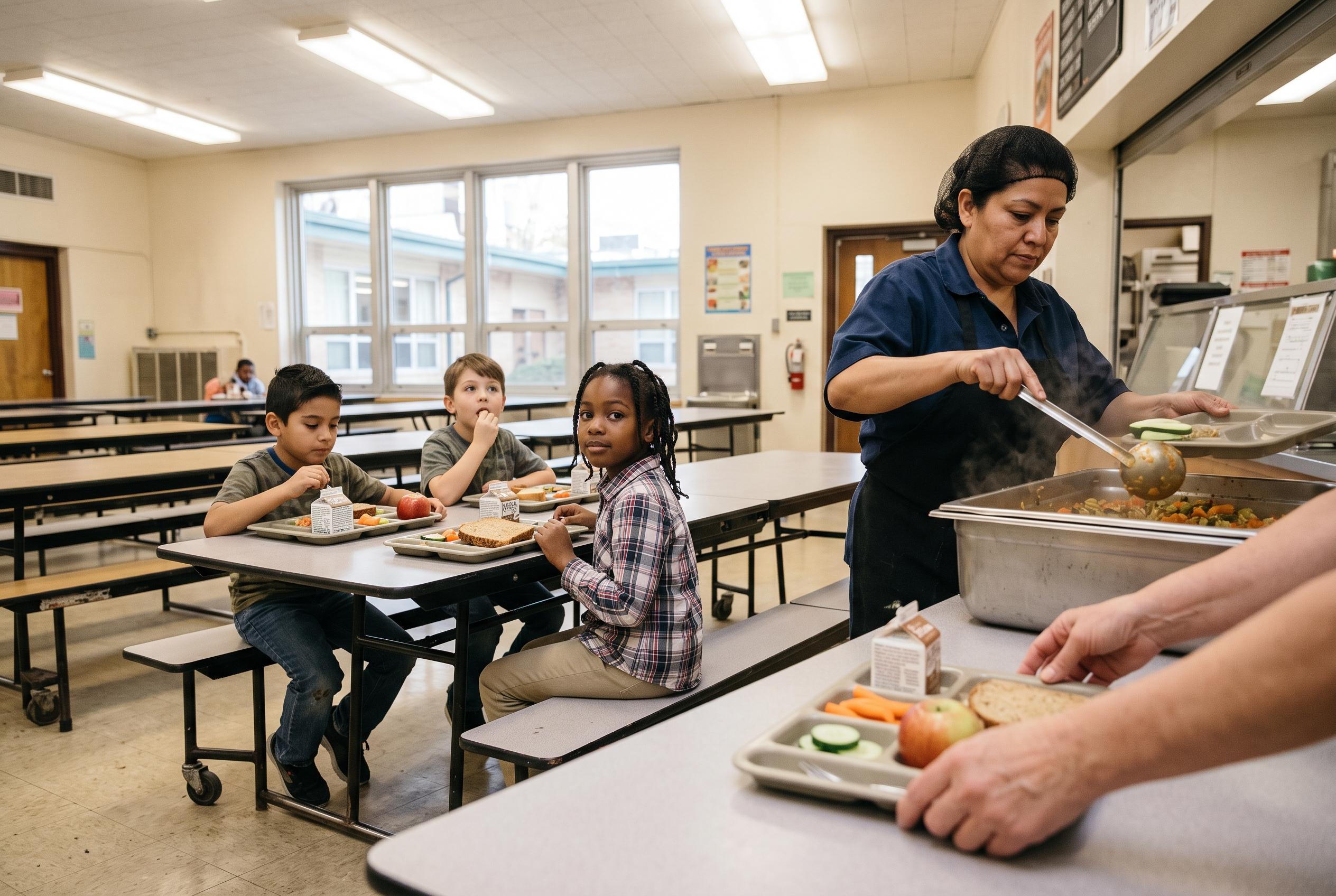

Federal reductions in SNAP and Medicaid are jeopardising free school meals for millions of children, prompting fears of increased hunger and disparities in low-income communities as school districts struggle to sustain vital nutrition programmes.
Back-to-school season usually brings relief for parents, but this year it is also exposing a quieter crisis: fewer children are able to rely on school meals just as household budgets are under severe strain. According to reporting from CBS News, recent federal changes to the Supplemental Nutrition Assistance Programme have already left about 4.5 million people, including 1.5 million children, with reduced access to food aid, threatening a key route to free breakfast and lunch at school.
For many families, the loss does not begin at the cafeteria door. In most states, children in households that receive SNAP or Medicaid are automatically certified for free school meals, without extra paperwork. When that link is broken, schools can lose the data they use to identify eligible pupils, and parents may only discover the change after a notice arrives from school or a bill lands in the mailbox. Food Research & Action Center research cited by K-12 Dive found that 74% of school districts are worried about the effect of federal cuts to SNAP and Medicaid on meal participation.
The pressure is already showing up in school systems. CBS News and other reports have noted that Miami-Dade, the nation’s third-largest district, has ended districtwide participation in the Community Eligibility Provision, the federal programme that lets high-poverty schools offer free meals to all pupils. FRAC has warned that as more families lose automatic eligibility through SNAP, more districts may struggle to qualify or afford the programme, leaving children in low-income communities most exposed to hunger.
The stakes go beyond the school day. State-funded universal meal programmes in places including New York, California and Michigan could also come under strain if federal support keeps falling and state budgets tighten. For parents already coping with higher grocery prices, the loss of school meals can mean cutting back elsewhere. Studies highlighted by The 74 show many lower-income parents say their children would not eat enough without school meals, while most also say free or reduced-price meals help them afford school supplies. That is why advocates are urging Congress to reconsider the cuts as lawmakers debate the Farm Bill and other legislation: once the school meal safety net frays, children feel the effects immediately.
Disclaimer: This content is for informational purposes only and is not intended to be a substitute for professional medical judgment, advice, diagnosis, or treatment.