

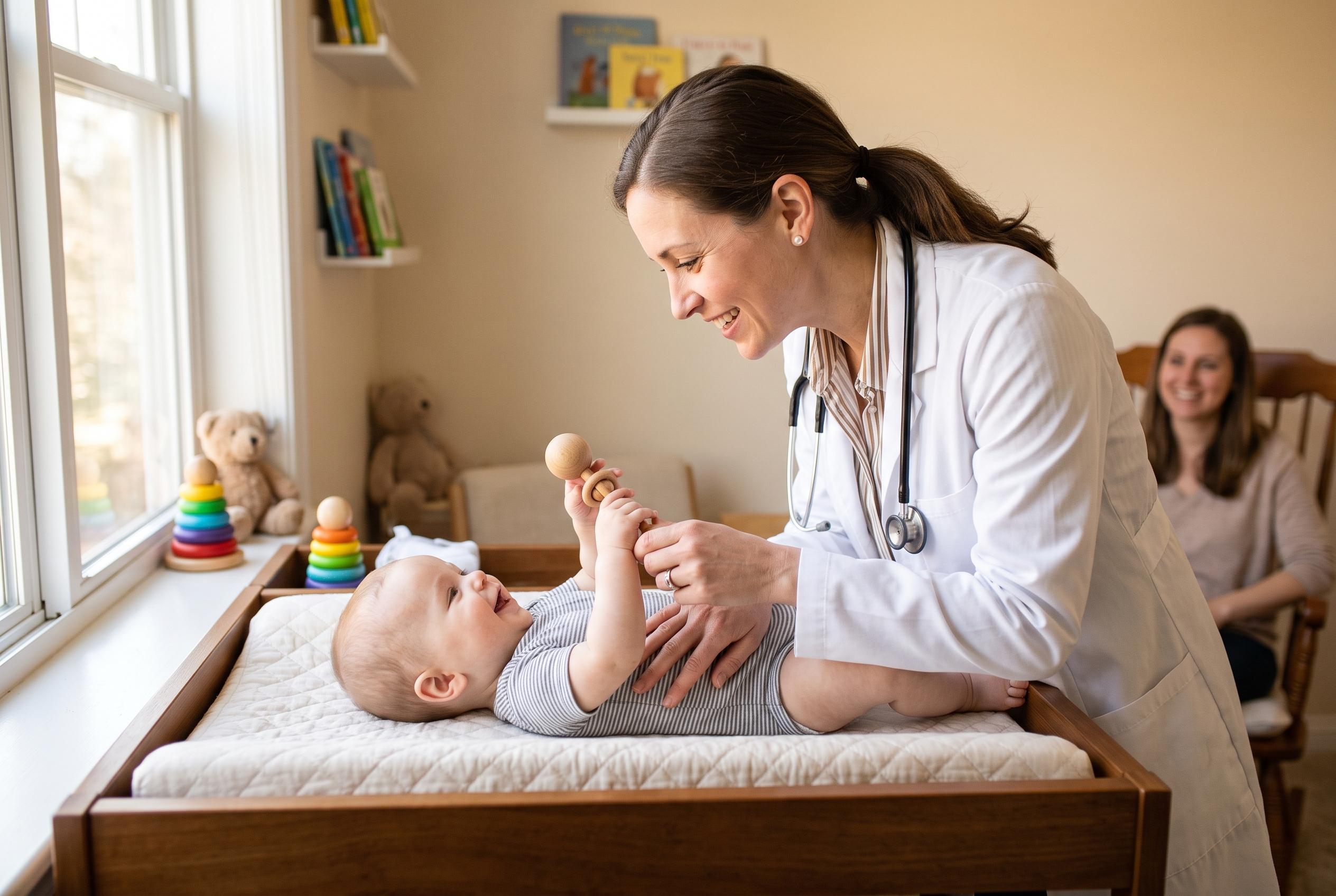

Routine check-ups during a baby’s first year can do more than monitor growth, they’re crucial for early detection of developmental concerns, with experts emphasising the importance of timely assessments to support optimal growth and bonding.
Regular check-ups in the first year of life can do more than track weight. They give doctors a chance to spot developmental concerns early, when treatment and support are often most effective. The Centres for Disease Control and Prevention says monitoring a child’s progress over time is an important way to identify delays and connect families with help as soon as possible, while routine milestone checks help clinicians and parents notice when a baby is not developing as expected.
Uzm. Dr Murat Koçkar, a child health and diseases specialist at Medipol University Esenler Hospital, said newborn care should begin immediately after birth, with an early assessment of breathing, heart health, growth measures and any possible congenital problems. He added that skin-to-skin contact after delivery helps a baby adjust to life outside the womb and strengthens bonding with the mother. Koçkar also said babies should be seen again shortly after discharge to review jaundice, feeding and weight change.
Koçkar said the first six months are the fastest period of growth, and that children should be checked regularly for length, weight, head circumference and developmental stages. That advice aligns with guidance from the Mayo Clinic and MedlinePlus, which note that babies in this age range commonly develop better head control, social smiling, vocal sounds, hand-to-hand object transfer and improved movement.
Parents should also pay attention to milestones such as rolling, sitting with support, babbling and responding to voices, the CDC and WebMD say. Koçkar said the sixth month is especially important because it combines early movement development with the move to solid foods, making it a key time to detect differences in growth or development and plan treatment if needed. The CDC also says early developmental screening is important for identifying concerns, including conditions such as cerebral palsy, as early as possible.
Disclaimer: This content is for informational purposes only and is not intended to be a substitute for professional medical judgment, advice, diagnosis, or treatment.



