

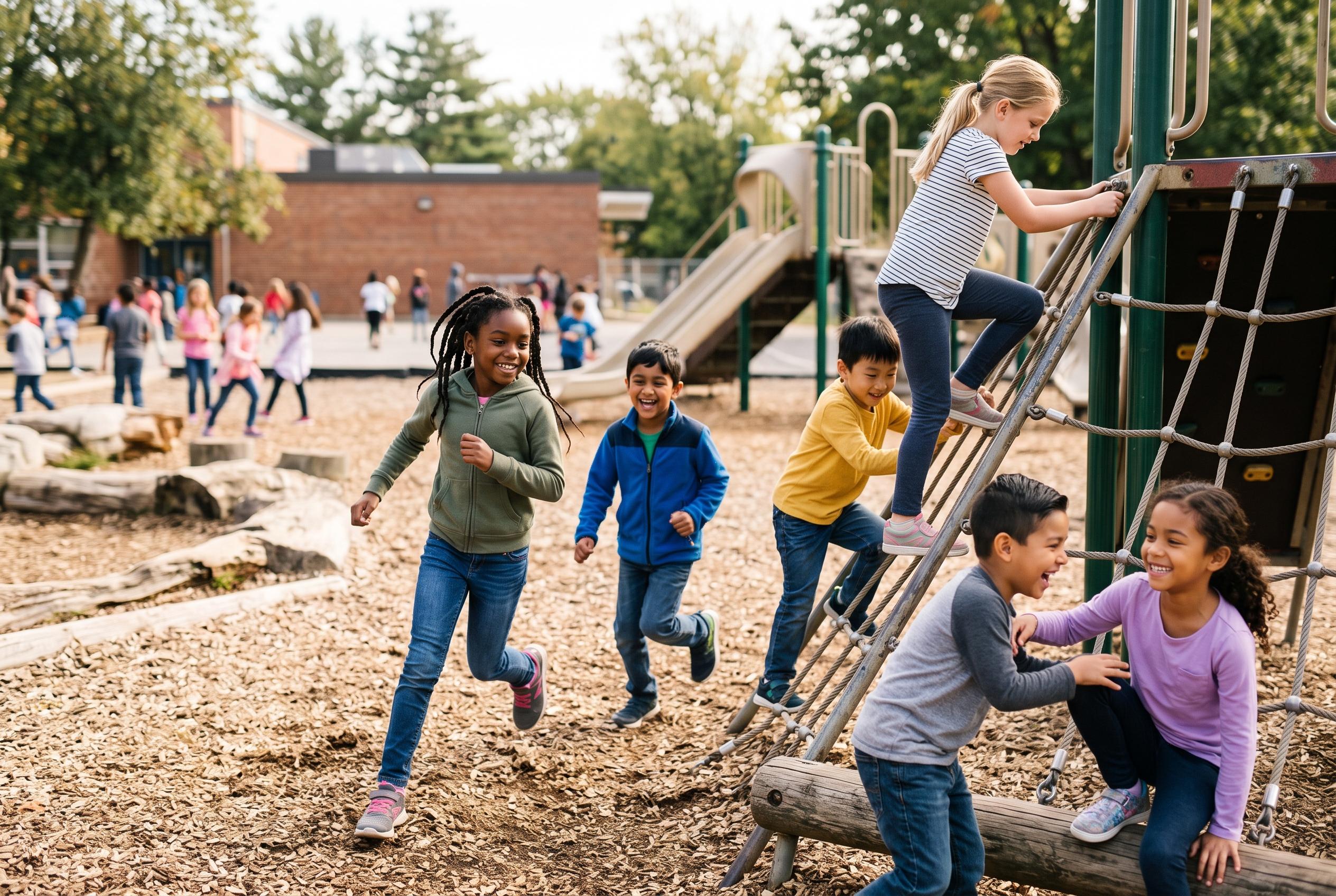

Paediatric experts and health authorities are emphasising the importance of unstructured play in schools, citing its benefits for mental health, social skills, and physical activity, while highlighting disparities in access for marginalised children.
Recess is increasingly being treated by paediatric experts as more than a pleasant pause in the school day. In a 2026 policy statement, the American Academy of Paediatrics said regular, unstructured play should be viewed as an important part of a child’s development, not a dispensable extra. The academy said it supports concentration, mental well-being and the classroom environment by giving children time to reset between lessons.
That view is echoed by the Centres for Disease Control and Prevention, which describes recess as a scheduled period for unstructured physical activity and self-directed play. Unlike physical education, which is guided and instructional, recess gives children a chance to choose their own games, negotiate rules and solve problems with peers. The academy says those moments help children practise communication, build relationships and learn emotional regulation.
Health experts also point to the physical and mental benefits of regular movement. The National Institute of Child Health and Human Development says activity in childhood supports cardiovascular health, stronger muscles and bones, better coordination, and improved mental health. In the school setting, that movement can help children manage stress, reduce fatigue and return to academic work better able to focus.
The academy has also argued that timing matters. It recommends that children receive at least 20 minutes of cumulative unstructured play each day, and ideally a 15- to 20-minute break after 45 minutes to an hour of instruction. It also favours recess before lunch, warning that children who play afterwards may rush through meals. The group says recess should not be withheld as punishment or used to make up classwork, because students who are struggling often need that break most.
Access, however, is not evenly shared. The academy said under-resourced schools and children from marginalised groups can face fewer opportunities for safe, inclusive play, whether because of limited equipment or disciplinary practices that keep pupils off the playground. It also noted that some risk is part of healthy play, so long as adults supervise and step in only when needed. That balance, the academy said, helps children build judgement, confidence and cooperation.
Disclaimer: This content is for informational purposes only and is not intended to be a substitute for professional medical judgment, advice, diagnosis, or treatment.



