

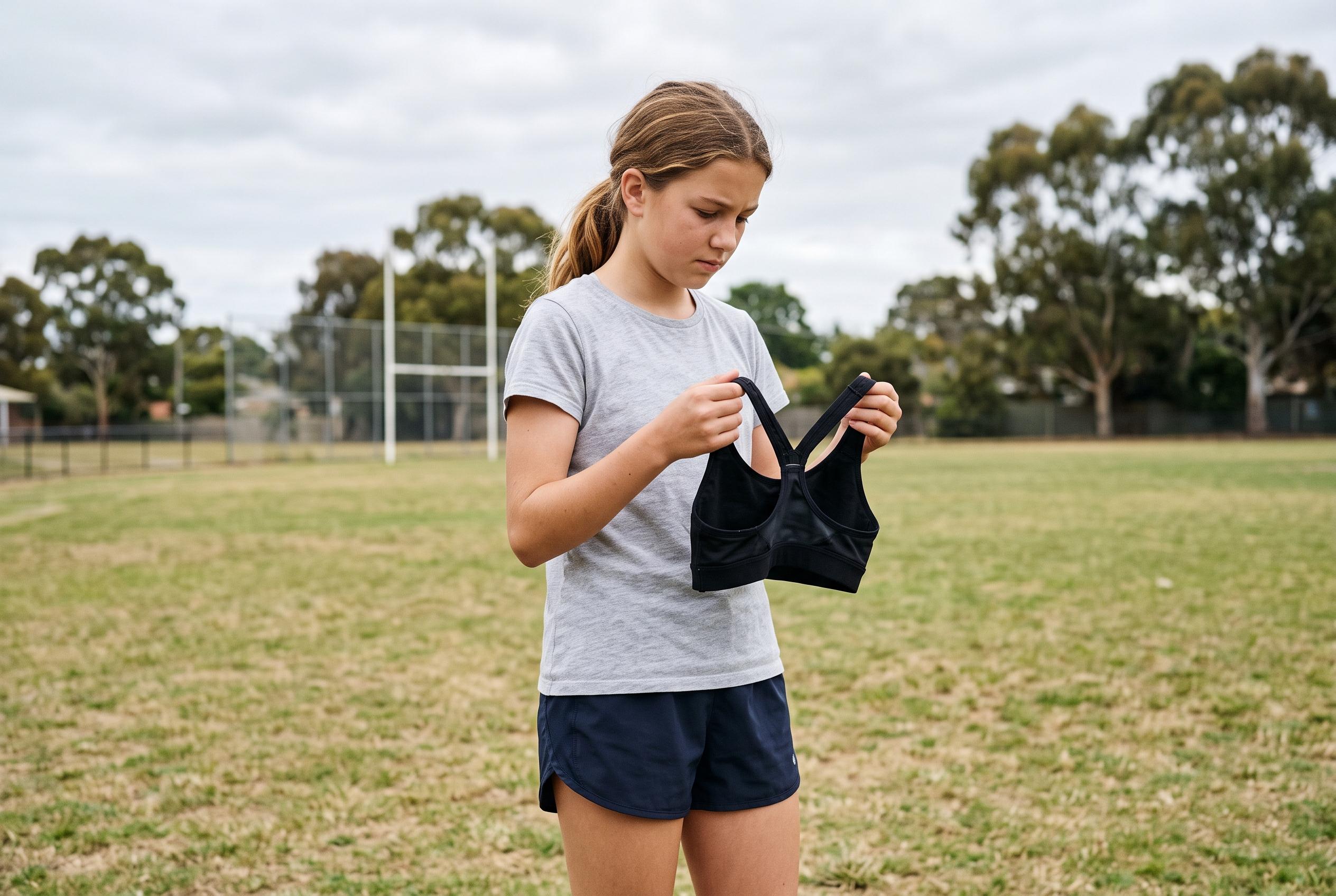

Research from Victoria University reveals that poorly fitting sports bras are contributing to a significant decline in female participation in organised sport across Australia, calling for systemic changes in education, access, and funding.
Australian girls and women are dropping out of organised sport at worrying rates, and researchers say one overlooked reason is poor breast support. A recent study from Victoria University found that up to 88% of girls wear sports bras that do not fit properly, leaving many with pain, chafing and embarrassment that can make exercise less appealing and performance harder. The university said the problem is not simply about comfort: it is also about whether schools and sporting bodies recognise sports bras as part of the equipment needed to keep girls in sport.
The research surveyed 225 people involved in kit decisions across 153 sporting organisations and 72 schools in Australia. It found strong awareness of the issue but very little action. Most respondents believed breast-related concerns affected participation, with many saying they limited performance, discouraged girls from joining in and contributed to dropping out altogether. Yet fewer than one per cent said their organisation actually provided education on sports bra fit, and only 2% formally included sports bras in school or club kits.
That gap matters because breast movement during running, jumping and rapid changes of direction can be painful and distracting. Victoria University said a well-fitted, high-support sports bra can reduce discomfort and embarrassment, helping girls and women exercise more confidently. The study also pointed to cost as a barrier, especially in schools and community sport, where families may struggle to afford suitable bras and where many girls still see them as underwear rather than performance gear. Related reporting on the study said decision-makers broadly understood the benefits of sports bras, but not enough were treating them as essential sporting equipment.
The researchers have published a guide urging schools and clubs to address the issue through education, better access and funding support. They pointed to examples such as Gilgandra High School in New South Wales, where free professionally fitted sports bras, funded through an equity programme, helped lift girls’ participation in athletics. The Queensland Academy of Sport has also added breast health education and bra fittings to athlete support services, using one-to-one advice to improve uptake. The broader message from the study is straightforward: if organisations want more girls to stay in sport, they need to make proper breast support part of the system, not an afterthought.
Disclaimer: This content is for informational purposes only and is not intended to be a substitute for professional medical judgment, advice, diagnosis, or treatment.



