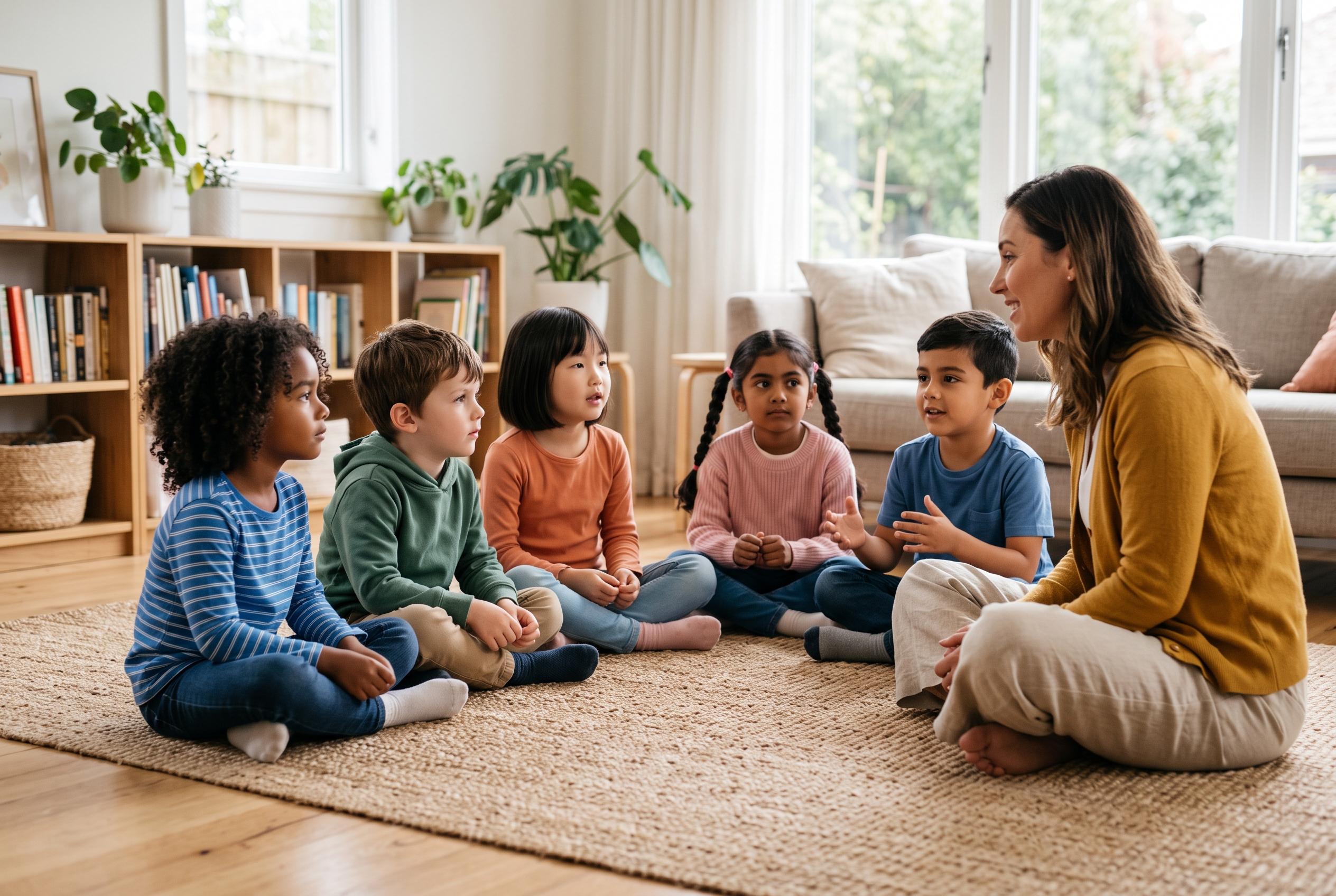

A new study indicates children as young as five display partisan behaviour rooted in early social cues, raising questions about the origins of political loyalty and potential ways to reduce bias.
With Election Day 2026 approaching, a new psychology study suggests that the roots of partisan behaviour may appear far earlier than most adults would expect. Researchers at New York University found that children as young as five were often willing to back a member of their own group even when the evidence pointed the other way, according to the paper published in Cognition. Earlier research has also suggested that political preferences and social loyalties can emerge in childhood, raising the possibility that partisanship is shaped less by settled ideology than by early social cues.
The study used a simple group test built around coloured T-shirts. Children were invited to identify with either a green group or an orange group, then watched fictional characters from each side make conflicting claims about ambiguous images. In those trials, children were more likely to side with the person from their own group than with the evidence in front of them, the researchers reported. The pattern was strongest when the children had to answer publicly.
The picture changed when the social pressure eased. In follow-up experiments, the children were told their responses would be private, or were offered a larger reward for getting answers right. Under those conditions, they were more likely to give accurate answers rather than simply echoing their group. That suggests, the authors say, that the behaviour looks less like a fixed belief and more like a public show of loyalty.
Bethany Lassetter, who was first author on the paper, and Andrei Cimpian, the senior author, argue that the findings point to a possible way of reducing group-driven distortion: make accuracy matter more, or lower the social cost of disagreeing with one’s side. Other 2026 research published in the Journal of Experimental Psychology: General similarly found that children’s social preferences can form around political markers, reinforcing the idea that partisan habits may start long before voting age.
Disclaimer: This content is for informational purposes only and is not intended to be a substitute for professional medical judgment, advice, diagnosis, or treatment.