

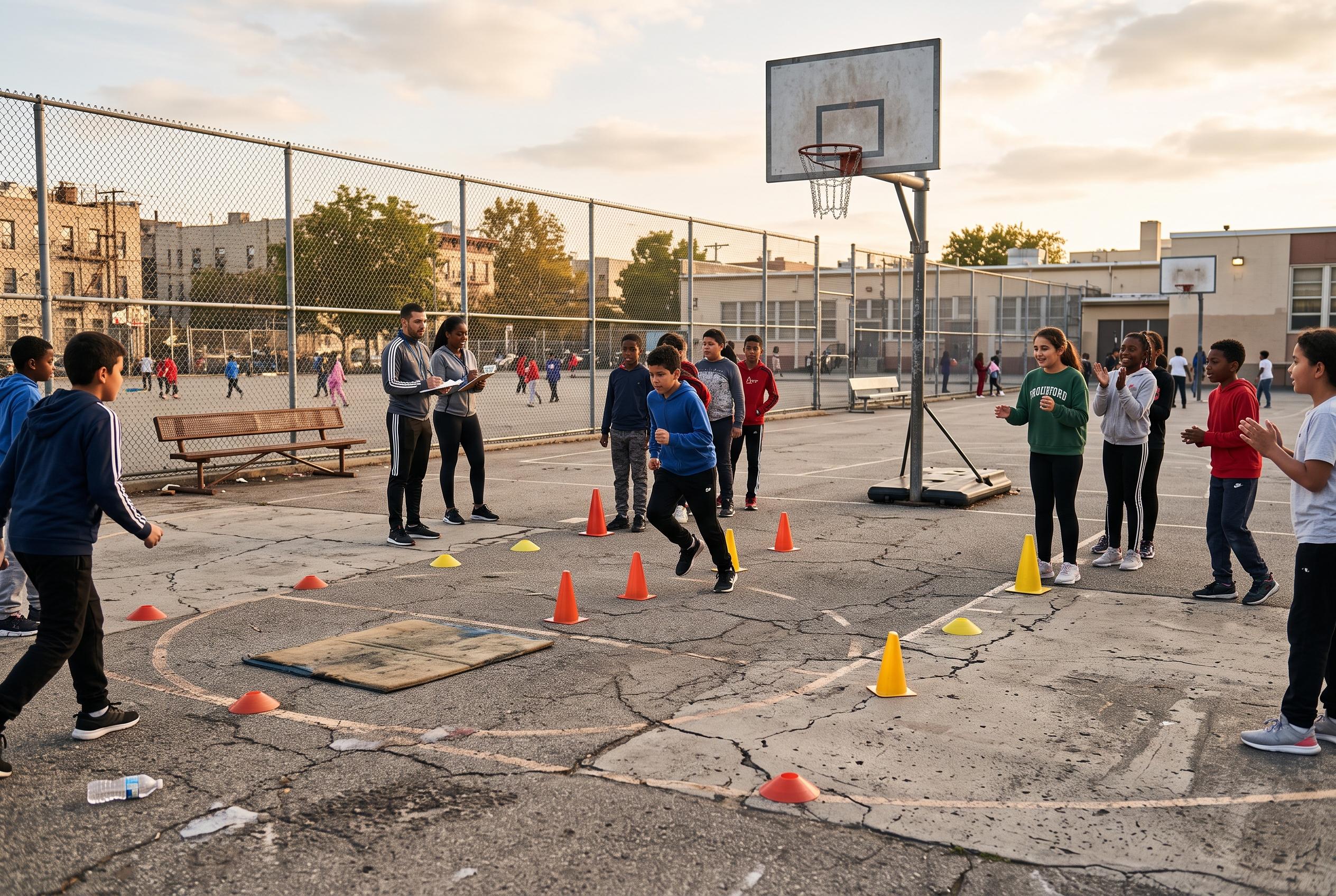

Inadequate PE budgets and space shortages compel schools to adapt, risking diminished physical activity and educational outcomes for students, according to SHAPE America.
When a Minnesota school shut its gymnasium for renovations, physical education did not move into a spare indoor facility. For an entire school year and into the next, classes were pushed outside in all weather, while indoor lessons were squeezed into classrooms, corridors and stairwells. The example, cited by SHAPE America, shows how a lack of space can quietly erode the quality of PE long before anyone labels it a crisis.
The problem is wider than one school. Research in U.S. public elementary schools found that PE budgets are often extremely thin: the median equipment budget was just $500 a year, and 30% of schools had no dedicated budget at all. The same study linked higher student-to-teacher ratios with weaker instruction and assessment practice, while another paper in Teaching and Teacher Education found that many elementary schools still fall short on PE time and resources. The result is not simply less gear, but less effective teaching.
In practice, inadequate resources change how classes behave. When there are not enough balls, ropes or other tools for every child to be active at once, students spend more time waiting, and waiting tends to produce distraction, chatter and off-task behaviour. SHAPE America has argued that inefficient transitions, long queues and slow equipment set-up are all avoidable barriers to active learning. The upside is that modest investments can help: in one example cited by the organisation, a school that received a new curriculum and $3,500 in equipment saw stronger student engagement and more positive staff attitudes towards PE.
The consequences extend beyond the gym. According to the Institute of Medicine, most studies they reviewed found a positive link between school-day physical activity and academic performance, undermining the common assumption that cutting PE will improve test results. That is one reason advocates say PE should be treated as part of a well-rounded education rather than as an optional extra. SHAPE America has also pointed to federal Title IV-A funding under the Every Student Succeeds Act as a key route for supporting health and PE, while stressing that districts must use those funds deliberately if they are to make a difference.
Schools can still make progress without large budgets. SHAPE America recommends station-based lessons, tighter routines for equipment distribution and clearer transition signals to keep more pupils moving. Teachers can also adapt by using shared spaces creatively, leaning on small-sided games and designing activities that minimise standing around. For administrators, the larger lesson is simple: if PE is to deliver benefits in fitness, behaviour and classroom attention, it needs protected time, usable space and enough equipment to keep children active. When those basics are missing, the cost is borne not just by PE teachers, but by pupils across the school.
Disclaimer: This content is for informational purposes only and is not intended to be a substitute for professional medical judgment, advice, diagnosis, or treatment.



