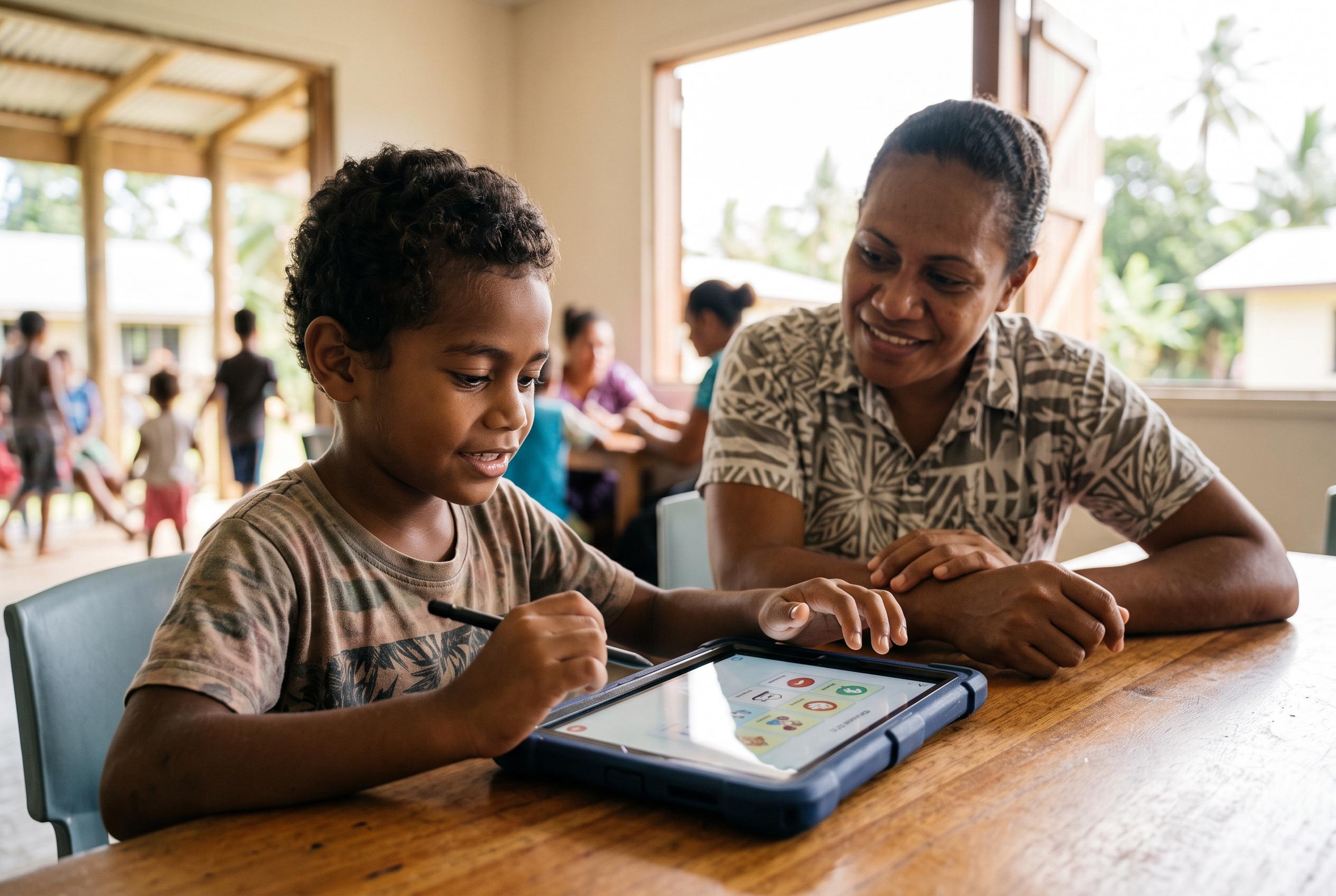

Fiji is set to expand access to essential assistive devices for children through a US$1.6 million initiative, addressing global disparities and enhancing educational and health outcomes for vulnerable youth.
Thousands of children who need glasses, hearing aids and mobility support are still missing out on basic assistive technology, leaving them at risk of avoidable setbacks in school and daily life. Parson Bijleveld, chief executive of the Global Partnership for Assistive Technology, said only about one in 10 people worldwide receive the support they need, with children in Pacific island countries facing even greater obstacles because of distance, limited specialist services and tight resources.
Bijleveld said the consequences can last far beyond childhood, affecting education, health, independence and future earnings. He also argued that the investment case is strong, pointing to studies suggesting every $1 spent on assistive technology can return $9 to society. “A pair of eyeglasses, a hearing aid or a mobility device can transform a child’s life, enabling them to learn, participate fully, build confidence and thrive both in school and in their communities. Ensuring that children have access to the right assistive products and services when and where they need them is therefore not simply about providing technology.”
Fiji is now preparing to expand support through its SPARK Fiji programme, officially titled “Unlocking Healthy Learning: Scaling Up Assistive Technology and Related Rehabilitation Services for School-Age Children”. According to local reporting, the initiative is backed by a US$1.6 million grant from the Australian government through ATscale and will provide spectacles, hearing aids, wheelchairs and rehabilitation services for school-age children in mainstream and special schools, as well as those outside the school system. The World Health Organisation says its Global Cooperation on Assistive Technology initiative is designed to make such support universally accessible, using a framework that covers people, policy and finance, products, service provision and personnel.
Health Minister Atonio Lalabalavu said the programme will be delivered across all 21 of Fiji’s subdivisions, including outer islands and communities with children who are not in school. He said the health ministry would work alongside education, social protection, disability groups, civil society and development partners, adding that the aim was to strengthen existing systems rather than build a separate structure. ATscale has been pressing the same message internationally, warning that assistive technology has been chronically underfunded, while UNOPS has said access remains urgent for millions of people who need it to participate fully in society.
Disclaimer: This content is for informational purposes only and is not intended to be a substitute for professional medical judgment, advice, diagnosis, or treatment.