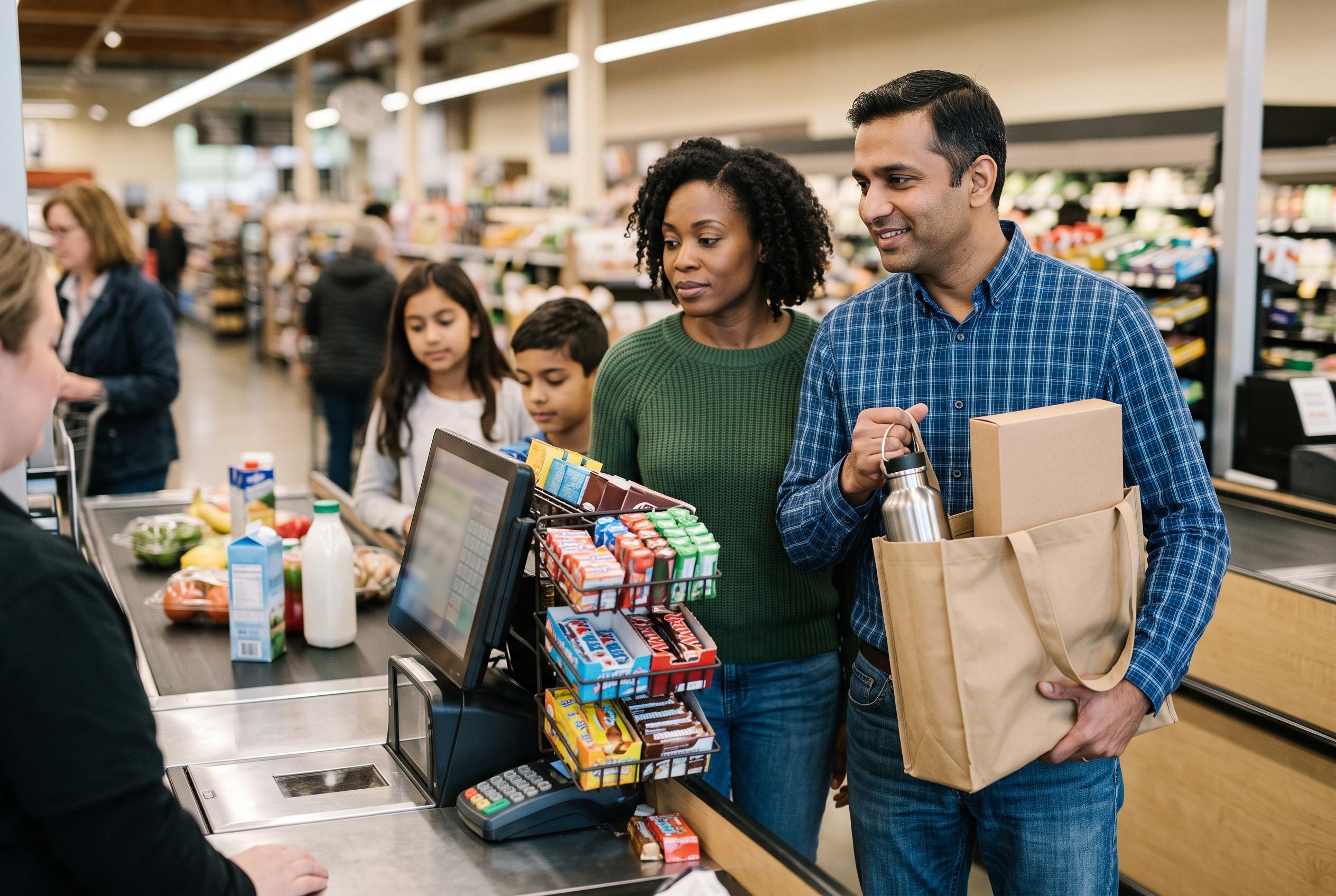

A pioneering policy in Berkeley successfully cut soda sales at checkout lanes, yet small-pack candy sales remained resilient, highlighting limits of impulse-buying restrictions without broader systemic measures.
Berkeley’s trailblazing healthy checkout law appears to have done what campaigners hoped in one crucial respect: it cut soda sales. But a new study suggests the policy stopped short of reducing all candy sales, underscoring both the promise and the limits of regulating what shoppers see at the till.
The ordinance, introduced in March 2021 and enforced from January 1, 2022, made Berkeley the first city in the world to bar sugary drinks and snacks from checkout lanes. Researchers from Boston University School of Public Health and the University of California, Davis found that sales of soda fell sharply after the rule took effect, while small-pack candy sales also dropped in supermarkets that were most willing to comply. Total candy sales, however, did not fall overall.
Published in The Lancet Public Health, the study examined scanner data from 71 stores in Berkeley and three comparison cities , Davis, Oakland and Sacramento , between March 2019 and December 2023. The analysis covered supermarkets, drug stores and mass-market retailers, allowing the researchers to compare how different store types responded to the policy and whether enforcement changed behaviour. Berkeley’s supermarkets, which were the most compliant, saw the biggest declines in sugary products; drug stores, where compliance was weakest, showed little change.
The findings fit with earlier work from the same research group showing that checkout displays in Berkeley and nearby cities were dominated by candy and sugar-sweetened drinks, and that the amount of added sugar at checkouts fell substantially after the ordinance was introduced. The latest paper suggests that compliance mattered: once the policy became enforceable, the decline in snack-sized confectionery became more visible, and soda sales fell by about two-fifths compared with the control cities, according to the study.
Justin White of Boston University said checkout lanes are designed to capture impulse buying, and argued that healthy checkout rules can steer shoppers towards better choices, provided they are actively enforced. Jennifer Falbe of UC Davis said the ordinance alone cannot fix broader problems in the food system, but said combining healthy checkout policies with other measures, including front-of-pack labelling, sugary drink taxes and subsidies for healthier foods, could improve diet quality. She also noted that a proposed US Food and Drug Administration labelling rule could make it easier for cities and retailers to identify products that should not be placed in prime impulse-buying spaces.
Disclaimer: This content is for informational purposes only and is not intended to be a substitute for professional medical judgment, advice, diagnosis, or treatment.