

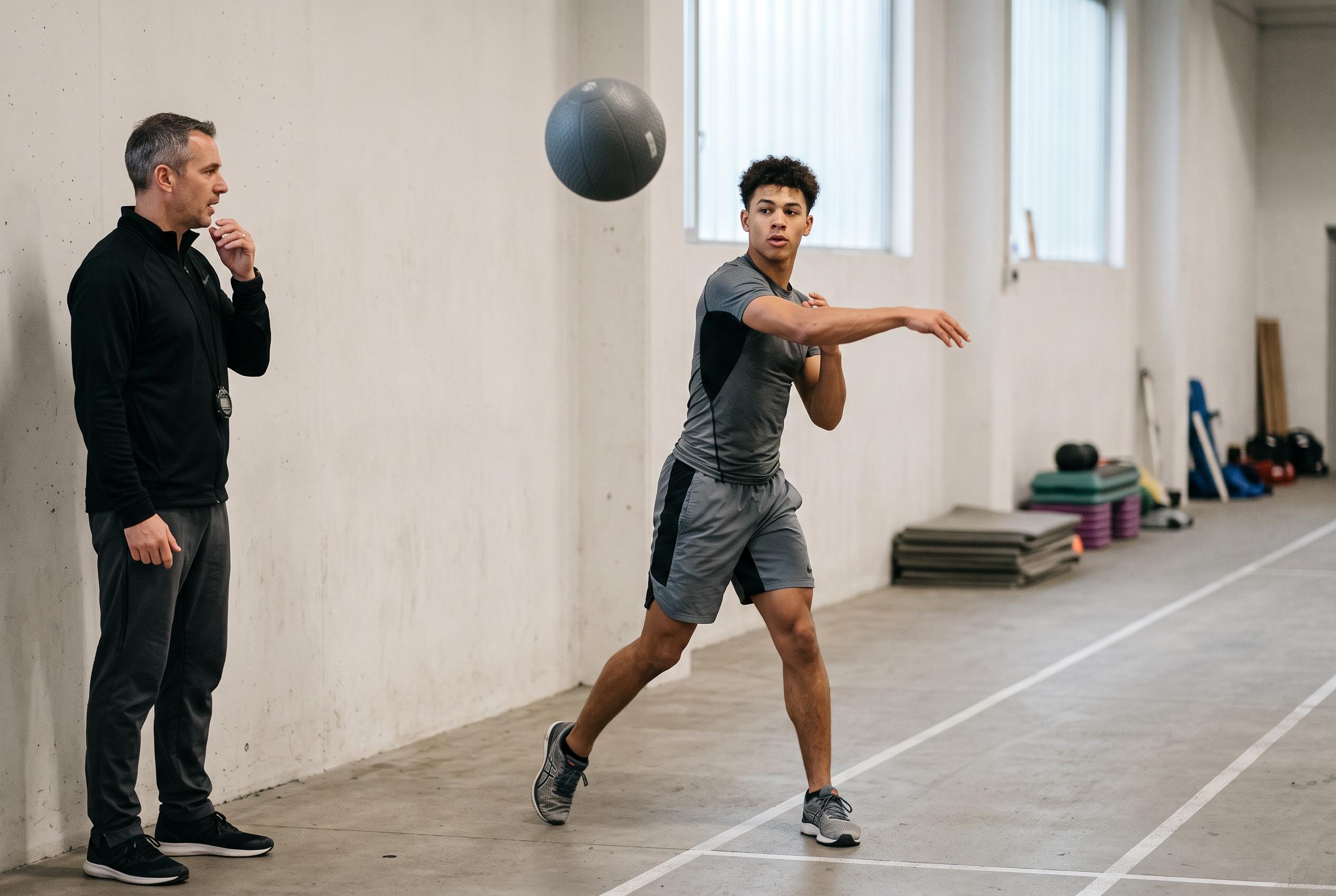

A new approach to youth athletic training emphasises simplicity and autoregulation through velocity-based training, promising more consistent progress and better long-term outcomes for young athletes.
Youth athletic development is often derailed not by a lack of effort, but by a lack of structure. Coaches across school teams, clubs and private sessions rarely work from the same plan, and young athletes are left juggling competing demands, inconsistent recovery and training that too often chases fatigue rather than progress. In that setting, simplicity has a better chance of producing long-term gains than complexity for its own sake.
One of the strongest arguments for a simpler model is frequency. A full-body, three-day approach gives young athletes repeated exposure to the movement patterns that matter most: squatting, hinging, pushing, pulling, jumping, sprinting and stabilising. That repetition supports motor learning, which is especially important during the rapid growth phases around peak height velocity, when coordination can lag behind changing limb length and body proportions. Research cited by the article and related reviews suggests that adolescents often benefit from relatively high volumes performed with submaximal loads, rather than constant maximal strain.
That is where velocity-based training, or VBT, fits neatly into a youth programme. Rather than focusing only on how much weight is on the bar, VBT uses bar speed to gauge intent, readiness and fatigue. Vitruve’s guide to VBT says real-time feedback can help coaches adjust loads more precisely, while also monitoring fatigue and supporting strength and power development. The practical appeal is obvious: young athletes can see whether they are moving with purpose, and coaches can respond to what is happening in the room rather than to a percentage written down weeks earlier.
The article’s core programming idea is the 8/5/3 method, a three-week mini-cycle built around higher-repetition work before gradually moving towards lower reps and heavier loads. It draws on ideas associated with 5/3/1 and APRE-style autoregulation, but adapts them for mixed groups of developing athletes who may arrive with very different training ages. The appeal is that the system can be started at almost any point, does not depend on a precise one-repetition maximum, and gives athletes enough repetition in the learning phases to improve technique as well as strength.
Within that framework, VBT becomes the dynamic-effort side of the programme. The article lays out broad velocity targets that rise over the nine-week cycle, with the load adjusted to match how quickly the athlete is moving that day. That kind of autoregulation matters in youth sport, where sleep, school, travel, nutrition and other commitments can all affect performance from one session to the next. Weakley and colleagues found that visual feedback in adolescent athletes reduced velocity drop-off and improved motivation, while a review by Mann and co-authors concluded that VBT is an effective way to prescribe and monitor load across different populations.
The final piece is data management. The article describes Vitruve as the tool used to capture bar speed in real time and TeamBuildr as the system for delivering sessions, logging work and tracking progress over time. TeamBuildr’s own features emphasise programme delivery, athlete reporting and progress monitoring, which aligns with the article’s central point: good coaching is not about turning training into a spreadsheet, but about using simple data to make better decisions. For young athletes in particular, the winning formula is consistency, clear feedback and a plan that helps them develop without overwhelming them.
Disclaimer: This content is for informational purposes only and is not intended to be a substitute for professional medical judgment, advice, diagnosis, or treatment.



