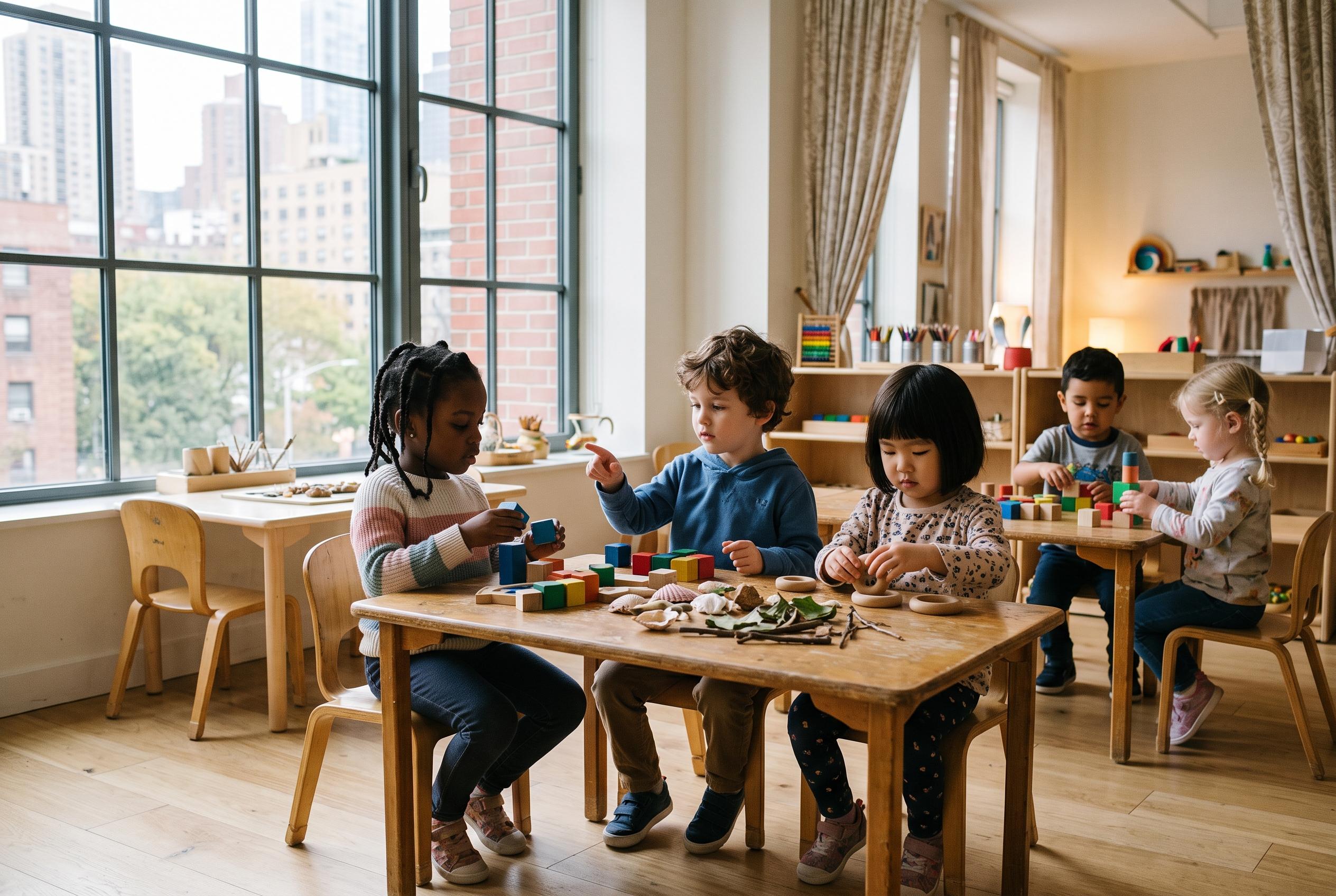

With the launch of the city’s first full-day, full-year 2-K programme, New York aims to ease family pressures and improve educational outcomes amid concerning test results and declining proficiency levels across grades.
In Washington Heights on Thursday morning, three-year-old Luna Peralta arrived for her first day of school in a blue skirt, white shirt and matching bow, and quickly became the day’s most memorable pupil. Her mother, Katerine Pérez, brought her to Mama Tingo’s Childcare early for the start of the 2026-27 school year, as children across New York City returned to classrooms in nearly 1,800 public schools across the five boroughs.
The occasion also marked the launch of New York City’s new 2-K programme, which is opening free places for two-year-olds for the first time. According to City Hall, the scheme began with an initial investment of $73 million and is designed to provide full-day, full-year care for working families, running from 8 a.m. to 6 p.m. for 260 days a year. The administration says more than 2,000 children have been offered places in the first cohort, after the programme drew roughly 5,700 applications.
Zohran Mamdani, the mayor, said the new places were about more than education. He argued that universal child care would ease financial pressure on families and help parents stay in New York, while setting a goal of adding 12,000 more places next year. Kathy Hochul, the governor, said the city and state were working together to make early education more affordable, and said the new investment could save families more than $23,000 a year.
Kamar Samuels, the city’s schools chancellor, said the first day of 2-K was a significant moment for thousands of families and praised teachers and child-care workers for making the programme possible. The city has said the first seats were rolled out in communities including Washington Heights, Inwood, Hamilton Heights and parts of the Bronx and Brooklyn, with the wider expansion planned in future years.
Yet the optimism of the first day comes with serious academic pressure. State test results released in 2026 showed English language arts proficiency for pupils in grades three through eight falling to 50.3%, down six points from the previous year, while maths rose only slightly to 57%. Third-grade reading dropped to 44.2%, and fifth-grade reading slid to 46.6%. National Assessment of Educational Progress data paint an even starker picture, with only 29% of eighth-graders reaching proficiency in English and 23% in maths.
Disclaimer: This content is for informational purposes only and is not intended to be a substitute for professional medical judgment, advice, diagnosis, or treatment.