

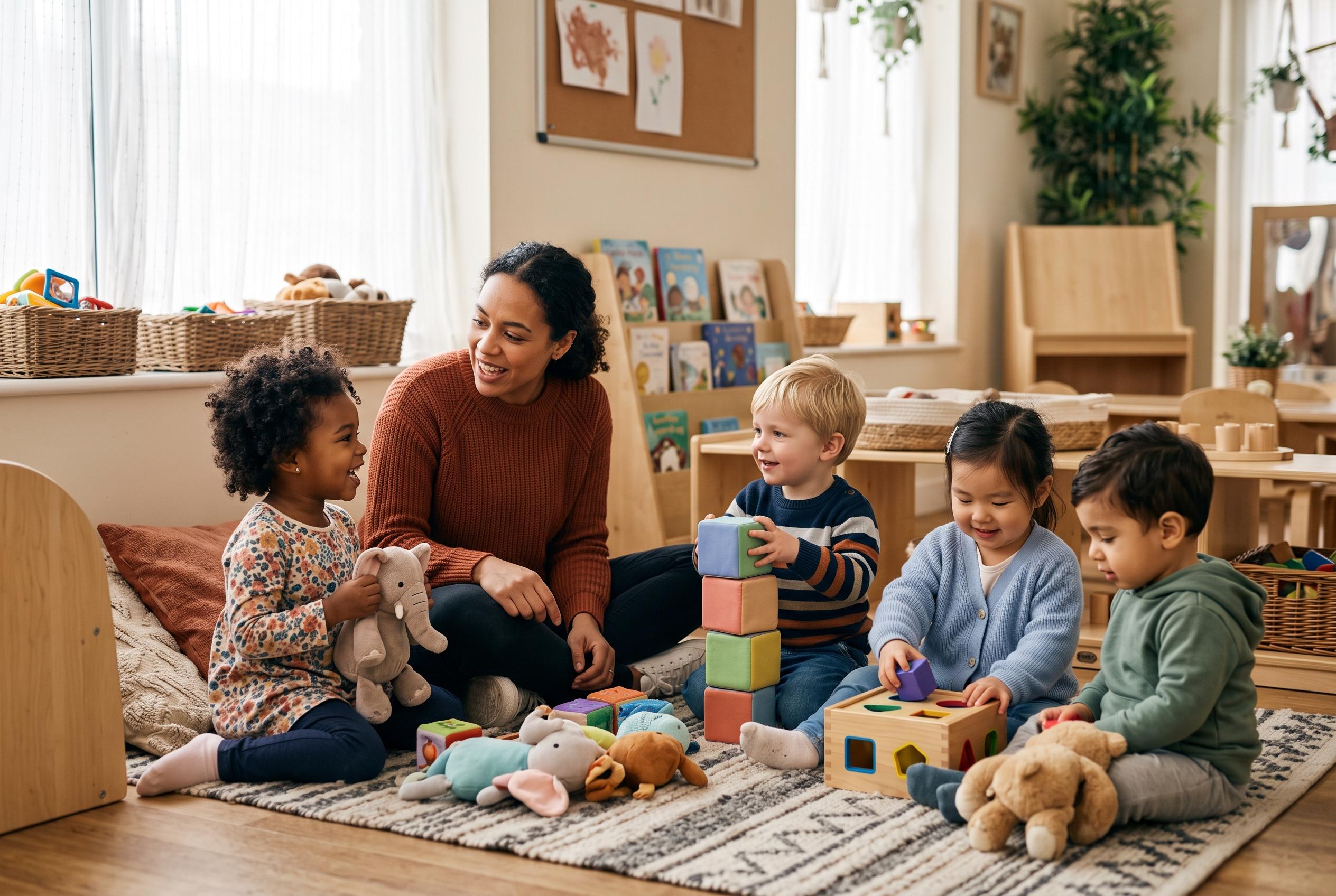

Emerging guidance highlights the significance of emotional well-being, play, and language-rich interactions in pre-nursery settings, shaping children’s confidence and lifelong learning habits from the earliest years.
For many families, the first step beyond home is not about letters or numbers but about helping a very young child feel safe in a new setting. That is the central message running through early years guidance from education authorities and child development groups: children learn best when they are emotionally settled, well supported and free to explore at their own pace.
Experts say the earliest years matter enormously. The South Australian Department of Education says the first five years help lay the groundwork for health, wellbeing and later learning, while the OECD says early experiences shape children’s happiness as well as their ability to develop attention, self-control and problem-solving skills. In practical terms, that means a pre-nursery should be judged less by how quickly it teaches formal lessons and more by how well it builds confidence.
Play is at the heart of that process. The OECD notes that both free play and guided play support development, and NAEYC says high-quality preschool helps children grow across physical, social, emotional, language and cognitive areas. A block tower, for example, can build spatial understanding; a shared game can teach patience; and pretend play can strengthen communication. The lesson for parents is simple: in a strong pre-nursery, play is not a break from learning. It is how learning begins.
Language-rich interaction is equally important. Children learn words and social cues through everyday conversation, songs, stories and questions, not just through formal instruction. The Tennessee early learning resource says high-quality programmes are linked with stronger language skills, better school readiness and improved social skills, while NIEER says good pre-kindergarten can help shape a child’s attitude towards school more broadly. Parents visiting a setting should listen for whether adults speak with children, respond to their ideas and encourage them to express themselves in different ways, including gestures and facial expressions.
The best classrooms also make movement, routine and choice part of the day. Young children need opportunities to run, climb, carry, dance and balance, and they also need predictable rhythms that help them understand what happens next. At the same time, a well-designed room should let them choose between a few manageable options, reach materials independently and move safely from one activity to another. Social guidance matters too: turn-taking, sharing and cooperation do not appear overnight, and teachers should guide children through those moments with patience rather than criticism. Clear communication with parents can then help families understand how their child is adjusting and where extra support may be needed.
Disclaimer: This content is for informational purposes only and is not intended to be a substitute for professional medical judgment, advice, diagnosis, or treatment.



