

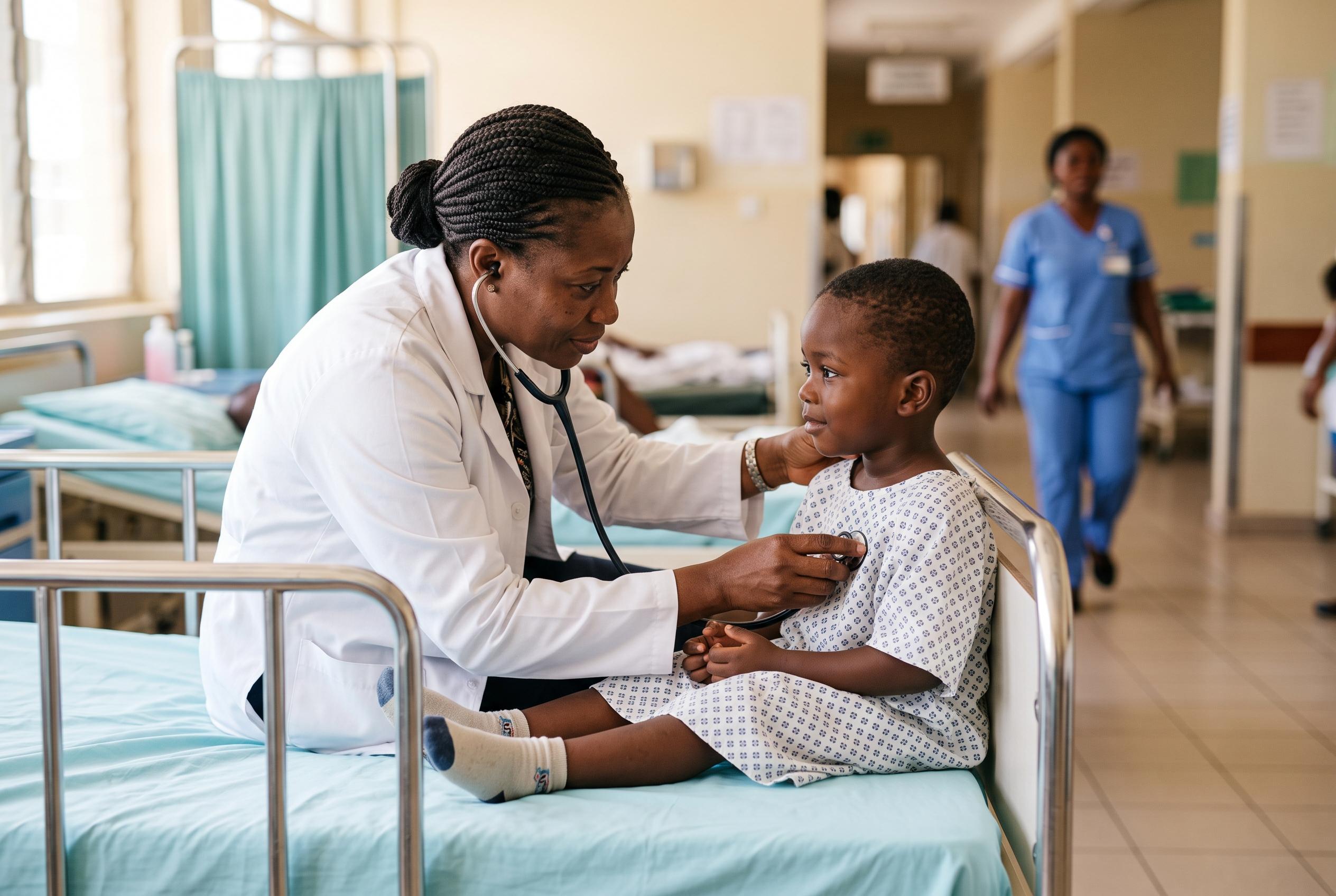

Health professionals at Korle Bu Teaching Hospital urge parents to avoid forcing children to eat, highlighting risks of aspiration pneumonia and other complications that have led to an increased number of cases over the past two years.
Parents and caregivers are being urged not to force children to eat, after health workers at the Rebecca Akufo-Addo Paediatric Intensive Care Unit at Korle Bu Teaching Hospital said they have treated several children with complications linked to the practice over the past two years. Dr Amanda Fofie, a paediatrician at the unit, said the cases were serious enough to prompt the “Protect My Little Lungs” campaign, which is aimed at teaching families about the risks of aspiration pneumonia and other feeding-related harm.
Dr Fofie told The Mirror in Accra that many parents become worried when a child eats only a little at a time, but she said small portions spread through the day are often enough. She said a child who appears to have a poor appetite should be assessed by a health professional rather than pressured to eat, adding that concerns about weight are not always justified. Medical guidance from children’s hospitals also notes that feeding problems can be caused by a range of issues, including medical conditions, developmental delays and oral-motor difficulties.
Health specialists say force-feeding can do more than create mealtime stress. It can teach children to ignore hunger and fullness cues, make food feel like a source of conflict and, in some cases, contribute to unhealthy eating patterns later in life. Paediatric feeding disorder is recognised as a clinical condition when a child cannot take in enough food or liquid to support growth and development, and experts say it often needs coordinated care rather than pressure at the table.
The Korle Bu team also warned against another dangerous response: giving a child palm oil or milk after they swallow a harmful substance such as a cleaning product. Nurse Stephanie Appiah said that trying to make a child swallow oil can send the liquid into the lungs and cause severe complications. Health workers say the safer response is to get the child to the nearest medical facility immediately.
Disclaimer: This content is for informational purposes only and is not intended to be a substitute for professional medical judgment, advice, diagnosis, or treatment.



