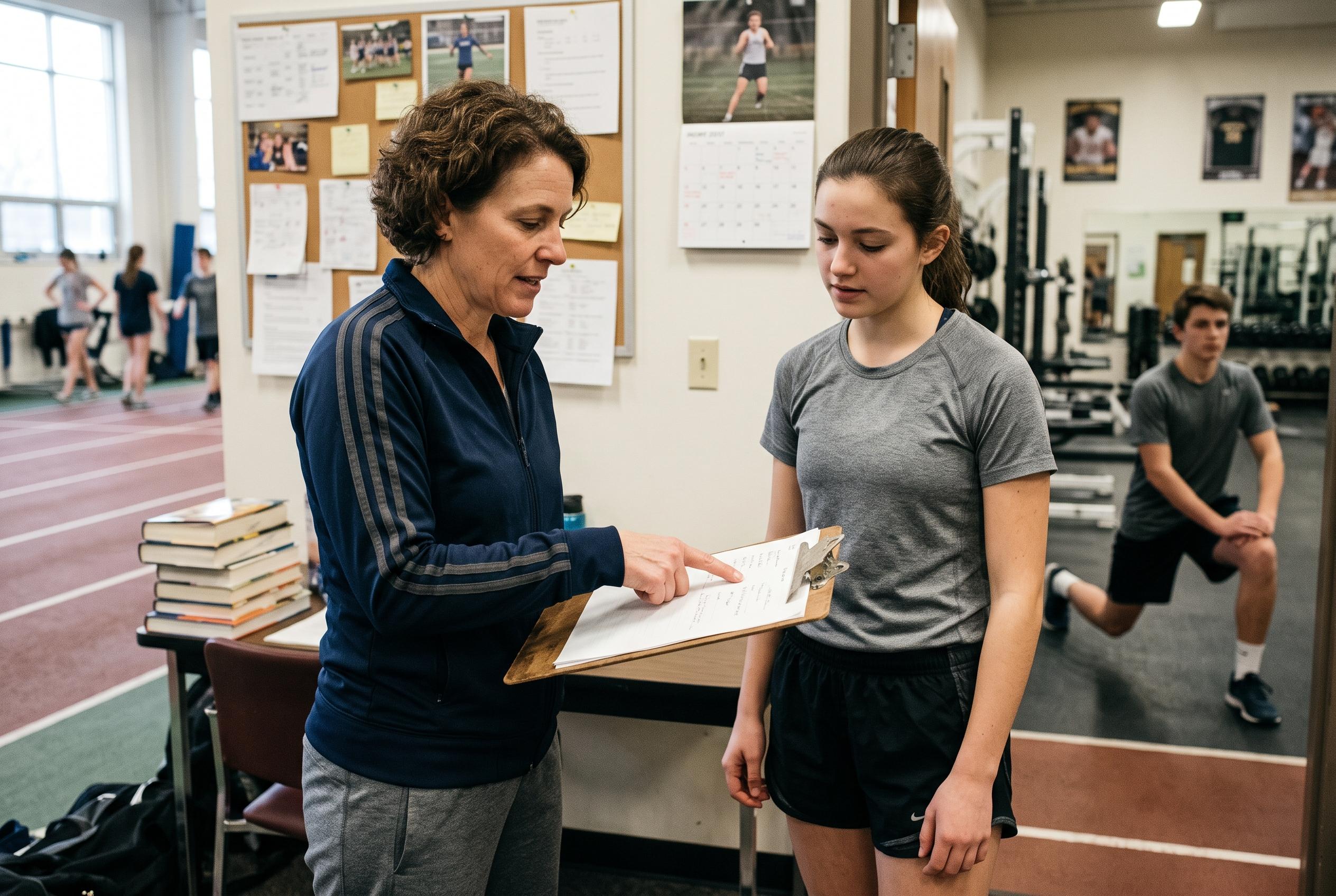

Drawing from over 20 years of experience, Walton emphasizes that academics, holistic development, and integrated college guidance should take priority in high school sport, challenging traditional results-focused models.
Wayne Walton is setting out a formal principle for high school sport: athletics should support a student’s education, not pull against it. Drawing on more than two decades in school leadership, coaching and college advising, Walton says the standard now guiding his work is built around academic standing, integrated college guidance and a view of coaches as educators as much as trainers. He has worked as athletic director and dean of students at EF Academy New York, as well as in college advising and NCAA recruitment at IMG Academy, and he coached girls’ basketball at Kent School, where his teams won two New England Class A championships. According to a statement outlining his approach, Walton now wants that philosophy applied consistently in school athletic departments.
At the heart of the standard is a simple order of priorities. Walton says a student’s classroom performance should come first, with academic progress checked before any discussion of playing time or recruitment. He also argues that college counselling should not sit apart from athletics, but should be woven into the sporting experience so families understand the process earlier and more clearly. And he believes coaches should be judged on more than results, with player development, resilience and teamwork treated as core measures of success. EF Academy New York’s own emphasis on personalised education and holistic student development fits closely with that outlook, with the school describing a community that combines academics, athletics and broader student growth.
Walton says he is formalising the principle now so other administrators have a clear model to follow, rather than relying on informal good intentions. He points to his coaching record as proof that keeping students focused on the classroom can strengthen performance on the court, saying habits such as punctuality, sleep and study discipline shape results long before tip-off. In practical terms, he says he will regularly review academic progress for student-athletes, make college counselling resources available well before recruitment season and insist that coaching staff treat student development as a season-long benchmark. He also cites his First Aid and CPR certification and membership of the National Interscholastic Athletic Administrators Association as part of the same commitment to student welfare.
Beyond his own roles, Walton is also making himself available to advise schools and sports programmes on athletics operations, coaching development, scheduling, league administration and NCAA recruiting. He likewise offers school and college placement advice for families navigating admissions and athletic fit, including interview preparation and recruitment requirements. The wider backdrop is a school sport landscape in which many independent schools now present athletics as part of a broader educational mission; Walton is arguing that this should be stated plainly, not left to chance.
Disclaimer: This content is for informational purposes only and is not intended to be a substitute for professional medical judgment, advice, diagnosis, or treatment.