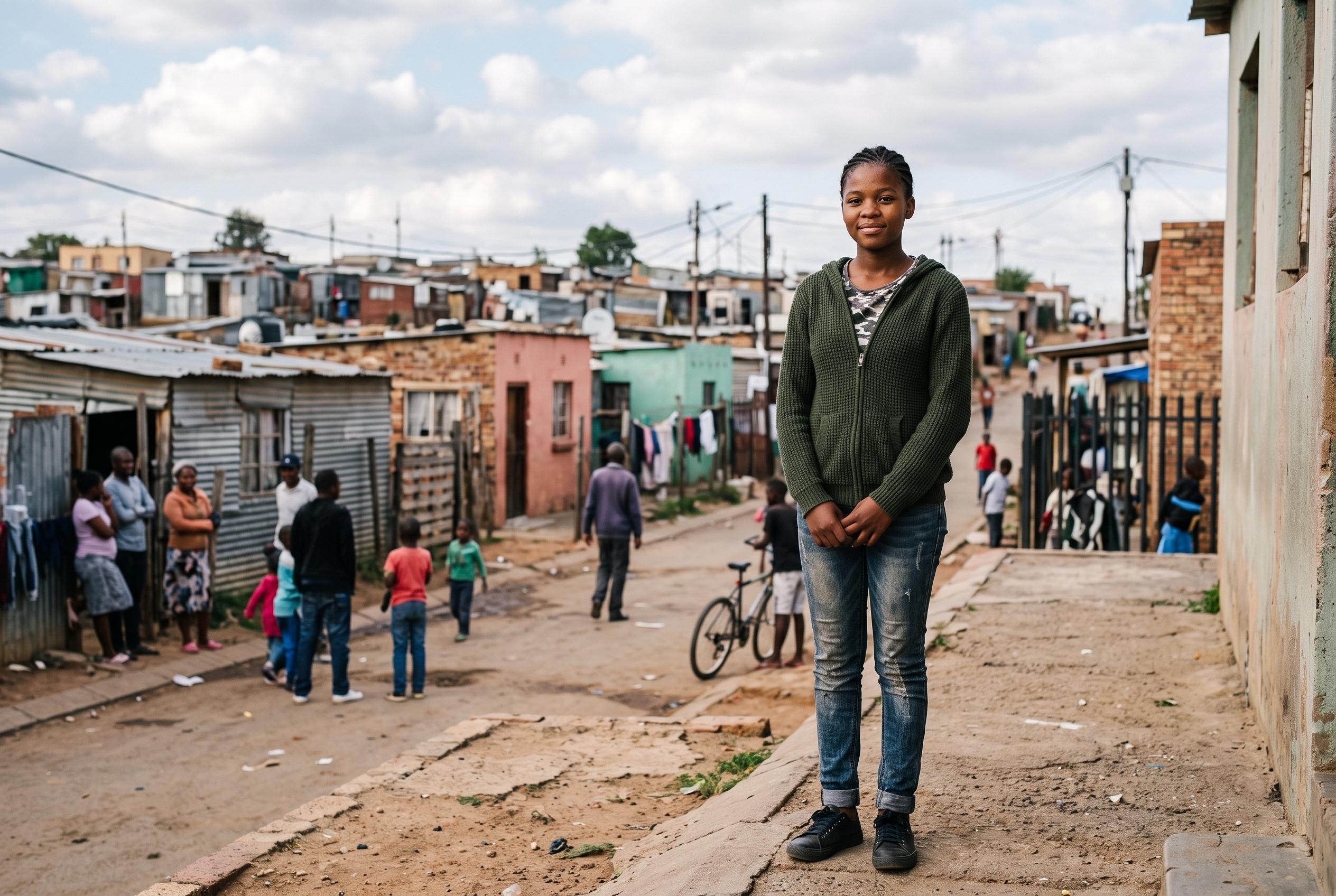

In South Africa’s townships, the development of resilient adolescent identities demands a societal shift towards stable relationships, safe spaces, and dependable services, confronting the lingering impacts of apartheid-era planning and urban fragmentation.
South Africa’s teenagers are being asked to build their futures in places that often make that task harder, not easier. In many township communities, especially on the edge of cities, families live with the legacy of apartheid planning, uneven services, poverty and crime, creating an environment where opportunity can be scarce and support inconsistent. The result is that resilience is often treated as a matter of individual toughness, even though the conditions shaping it are profoundly social.
That is the central flaw in much of the way adolescent wellbeing is understood. Identity is not simply about self-confidence or ambition. It also depends on whether a young person knows where to turn, whether help is available, and whether support actually changes outcomes. Research on South African resilience suggests that agency, self-worth and perseverance are strengthened when they are reinforced by stable relationships, safe spaces and dependable services, rather than by willpower alone.
The broader urban setting matters too. Academic work on South African spatial planning shows how apartheid’s segregationist design left cities fragmented long after democracy, with the effects still visible in the way communities are separated from jobs, schools and public infrastructure. A literature review of township research also points to persistent pressures inside these areas, from social instability to broader development challenges, underlining that adolescent vulnerability is not occurring in a vacuum.
That makes the policy debate more urgent. According to the Daily Maverick opinion piece, Cabinet approved the National Strategy to Accelerate Action for Children in late 2025, and adolescent identity, agency and connectedness are among its top priorities. The Hold My Hand campaign is pushing the same message, arguing for a whole-of-society response that brings parents, teachers, community groups and government into the same effort. Its new free guide for adults is one example of how that approach can be translated into practical support.
The point is not that teens should be shielded from every difficulty. It is that no young person builds a resilient identity in isolation. For parents and caregivers, and for policymakers alike, the more realistic question is how to create the relationships, services and safe spaces that allow teenagers to keep hope intact even when life is unstable. The stronger the support around them, the more likely they are to grow into adults who can cope, contribute and belong.
Disclaimer: This content is for informational purposes only and is not intended to be a substitute for professional medical judgment, advice, diagnosis, or treatment.