

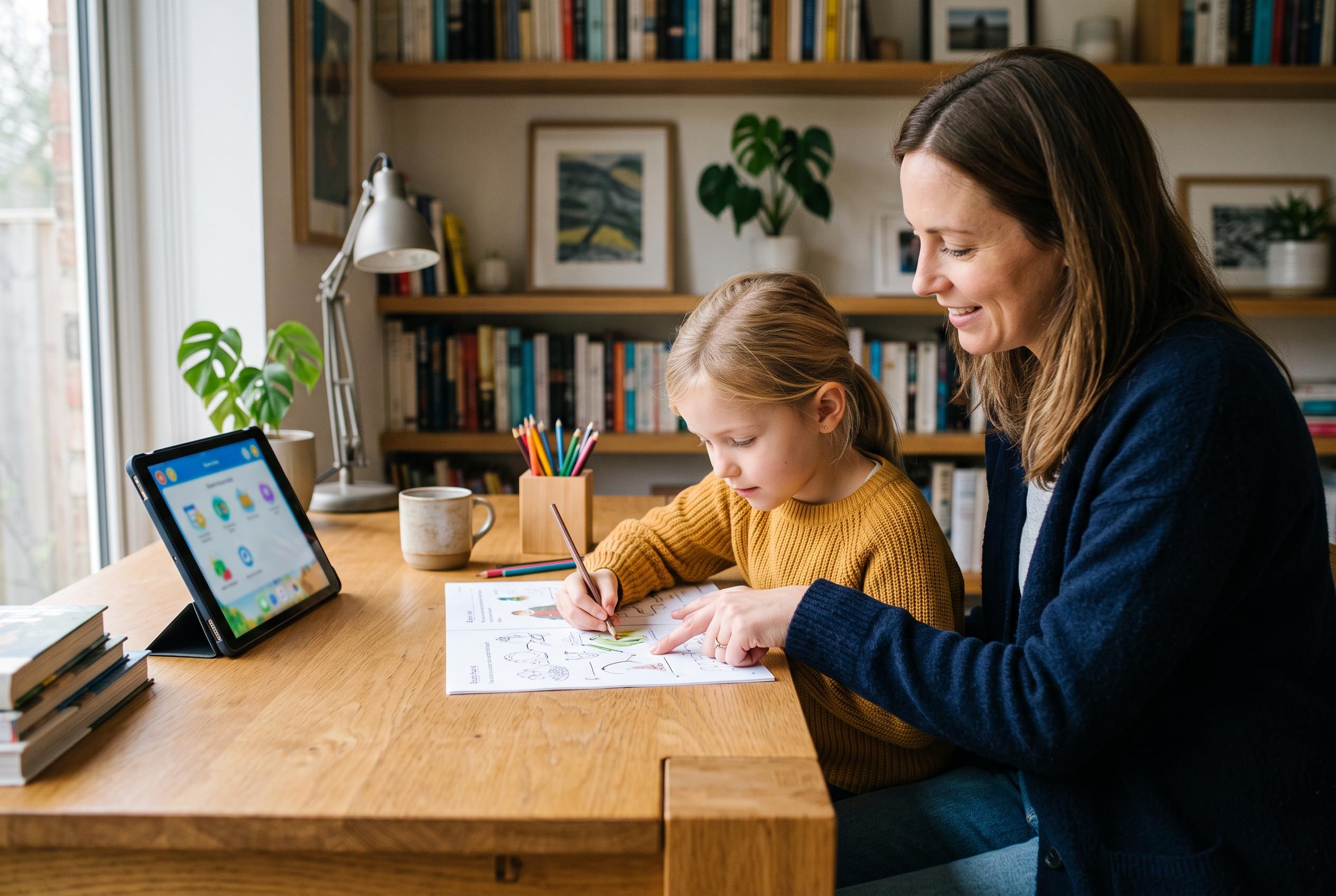

Parents seeking to enhance off-screen reinforcement of learnings are increasingly combining educational apps with printable resources, creating a synergy that strengthens children’s skills across subjects.
Parents who want to cut down on passive screen time without giving up the educational value of apps are increasingly pairing digital learning with printable worksheets. Education.com, Khan Academy Kids, 123 Homeschool 4 Me, Twinkl, K5 Learning and Teachers Pay Teachers all offer varying mixes of free and paid resources that can turn a tablet session into a more hands-on lesson.
Education.com is one of the largest worksheet libraries in this space, with materials organised by subject and grade from Pre-K to eighth grade. Its free and premium sections make it useful for targeted practice, especially after a child has been introduced to a concept on an app such as Khan Academy Kids.
Khan Academy Kids also publishes printable activities for parents and teachers, including packets in English and Spanish that cover maths, reading and social-emotional learning. That makes it a natural bridge between app-based instruction and off-screen reinforcement at home.
For families looking beyond core literacy and numeracy, 123 Homeschool 4 Me offers a broad collection of free printables across maths, reading, science and history. Twinkl, meanwhile, provides a large catalogue of worksheets and lesson materials for early years through secondary pupils, with both free and premium content available.
K5 Learning takes a more straightforward approach, with worksheets and activities focused on elementary maths, reading, spelling and cursive writing. That simplicity can be useful after a highly stimulating app lesson, because it strips away distractions and checks whether a child can still work through the material independently.
Teachers Pay Teachers adds another option through its searchable free section, which includes thousands of teacher-made printables. For parents using coding apps or other digital study tools, that can be a way to bring abstract ideas on screen into a paper-based activity that reinforces sequencing, logic and recall.
The broader point is that printable worksheets do not need to replace educational apps; they can strengthen them. Research-based learning routines often work best when children move from recognition on a screen to recall on paper, especially when the goal is to build confidence, concentration and fine motor skills as well as knowledge.
Disclaimer: This content is for informational purposes only and is not intended to be a substitute for professional medical judgment, advice, diagnosis, or treatment.



