

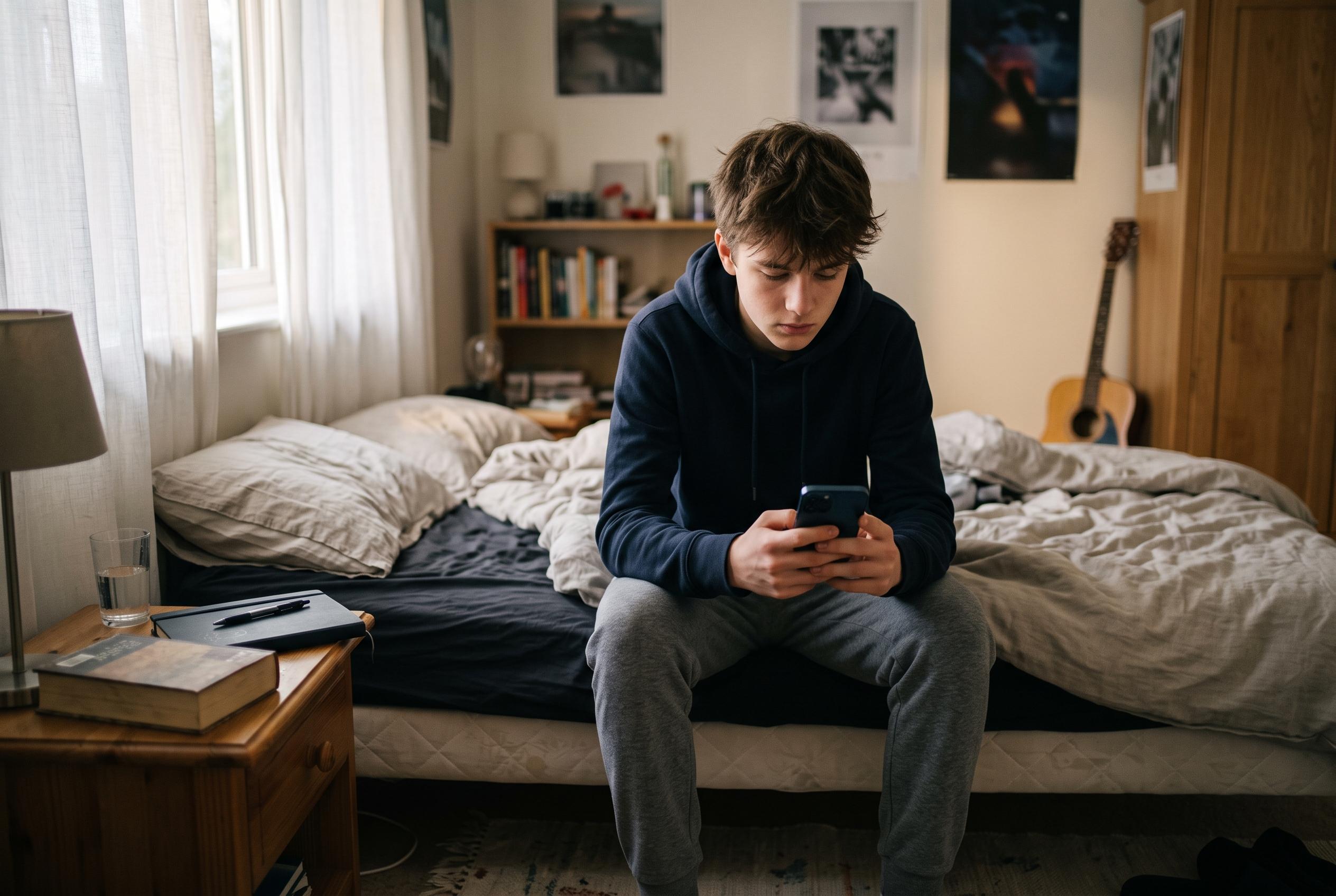

A growing number of teenagers are turning to artificial intelligence chatbots for companionship, prompting experts to warn against potential impacts on real social connections and emotional wellbeing.
Many teenagers are turning to artificial intelligence chatbots not only for homework and search, but also for company. That can be harmless, even helpful, when the technology is used to organise thoughts or rehearse difficult conversations. But experts say parents should pay close attention to a more important question: whether a chatbot is supplementing real relationships or starting to replace them.
In Norway, the media regulator Medietilsynet found that just over half of nine- to 18-year-olds use ChatGPT or similar services, and 15% of those users say they use an AI friend such as Character.AI or My AI. The figures are higher among girls than boys. Researchers Marita Skjuve, who studies human-AI relationships at Sintef, and Helene Høgsdal of UiT say the appeal is easy to understand: AI is always available, does not judge, and can feel personal when it remembers previous exchanges.
That sense of being heard is one reason the trend has become so widespread well beyond Norway. A Common Sense Media survey reported by Axios found that 72% of American teenagers use AI companions, and more than half use them several times a month. Other reporting has pointed to similar patterns of frequent use, with some young people saying chatbots are as satisfying as talking to real people. Experts warn that this can be useful in moderation, but also risky if the technology becomes a main source of emotional support.
For most teenagers, the problem is not the existence of an AI conversation itself, but what it begins to crowd out. Høgsdal says concerns grow when chatbot use replaces friends, family, sleep, schoolwork, or hobbies. Skjuve points to smaller daily moments too: if a young person starts turning to a bot after an argument, instead of a parent or friend, they may lose chances to strengthen real relationships. Both researchers say parents should also watch for signs of distress, secrecy, withdrawal, or a growing inability to make decisions without checking with AI first.
The researchers also argue that some teenagers are more vulnerable than others, particularly those who already feel lonely or crave reassurance. Studies have linked social AI use with loneliness and with stronger emotional attachment in people with an anxious attachment style, though it is not yet clear which comes first. There is also growing concern about design choices that encourage dependency. In response, companies have tightened some safeguards: Character.AI has restricted open chat for under-18s, and OpenAI has introduced a teen-focused version of ChatGPT with additional safety features and parental controls. Chinese regulators have also moved to curb emotionally intimate AI services for minors.
For parents, the advice is less about banning technology than about staying curious and involved. That means asking what a chatbot is being used for, trying the tools themselves, and talking plainly about moments when a child reaches for AI instead of a person. The central issue, Skjuve says, is whether the chatbot is meeting a need that would be better met through human contact.
Disclaimer: This content is for informational purposes only and is not intended to be a substitute for professional medical judgment, advice, diagnosis, or treatment.



