

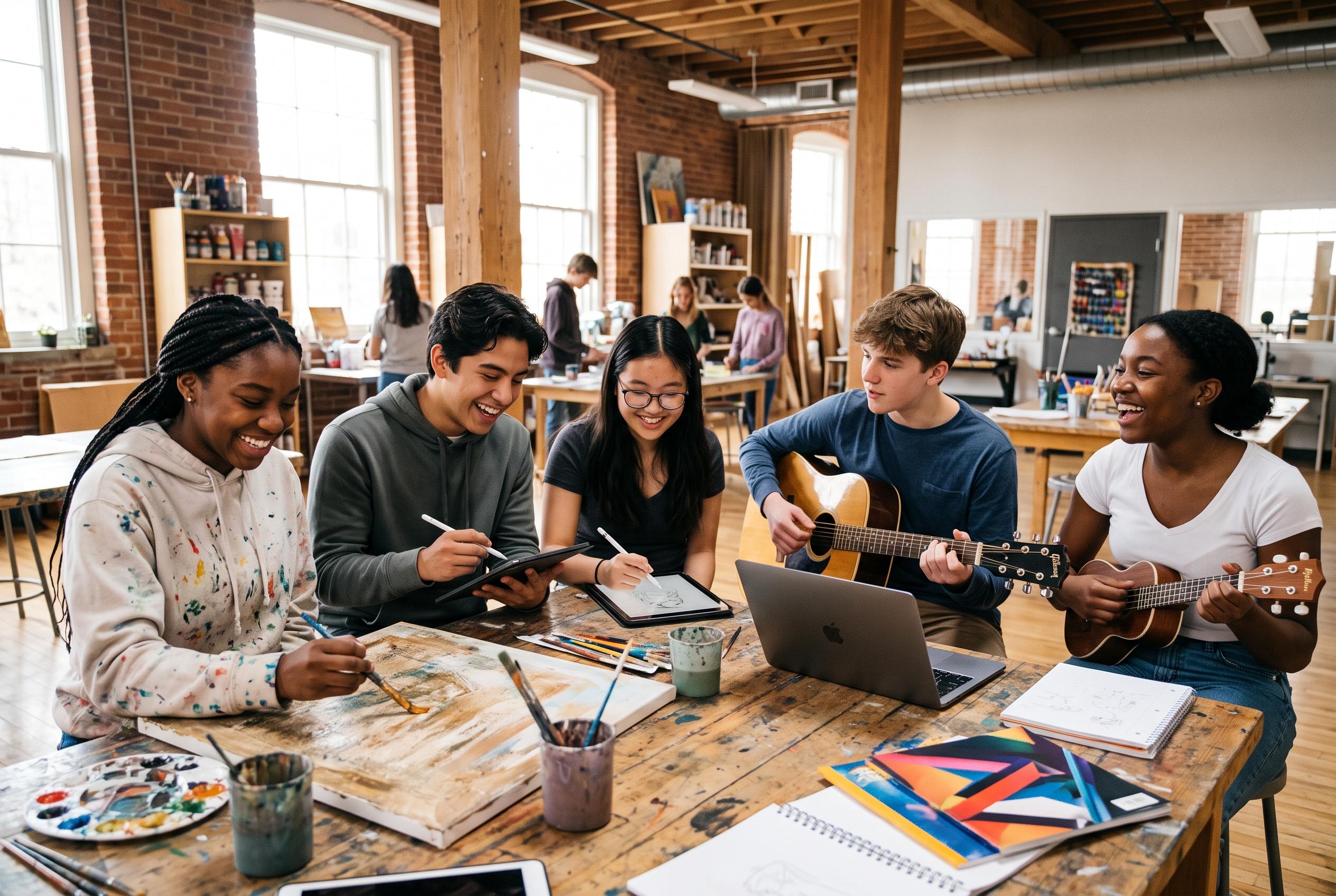

A large international study indicates that teenagers engaging in a wide range of arts and creative activities tend to perform better in reading and report higher life satisfaction, highlighting the potential benefits of diverse creative involvement beyond formal arts education.
A large study published in Frontiers in Psychology suggests that teenagers who take part in a wider range of arts and creative activities tend to do better in reading and report higher life satisfaction, although the authors stress that the findings do not prove cause and effect.
Using data from the OECD’s PISA 2022 assessment, the researchers analysed responses from 441,183 15-year-olds in 64 countries and economies. Rather than treating arts participation as a single yes-or-no measure, they built a breadth index covering activities such as art, music and drama, then examined how that linked with reading performance and subjective wellbeing.
The study found positive overall associations between broader creative participation and both outcomes. It also identified joint indirect links through school belonging, self-regulation, self-efficacy and creative thinking. But the authors caution that, because the analysis is cross-sectional, the results cannot be read as proof that arts involvement itself causes the gains.
That caution fits with the wider OECD PISA 2022 findings, which also point to the importance of school climate and creative opportunities. The OECD says students who feel they belong at school are less likely to feel lonely and more likely to make friends easily, while its creative-thinking analysis found that balanced participation in arts-related school activities can support creative skills development. Separate PISA material also suggests that students with stronger creative self-efficacy, or confidence in their creative ability, tend to perform better in creative thinking tasks.
The new paper adds a further nuance: its results apply to broad participation in creative activities, not to formal arts education alone or to any single art form. The authors also note that their pooled estimates across countries show average patterns rather than identical relationships in every national setting.
Disclaimer: This content is for informational purposes only and is not intended to be a substitute for professional medical judgment, advice, diagnosis, or treatment.



