

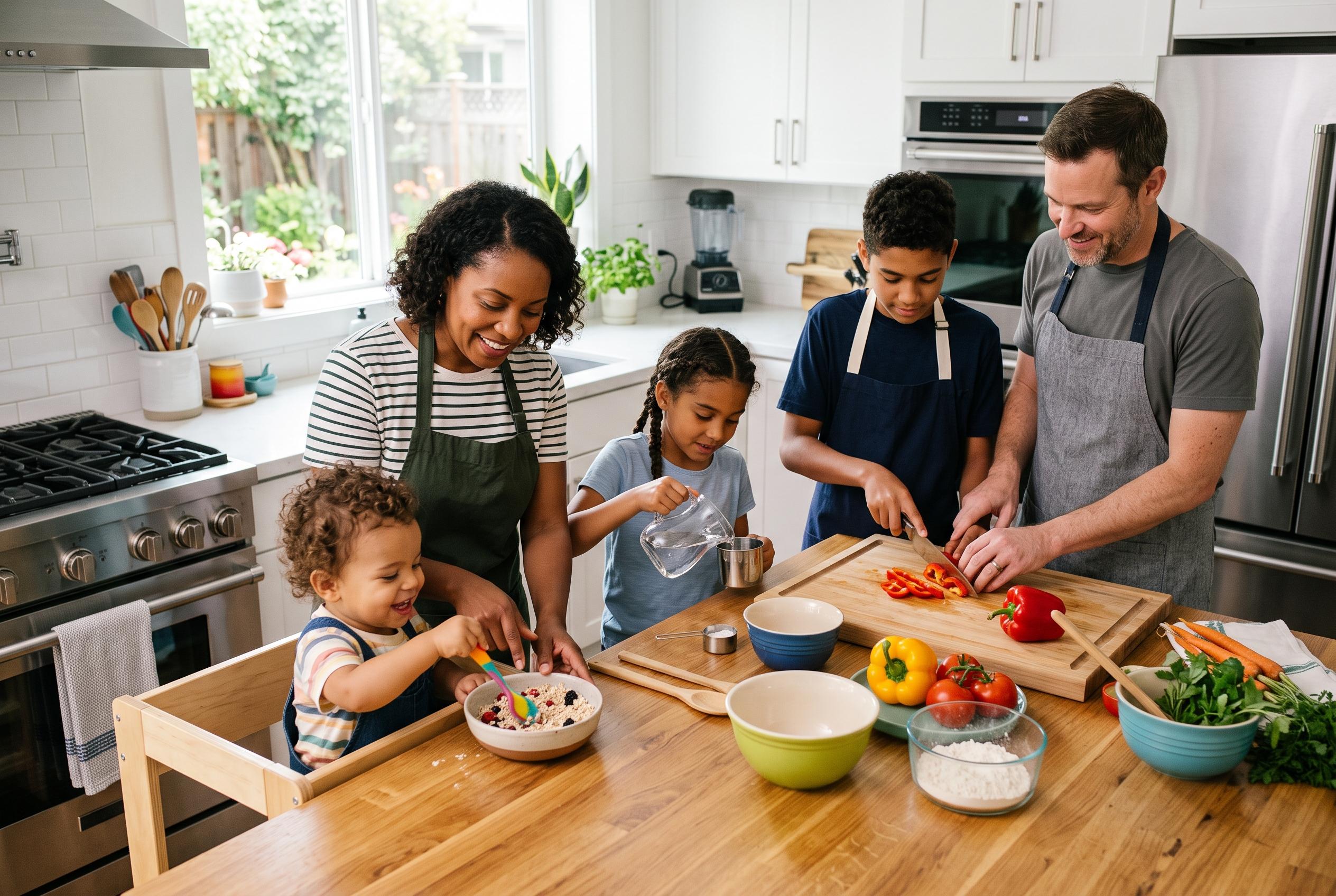

Engaging kids in kitchen tasks can foster essential skills and confidence, but understanding age-appropriate responsibilities and safety measures is key to family-friendly cooking routines.
Cooking with children can do more than get dinner on the table. It can help build confidence, patience and practical skills, so long as the tasks match the child’s age and ability. The idea is not to turn every child into a junior chef overnight, but to give them safe, structured ways to join in and learn.
Safety has to come first. The American Academy of Pediatrics says kitchens should be treated as active hazard zones, with sharp tools, cleaning products and cords kept out of reach, pot handles turned away from the front of the hob and children kept away from hot surfaces. IKEA also recommends a clear child-free zone around heat sources and keeping the kitchen tidy so hazards are easier to control.
For toddlers, simple sensory jobs are usually best. Children’s Health says children as young as two can help wash fruit and vegetables, tear lettuce and stir room-temperature ingredients, while Mayo Clinic Press suggests giving young children a safe place to sit with age-appropriate items rather than letting them wander near the cooker. At this stage, the goal is familiarity: touching, pouring, mixing and learning basic directions.
By the preschool years, children can usually take on slightly more involved work. Children’s Health says many four- and five-year-olds can measure dry ingredients, knead dough and mix batter with supervision, while IKEA advises keeping hot appliances out of reach and using child locks where needed. These tasks can help with counting, hand-eye coordination and following short instructions one step at a time.
Once children reach early school age, they may be ready for more responsibility, but not more risk. The American Academy of Pediatrics recommends continuing close supervision and separating safe tools from sharper ones, while Children’s Health notes that readiness depends on maturity rather than age alone. That means some children may be able to grate, peel or read a recipe aloud before others, but all should still be watched carefully.
Older children can often begin to cook simple dishes with less help, though heat and sharp equipment still need adult oversight. Children’s Health says tasks such as scrambling eggs, measuring ingredients and baking straightforward recipes can be good next steps, and IKEA recommends using oven gloves and keeping children back when the oven is opened. The best approach is gradual: give more freedom as confidence grows, but keep the safety boundaries firm.
The wider lesson is that kitchen time can become a useful part of family life when it is planned properly. Clear rules, close supervision and age-appropriate jobs allow children to practise useful skills without being put at unnecessary risk. Done well, cooking together can be both safer and more rewarding for everyone in the house.
Disclaimer: This content is for informational purposes only and is not intended to be a substitute for professional medical judgment, advice, diagnosis, or treatment.



