

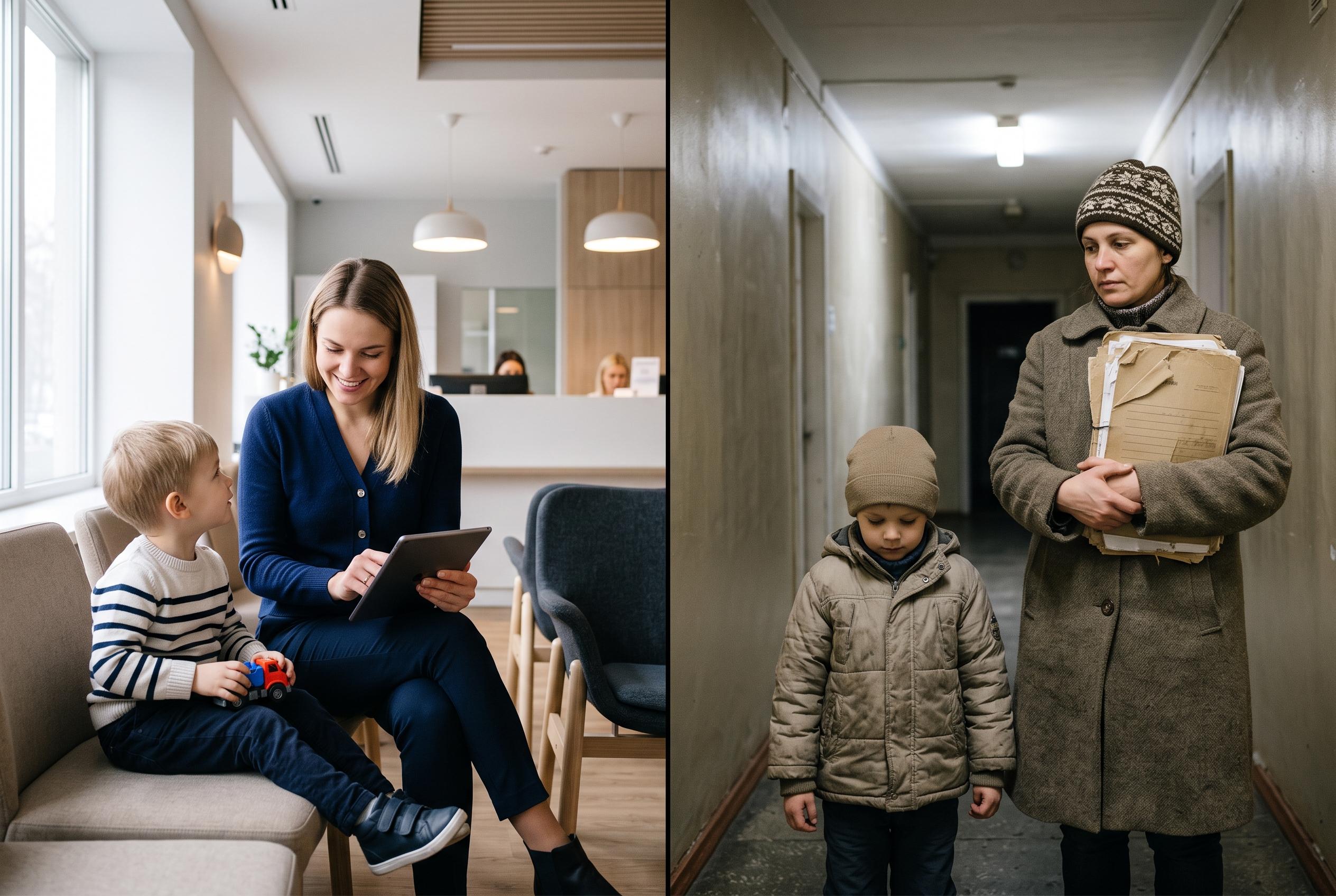

In Latvia, children’s right to healthcare is hindered by socioeconomic divides and regional disparities, raising concerns over the effectiveness of preventive care policies.
In Latvia, children are meant to have priority in healthcare, but in practice that promise often depends on a family’s ability to pay, according to Jauns. The outlet reports that access to doctors varies widely by region and that parents with greater financial means can often secure faster appointments and more services for their children than those with less. This gap is especially troubling because the family doctor is supposed to be the first point of contact for spotting health and development problems early.
Official data from Latvia’s health service show that preventive care is strongest in the first year of life, when 95% of babies receive check-ups. After that, the picture worsens sharply: only 56% of children aged one to 18 had an annual preventive examination. About a third of newborns also missed the planned home visit in the first month of life. The same data suggest that early developmental assessment is still not applied consistently, reaching only about one in four or one in five children, depending on age.
Under Latvia’s system, family doctors act as the main gateway to primary care, offering treatment, preventive checks, consultations and referrals to specialists. The National Health Service says children should receive scheduled preventive examinations as part of a defined programme, and patients are expected to book these appointments through their family doctor’s practice. In theory, that structure should help problems surface before they become more serious.
But the contrast between the rules and the reality remains stark. Jauns says the aim of preventive examinations is to identify difficulties while help is still possible, rather than waiting until a child has already reached a specialist. The reporting points to a wider question for Latvia’s health system: whether a child’s chance of getting timely care is still shaped less by policy than by geography, access and household income.
Disclaimer: This content is for informational purposes only and is not intended to be a substitute for professional medical judgment, advice, diagnosis, or treatment.



